Foundation drainage contractor and yard drainage contractor serving central Illinois — drainage and grading, foundation drains, yard drains, catch basins, and field tile repair. Standing water, soggy yards, runoff, and saturated fields — fixed. Mattoon, IL — 60-mile radius.
📞 Call (217) 809-0779 Free EstimateLocal drainage contractor fixing standing water, soggy yards, runoff, and failed tile across central Illinois — drainage and grading, foundation and yard drains, catch basins, culverts, and field tile repair. One contractor for the dig, pipe, gravel, and finish grade. Mattoon, IL — 60-mile radius. Free on-site estimate: (217) 809-0779.
Standing water almost always means it has nowhere to go. The fix is grading, a yard drain, foundation drains, or field tile — sized to where the water comes from. We diagnose first, then drain it.
Water that sits causes problems. Yards that won't dry. Fields that won't farm. Foundations that crack. Driveways that wash. Drainage isn't glamorous work — but doing it right pays you back every spring.
Repair-first — and we move fast. We fix the drainage the big outfits are too booked to bother with — find the wet spot's cause, put in the pipe or the grade to move the water, and get it done, not booked out for the season. And you deal with the owner, not a call center: your job is run by Levi Brohez, the man on the machine — call or text direct at (217) 809-0779.
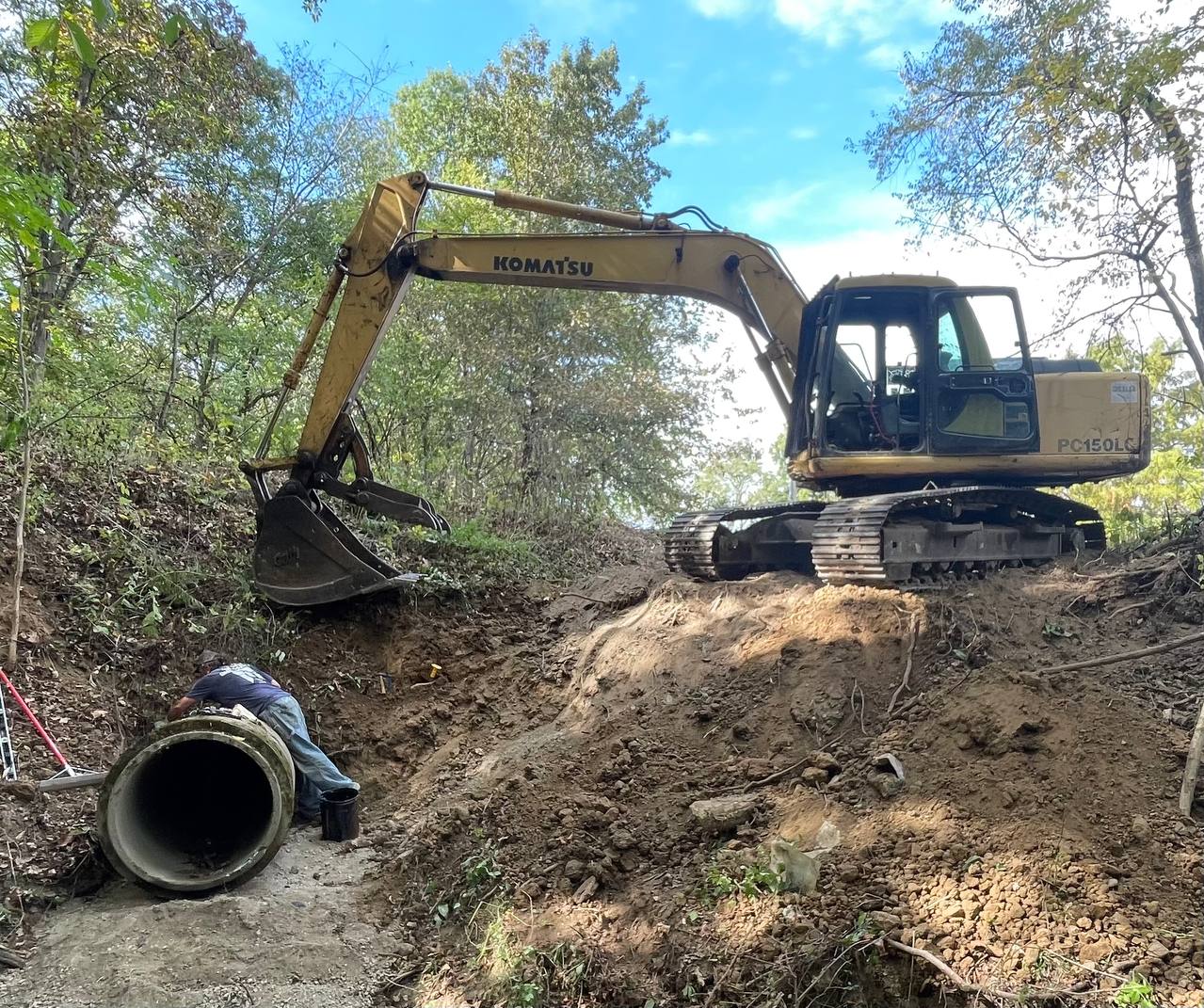
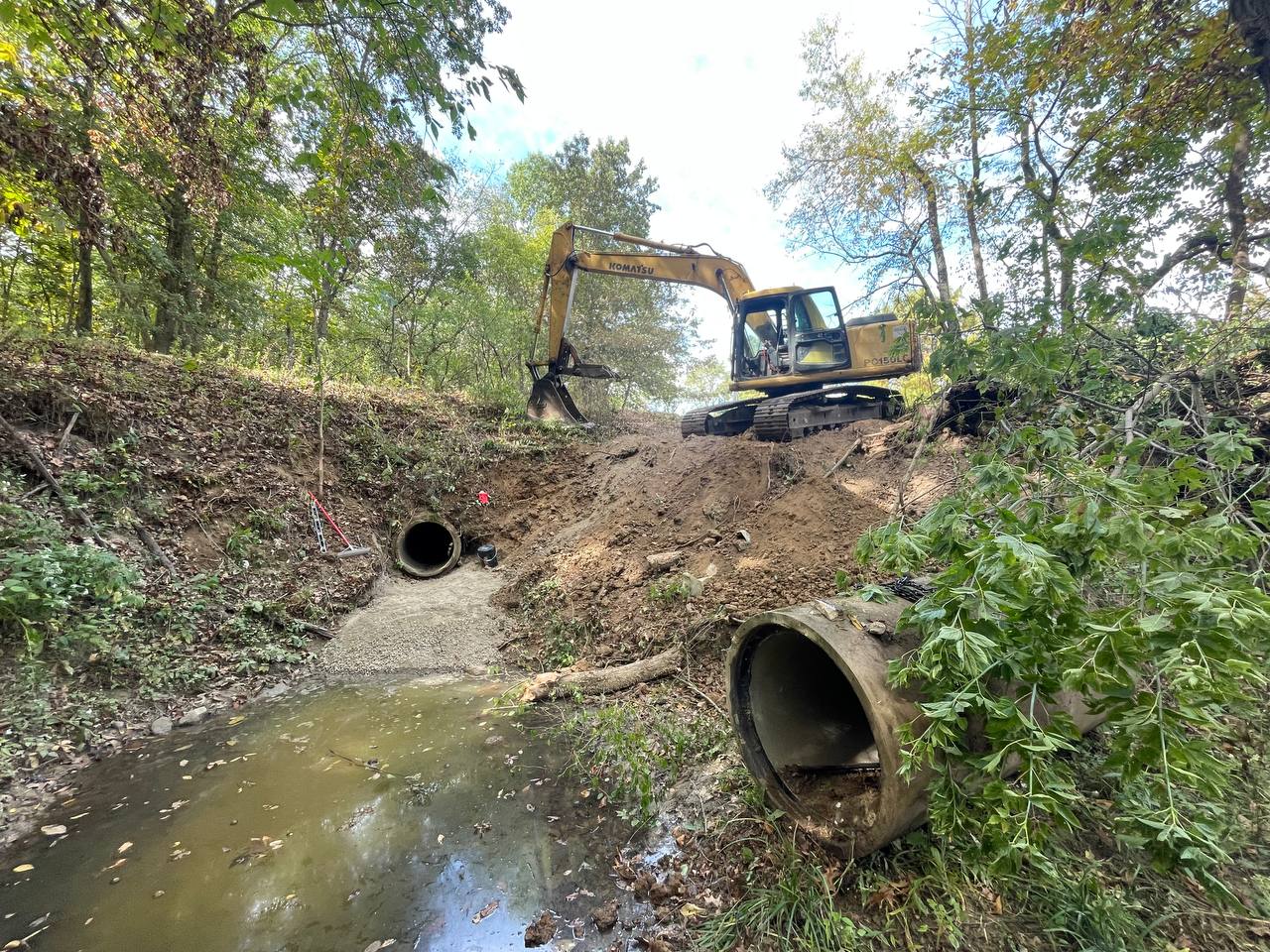
Brohez Trucking LLC installs and repairs drainage across central Illinois — surface drainage and grading, foundation and footing drains, yard drains, catch basins, downspout/sump-line tie-ins, and field tile repair. On farm ground we repair and replace broken, crushed, and collapsed field tile and run targeted drainage lines to pull wet spots dry. We dig the trench, set the pipe at grade, backfill correctly, and tie everything to a real outlet. If it's the dig itself you're pricing — a tile line, a culvert line, a septic or water line — see our trenching service in Mattoon and central Illinois.
The fundamentals are the same whether it's a 30-foot yard drain behind a house or a blown-out field tile outlet that has to be located and spliced: find where the water comes from, find where it can go, and connect them with pipe at the right grade. Skip a step and the work won't last.
If you've got standing water that won't go away, broken old tile that's bringing fields back to wet, a basement that's seeing water, or a downspout dumping next to the foundation, we can fix it. One contractor for excavation, pipe, gravel, backfill, and finish grade.
And if the water's coming from a farm pond that's leaking — a dam that seeps or a spillway washing out — that's a related earthwork fix on the same iron: see our pond dam & spillway repair.
Not sure why water keeps pooling in the same spot? Read our blog post on why water stands in your yard →
Curious what field tile drainage costs? See what drives the cost of field tile drainage →
Wondering what a yard drainage fix runs before you call? Read what drives yard drainage cost in central Illinois →
More from the blog: what time of year is best for yard drainage tile, the best time to install field tile in central Illinois, how to find a broken field tile, how a wet basement gets fixed from the outside, what size driveway culvert you need, what size drain tile you need, what actually happens on a drain tile repair, and how farm drainage tile contractors differ.
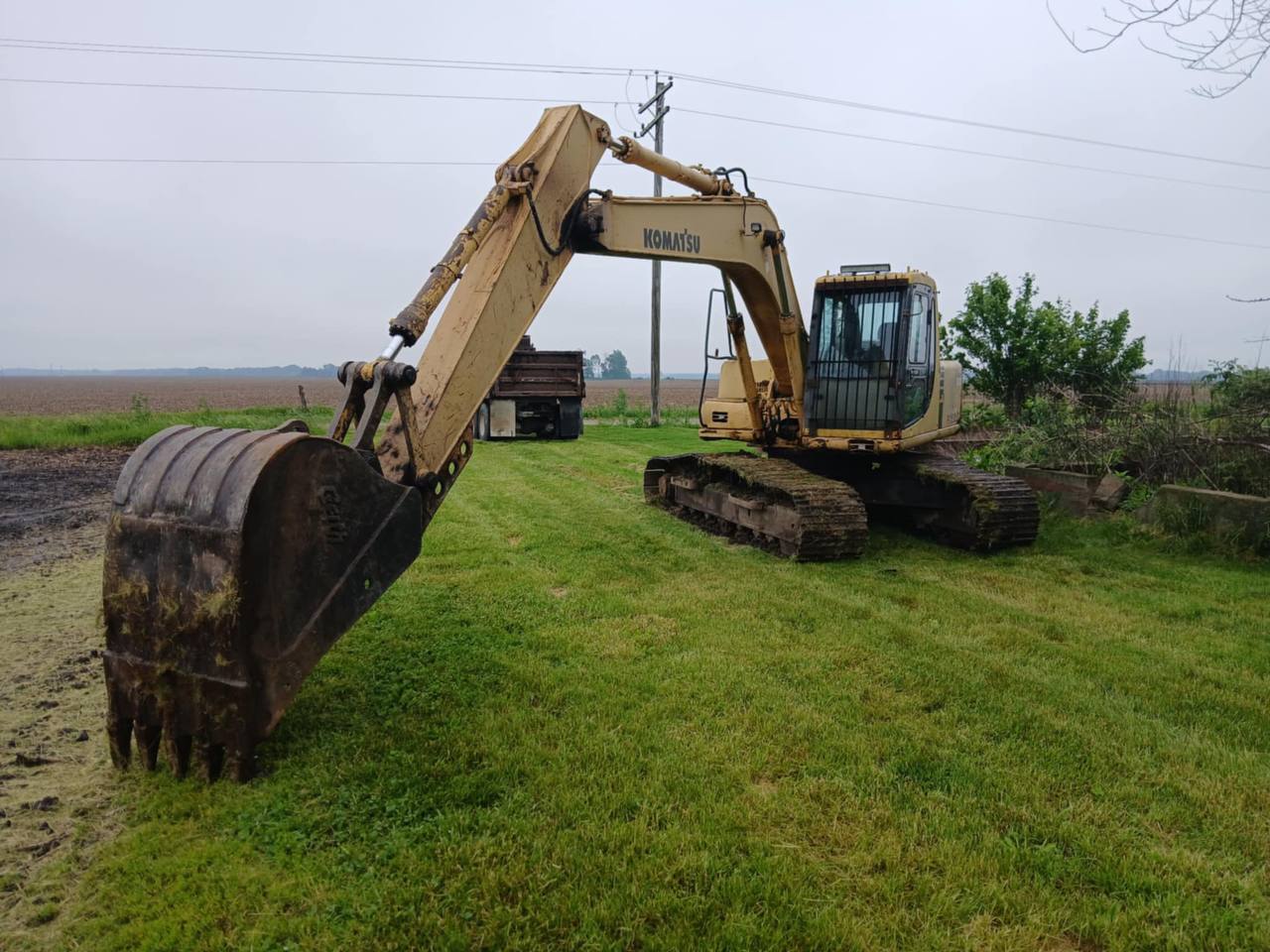
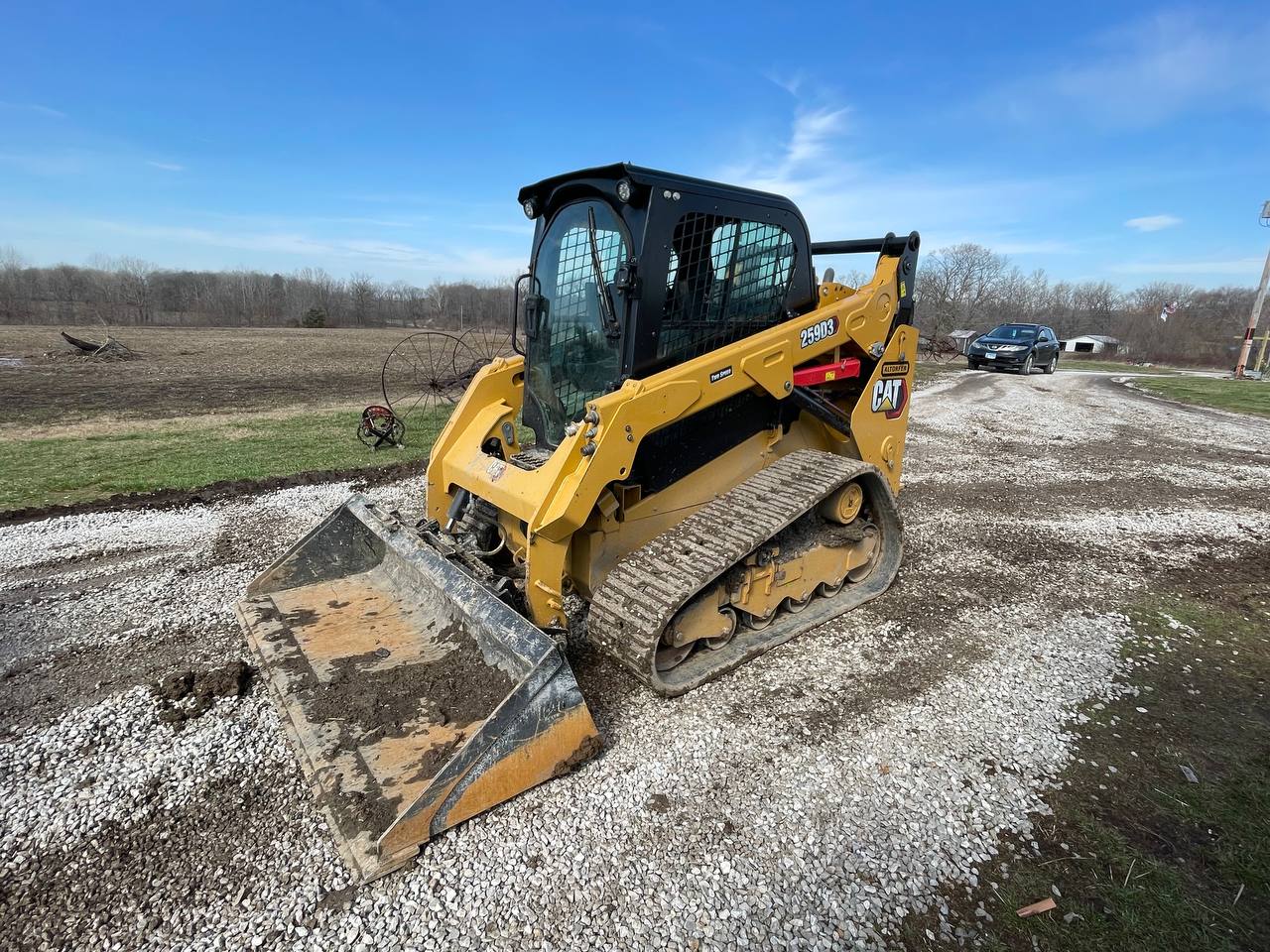
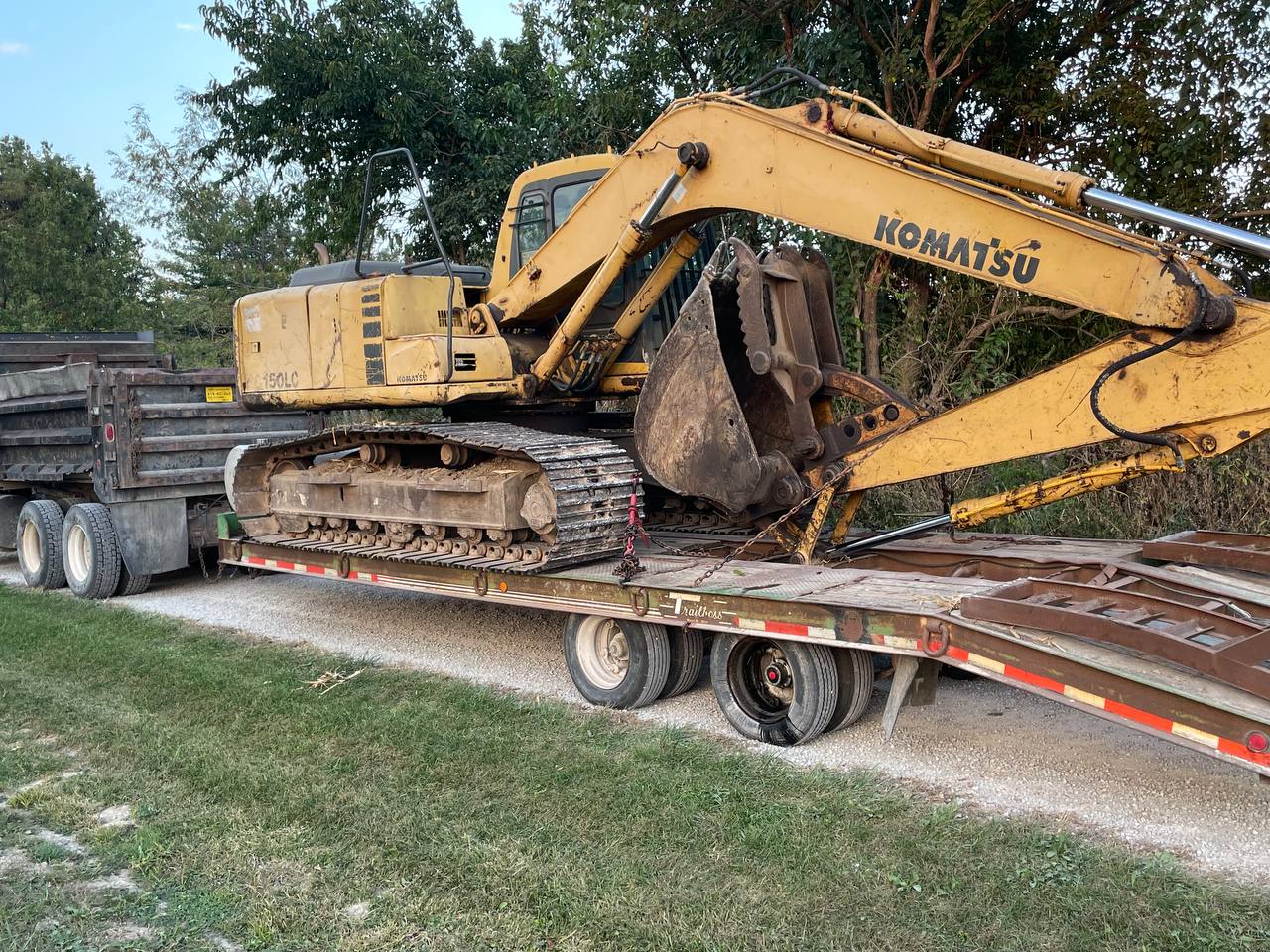
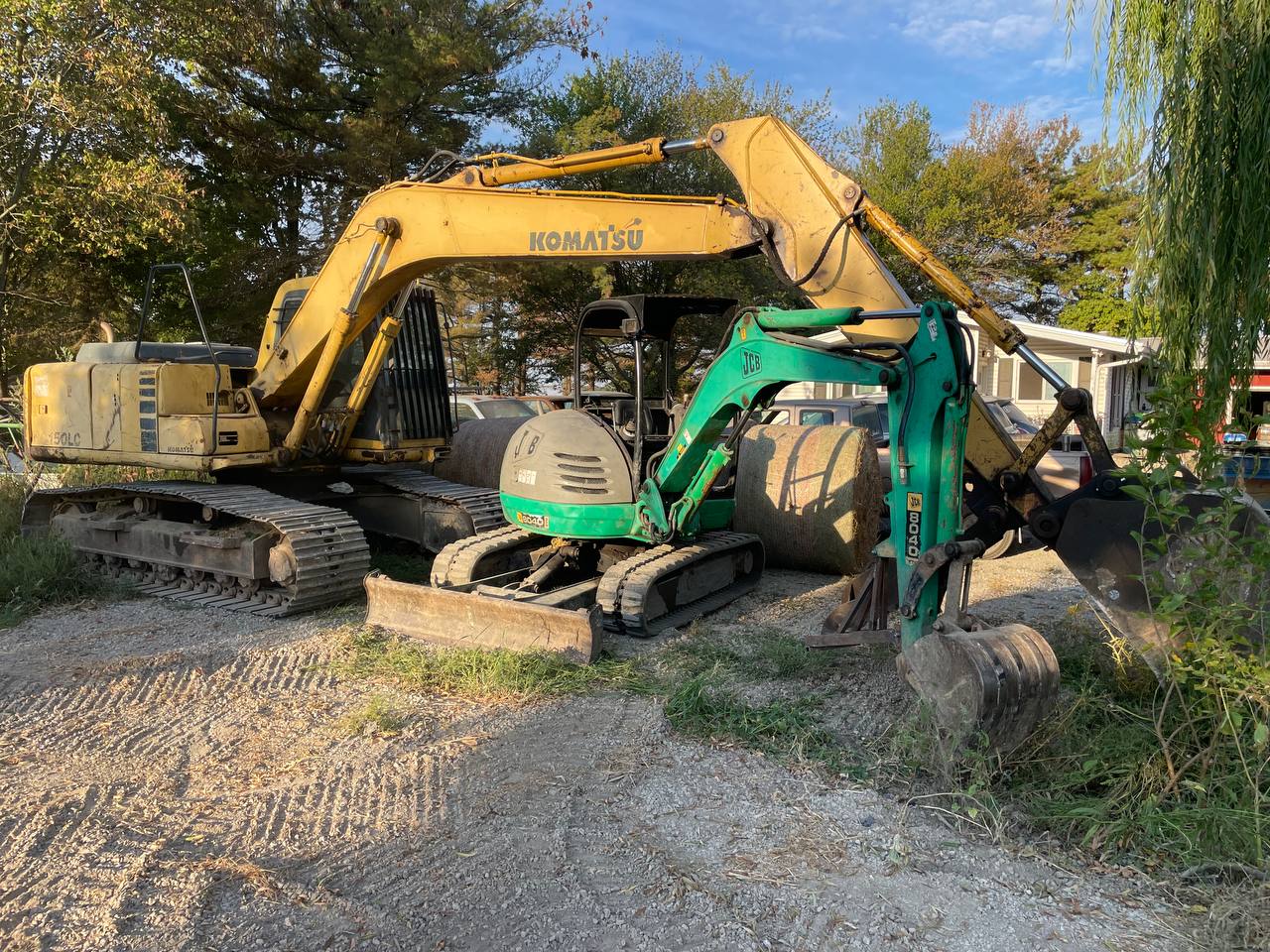
Plenty of outfits around here have been at it a long time. We counter on what age alone doesn't buy: modern iron — a Komatsu PC150LC-6 excavator and a Cat D6N dozer — run with laser grade control so the fall is right the first time. Add 18 five-star reviews and a same-week, free on-site estimate, and you've got a crew that shows up, gets the grade right, and leaves it draining.
Your drainage job is designed and run by Levi Brohez, owner-operator — the man on the machine is the man you talk to. Direct line: (217) 809-0779.
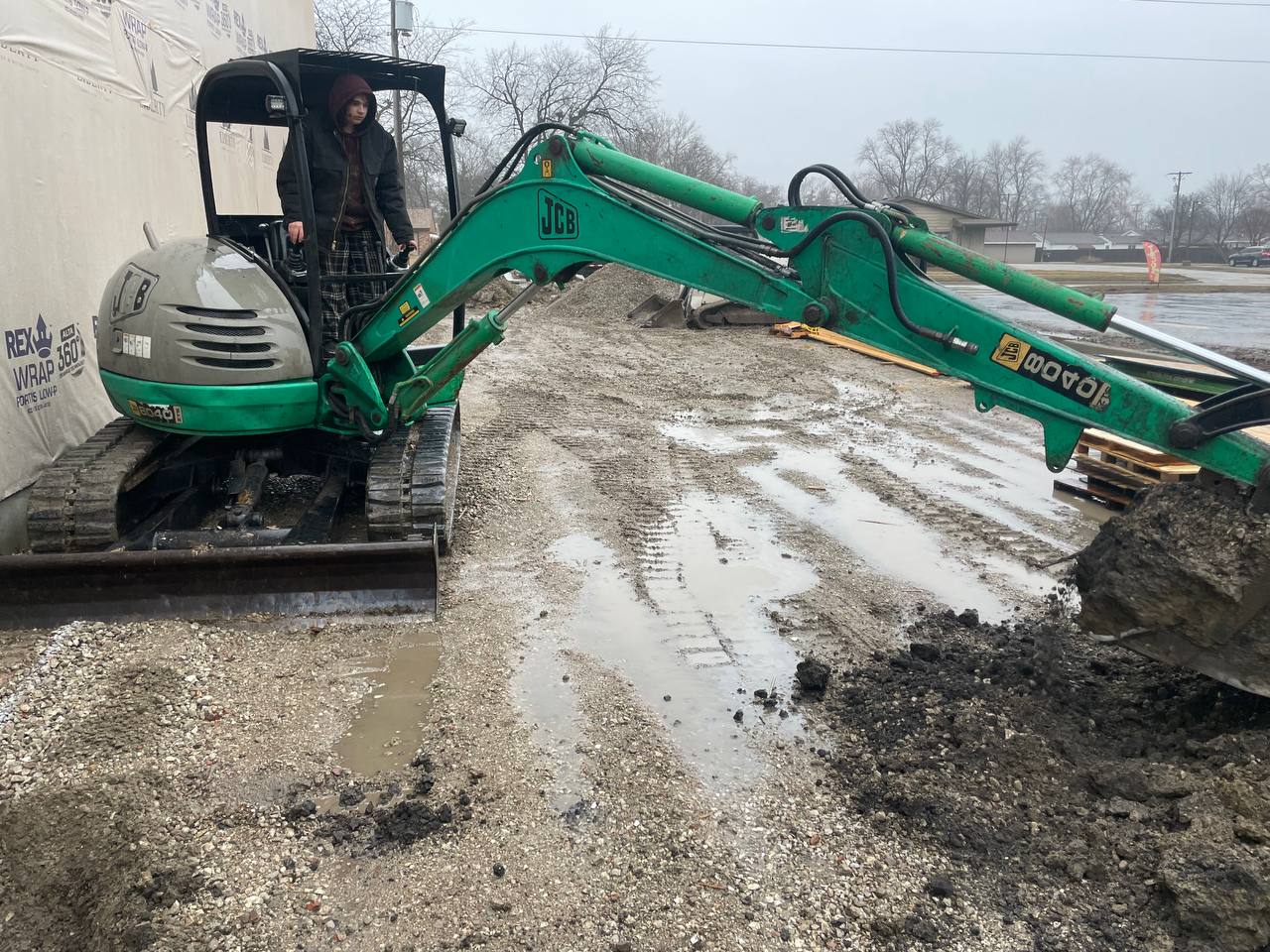
Whether it's a yard drain or a field tile repair, the steps are the same.
We come look at the site, find where the water is coming from and where it can go, and recommend the right approach — tile, yard drain, swale, or a combination. Free estimate.
Utility locates get called before any digging. We mark the trench line so you can see exactly where the work goes.
We open the trench at the right depth and set the slope so water flows downhill the whole way. No flat spots, no reverse grade.
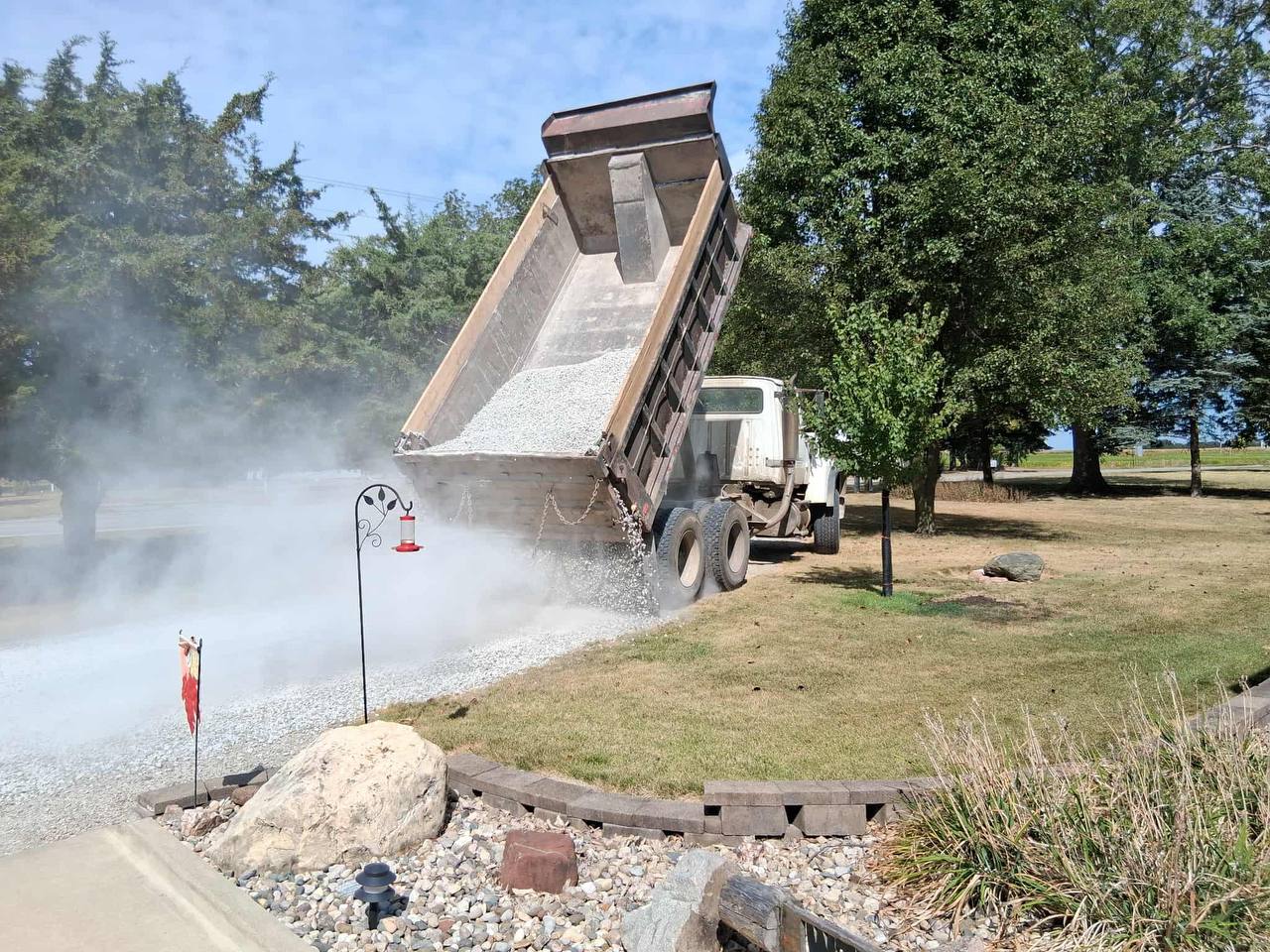
Perforated pipe (sock-wrapped where needed) goes in on a clean gravel bed and gets surrounded with washed stone so water can find it from all sides.
A drain that doesn't go anywhere isn't a drain. We tie into an existing tile main, ditch, low spot, or daylight outlet so the water actually leaves the property.
Trench backfilled in lifts, surface restored, and graded smooth. Yard work gets seeded; field work gets disced back ready for the next pass.
From a single soggy corner of the yard to locating and repairing a failed field tile run.
Standing water and soggy spots in residential yards solved with yard drains, catch basins, tile, or surface swales. Cleaned up so the lawn comes back.
Perforated pipe in a gravel trench, for foundation perimeters, retaining wall backs, and short yard runs. Full detail, cost drivers, and how we build them: French drain installation.
Broken, crushed, or collapsed tile located, dug up, spliced or replaced, and tied back to the main. More on drain tile repair.
Buried drain lines that take downspout and sump pump discharge away from the foundation to a real outlet — no more pooling against the house.
New construction or remediation perimeter footing drains to keep groundwater away from basements and crawl spaces.
Cross-tile, swales, and grade work to keep water off and out of gravel driveways and farm lanes — so they don't wash out every storm.
Blown-out outlet pipes, eroded outlet rock, and lost main connections rebuilt and protected so the whole tile system keeps draining.
Pitching yards, lots, and lanes away from buildings and low spots. Cut, fill, and final grade so water runs where you want it instead of pooling where you don't.
A lot of yard drainage problems aren't a pipe problem at all — they're a slope problem. If the ground is flat, or it tilts back toward the house, surface water has nowhere to run and it ponds in the same low spot after every rain. The fix is yard grading: reshaping the surface so it sheds water the right way instead of holding it.
We regrade yards, lots, and lanes with a Cat D6N dozer running laser grade control — cutting the high spots, filling the low ones, and feathering a positive slope away from the foundation and toward a ditch, swale, or drain inlet. On a lot of jobs, a clean regrade fixes the standing water on its own, with no tile needed, because the water never gets a chance to pond. When the ground is too flat to drain by surface alone, we pair the grading with a yard drain so the regraded surface and the buried pipe work together.
So whether your wet spot needs surface yard grading, subsurface yard drainage, or both, it's one crew and one estimate. If you're pricing the two together, that's covered in full on our drainage and grading service page — how we set fall, tie the surface to an outlet, and what grading for drainage costs to do right. Or call (217) 809-0779 and we'll walk it.
Not sure whether your standing water needs grading, drainage, or both? Read: yard grading vs. drainage — which one actually stops the standing water →
When a low spot in the field holds water after every rain — a pothole, a closed depression, a wet hole that drowns out the crop two passes wide — the named fix is a surface inlet tied into your tile. Around here they go by a few names: standpipe, surface inlet, riser inlet, blind inlet, or just "the pipe in the wet hole."
The idea is simple. A perforated or grated riser stands up in the low spot, and surface water that ponds there drops into it and runs out through tile to a real outlet instead of sitting on the ground for days. A standpipe (a vertical riser with a grate or a perforated cap) takes ponded surface water directly. A blind inlet — a buried gravel-and-fabric bed over the tile — does the same job without a pipe sticking up to dodge with the planter, which a lot of farmers prefer in the middle of a field.
Here's how Brohez installs them: we find the low spot and confirm where the tile runs or where a new lateral has to go, call locates, and dig down to the tile main or lateral. We set the inlet structure at the right elevation — low enough to actually drain the pond, high enough that it isn't constantly silting in — connect it to the tile with the proper fittings, gravel it in, and backfill and grade so the surrounding ground still sheds toward it. Done right, the wet hole drains down in hours instead of drowning out the crop. Got a spot that ponds every spring? Call (217) 809-0779 and we'll come look at it.
When the wet-hole fix ties into edge-of-field conservation earthwork — controlled drainage, waterways, or grade-stabilization structures — we build those to spec too; see our NRCS conservation practices we construct.
Real excavation work from across central Illinois — same equipment, same crew, same standards on drainage as on every job.
Depends on the job — a short yard drain is very different from a long run or a field tile repair that has to be located and dug up. Cost drivers are footage, depth, pipe size, and access. Free estimate — call (217) 809-0779.
Both move groundwater with perforated pipe in gravel. A French drain is shorter and shallower, for yards and foundations — see French drain installation. Drain tile is the bigger version, longer and deeper, common in fields — see drain tile repair.
Usually yes. Most standing-water problems come from a low spot with no outlet. We figure out where the water comes from and put in tile, a yard drain, a swale, or a sump tie-in to move it.
Almost always because the water has nowhere to go. Four things cause it around here: the ground is too flat or pitched back toward the house, so surface water can't run off; there's no outlet for it to drain to; the soil is compacted or heavy clay that won't let it soak in; or an old field tile line has broken or lost grade and quit carrying it away. We come look, figure out which one it is — usually a mix — and fix it with regrading, a yard drain, or a tile repair tied to a real outlet.
Yes. Broken, crushed, or blown-out tile located, spliced or replaced, and tied back into the main.
The trench line gets disturbed, but we backfill, grade smooth, and leave it ready for grass to come back. Big runs through field crops are timed around the season.
Yes — combining downspouts and sump discharge into a buried drain line that empties safely away from the foundation is one of the highest-value drainage upgrades for residential.
Yes — Brohez Trucking is a yard and field drainage contractor working the 60-mile radius from Mattoon: Charleston, Mattoon, Effingham, Champaign, Decatur, Sullivan, Tuscola, Shelbyville, and the towns between. We diagnose why the water stands, then fix it with grading, yard drains, or tile tied to a real outlet. Read why water stands in your yard, or call (217) 809-0779 for a free on-site estimate.
60-mile radius from Mattoon, IL — Decatur, Champaign, Effingham, Charleston, Urbana, Sullivan, Tuscola, Shelbyville, Pana, and Terre Haute.
It depends on the job — a short yard drain is very different from a long run or a field tile repair that has to be located and dug up. Cost drivers are linear footage, depth, pipe diameter, and access. Call (217) 809-0779 for a free on-site estimate.
Both move groundwater. A French drain is typically a perforated pipe in a gravel-filled trench right at the surface — used for yard drainage, foundation drains, and short runs; see French drain installation. Drainage tile is the same idea on a bigger scale — long perforated pipe runs through fields or yards, often deeper and tied to a main outlet.
Yes. Combining downspouts and sump discharge into a single buried drain line that empties safely away from the foundation is one of the highest-ROI drainage upgrades for residential properties.
Brohez Trucking LLC delivers full drainage solutions — drainage and grading, foundation drains, drainage tile, yard drains, and catch basins — across a 60-mile radius from Mattoon, IL — into Coles, Cumberland, Douglas, Shelby, Moultrie, Effingham, Edgar, Clark, Champaign, and Macon counties, plus over the line into Vigo County, Indiana. Pick your town below for local details, or call (217) 809-0779 for a free estimate anywhere in the radius.
Call us and we'll come look. No pressure, no obligation — just a straight number.
(217) 809-0779 📞 Call For Free Estimate Send A MessageOpen daily, 7am–7pm · Mattoon, IL · 60-mile service radius