A drain tile repair is a targeted dig, not a field-wide project. We narrow the failure down from the surface first, open the ground right at it, and either splice in a new section or replace the run back to solid pipe. Most single-break repairs are a half day to a day on the machine. Price rides on depth, access, how much line has to come out, and whether the outlet needs rebuilt too. Broken lines, crushed pipe, collapsed clay, blown-out outlets and lost grade — that's our work. Full-field pattern systems are a tile-plow trade and we'll point you to one. Free on-site look: (217) 809-0779.
Most of what's written about drain tile repair stops at "call a contractor." That's not much help when you're trying to decide whether to spend money on it this fall. So here's the job from our side of it: what we actually do when we pull in, how much of your ground gets disturbed, and the handful of things that decide whether the bill is small or not.
This is the companion to our drain tile repair service page — that one covers what we offer and where. This one covers what the day looks like.
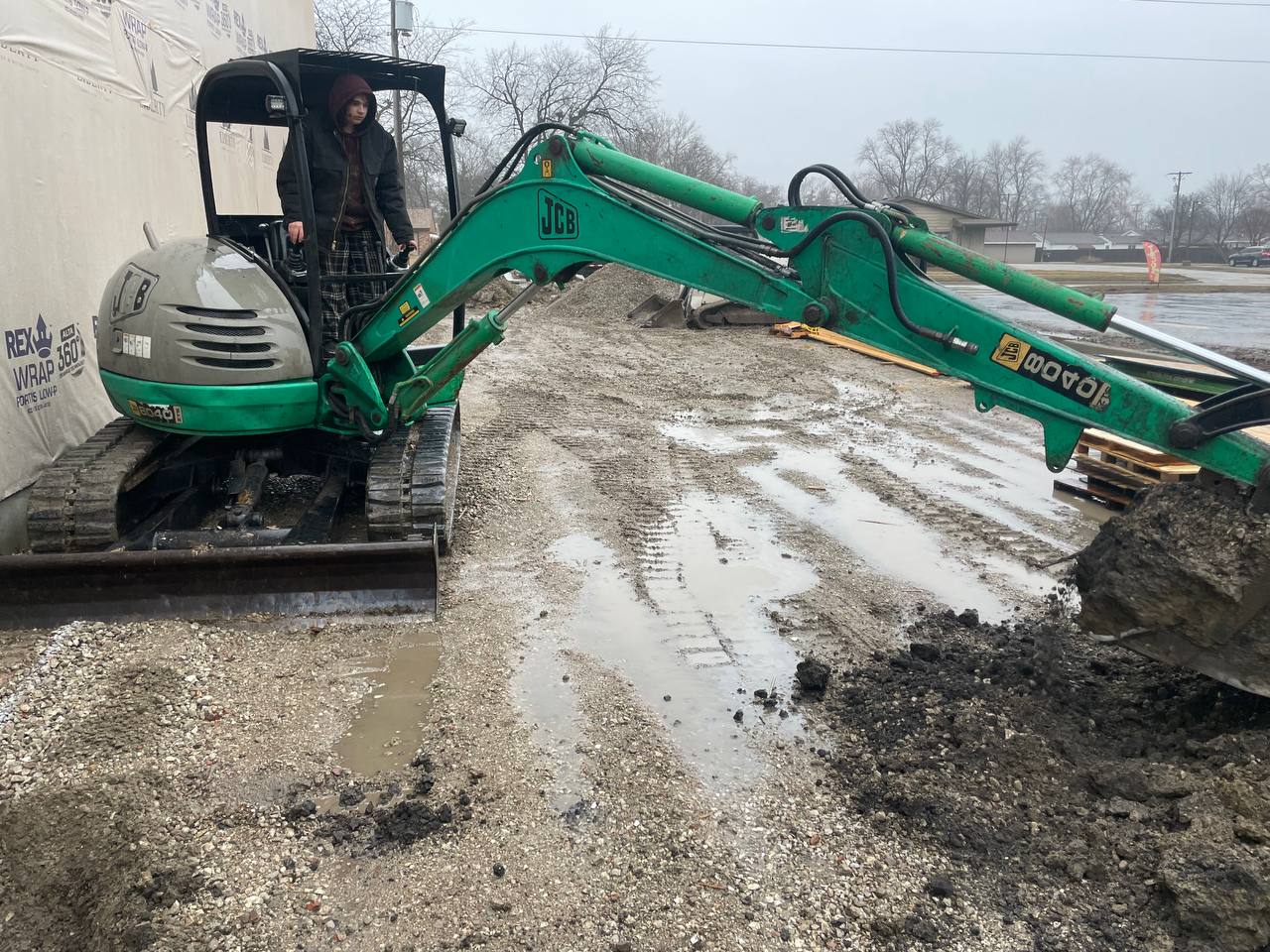
Step One Happens Before The Machine Moves
The most expensive way to fix a tile is to go looking for it with a bucket. So the first thing we do is read the ground. A failed line almost always tells on itself: a wet streak running in a suspiciously straight line, greener or ranker growth tracing the run, a soft slumped spot or a blowhole over the pipe, an outlet that used to run after every rain and now sits dry — or runs muddy, which means the line is taking in dirt somewhere upstream.
From a known point — usually the outlet — we can follow the run and narrow the failure to a section instead of a field. We walk that out with you before anybody quotes anything. The full diagnostic version of this is in how to find a broken or blown field tile.
If the surface won't give it up, the fallback is to open the line at a known-good point and work toward the failure. That costs more, and it's worth saying out loud rather than finding out on the invoice.
Splice Or Replace The Run — How We Decide
Once the ground is open, the pipe tells us which job this is.
- Splice. One clean break, sound pipe either side, grade still where it belongs. We cut back to good pipe, set a new section, couple it, and it's done. This is the cheap outcome and it's the common one on a single mechanical break — a crossing, a deep rip, an equipment load.
- Replace the run. Old clay tile that's crumbling in your hand, pipe that's collapsed in more than one place, or a line that's lost its fall and holds water. Patching one hole in a line like that buys you a season. We pull the bad run and set new pipe back to something solid.
- Rebuild the outlet. A surprising share of "the tile quit" calls are really an outlet that washed out, got crushed by a mower, or silted shut. The line upstream is fine. That's the cheapest fix on this list and the first thing we check.
We'll tell you which one you've got standing at the hole, before it turns into a bigger invoice. If the honest answer is "this run is fine, your problem is fifty feet the other way," that's what you'll hear.
Grade Is The Part That Gets Skipped
New pipe set at the wrong fall is a repair that fails again. Tile works on gravity and not much of it — a line can be laid "downhill by eye" and still hold water. When we reset a section we set it to the grade of the line it's tying into, bed it so it doesn't sag once the ground settles, and backfill in a way that doesn't leave a soft channel for surface water to run down and wash sediment back in.
That's the difference between a repair and a patch, and it's most of why a tile job isn't a rental-machine afternoon.
What Moves The Price
There's no honest flat rate on a tile repair, but the variables are short and you can size up your own job against them:
- Depth. A line three feet down is a different dig than one at six. Deeper means more spoil, wider hole, more time.
- How much line comes out. A single splice versus a hundred feet of replaced run.
- Access. Can we get the excavator to it, or is it behind a fence row, in a yard with a septic field, or across ground too soft to travel?
- What's around it. Other utilities, a waterway crossing, a road ditch, a lane we have to keep open.
- Restoration. A crop field gets leveled and left. A lawn gets it put back the way we found it, which is more work.
- Whether the outlet needs rebuilt while we're there — usually worth doing in the same trip.
We don't post prices, because a number without a site walk is a guess dressed up as a quote. What we will do is come look for free and tell you the real number before you commit. The cost drivers on the wider drainage side are broken down in what drives field tile drainage cost.
What We Do And What We Don't
Worth being straight about, because it saves everybody a phone call. We repair and replace failed tile: broken, crushed, and collapsed lines, bad outlets, risers, lost grade — plus targeted single drainage lines trenched in with the excavator where a field or a yard needs one line to a good outlet.
We do not run a tile plow, so full-field pattern systems aren't our trade. If what you need is a whole field systematically tiled on spacing, that's a tiling outfit with a plow and we'll say so rather than take the job sideways. Which trade you're actually looking for is worth two minutes: farm drainage tile contractors — who does what. The drain tile repair and drainage pages spell out the same limits.
When To Do It
Dry ground repairs better than wet ground. Late summer through fall is the sweet spot around here — the ground is firm enough to travel and backfill compacts instead of smearing. Spring is workable but you're fighting saturation, and a machine on soft ground does damage that outlasts the repair.
The argument for not waiting: a small break gets bigger. Water moving through a hole in a line carries dirt with it, and a hole that took in sediment last year is a plugged run this year. A splice becomes a replaced run because it sat.
More on the seasonal side in timing drainage tile work through the year and when saturated ground means waiting.