Recent Work

Basin & Earthwork
Bulk earthwork and grade control across central Illinois.
Dry detention and wet retention basins for commercial, subdivision, municipal, and institutional sites — excavation, embankment, sediment forebay, outlet control structure, emergency spillway, SWPPP erosion control, and stabilization. Owner-operated earthwork sub out of Mattoon, IL, working to your civil engineer's contours across a 60-mile radius.
📞 Call (217) 809-0779 Free EstimateBrohez Trucking builds stormwater detention and retention basins to the engineered plan — excavation and side-slope shaping, embankment in compacted lifts, sediment forebay, outlet control structure and riser set and backfilled with anti-seep collars, emergency spillway cut and armored, SWPPP/NPDES erosion control, and final seeding and stabilization. We self-perform the earthwork scope; the design, the calculations, and the as-built certification stay with your engineer. Mattoon, IL — 60-mile radius. Free on-site estimate: (217) 809-0779.
A detention basin holds a storm back and lets it out slowly through a restricted outlet. Getting one to work is an earthwork problem: the bottom has to drain, the embankment has to be built in compacted lifts, and the outlet structure and its barrel pipe have to go in at the plan elevation with the backfill hand-compacted around them. That's the scope we build.
Almost every commercial, subdivision, and institutional site built in Illinois has to detain its own stormwater. The ordinance sets a release rate, the civil engineer sizes the basin and draws the contours, and then somebody has to go build the thing. That last part is us.
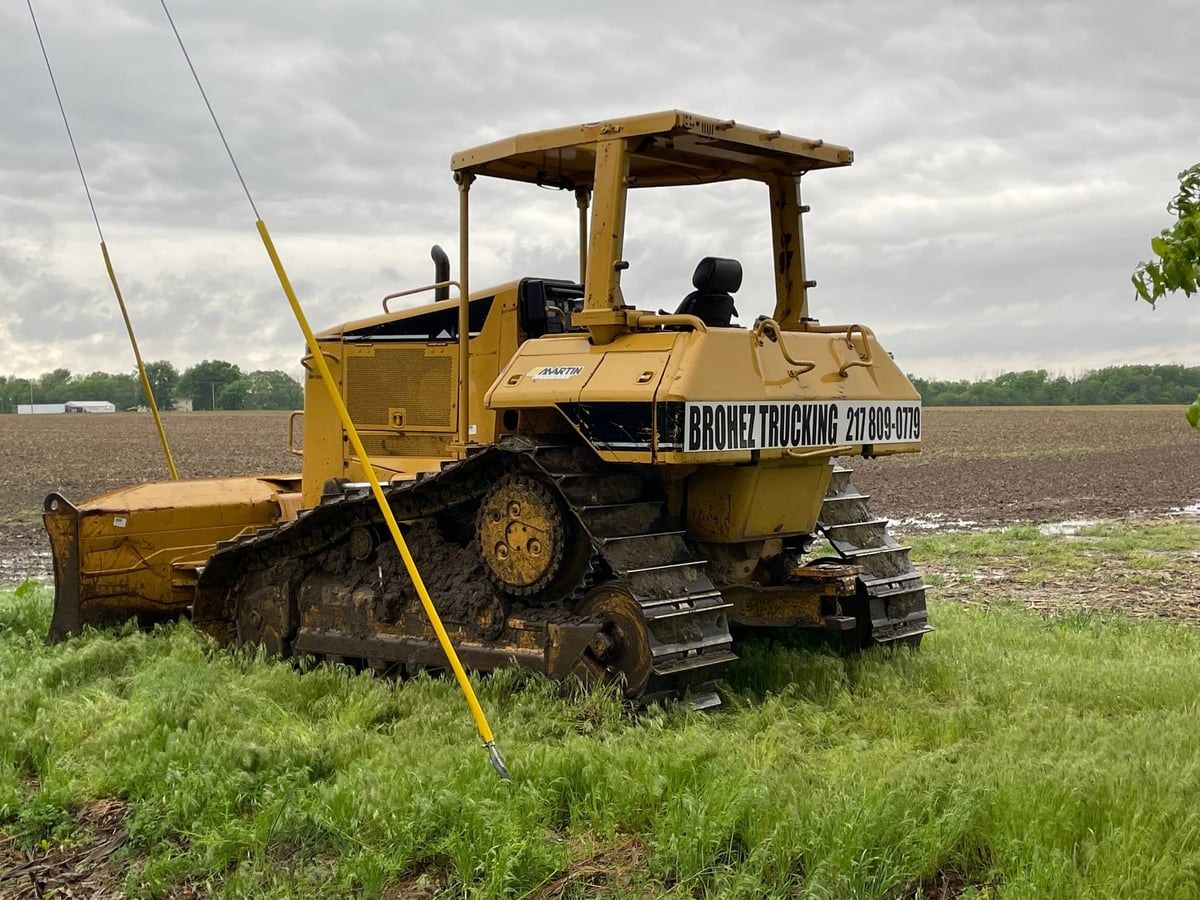
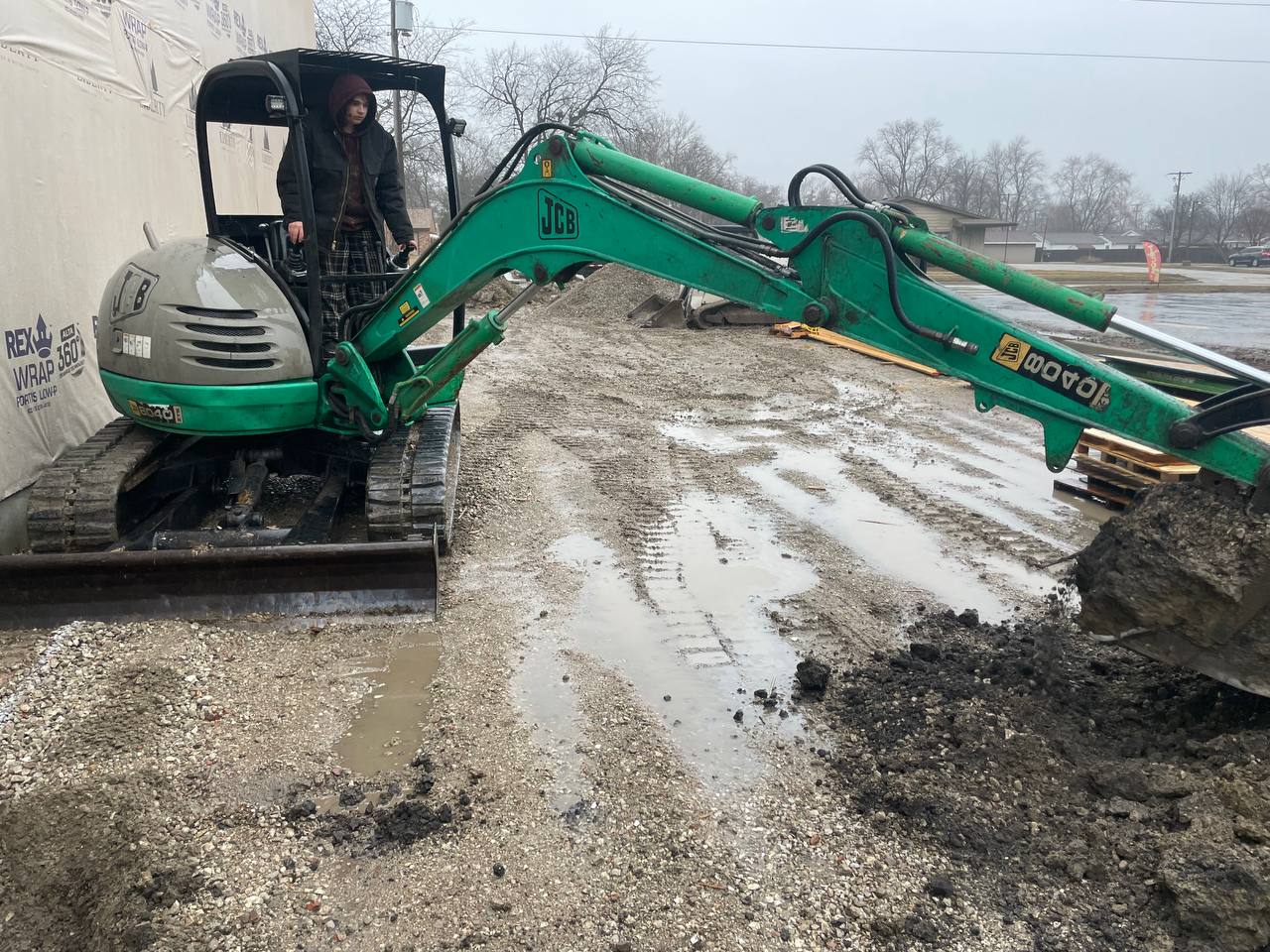
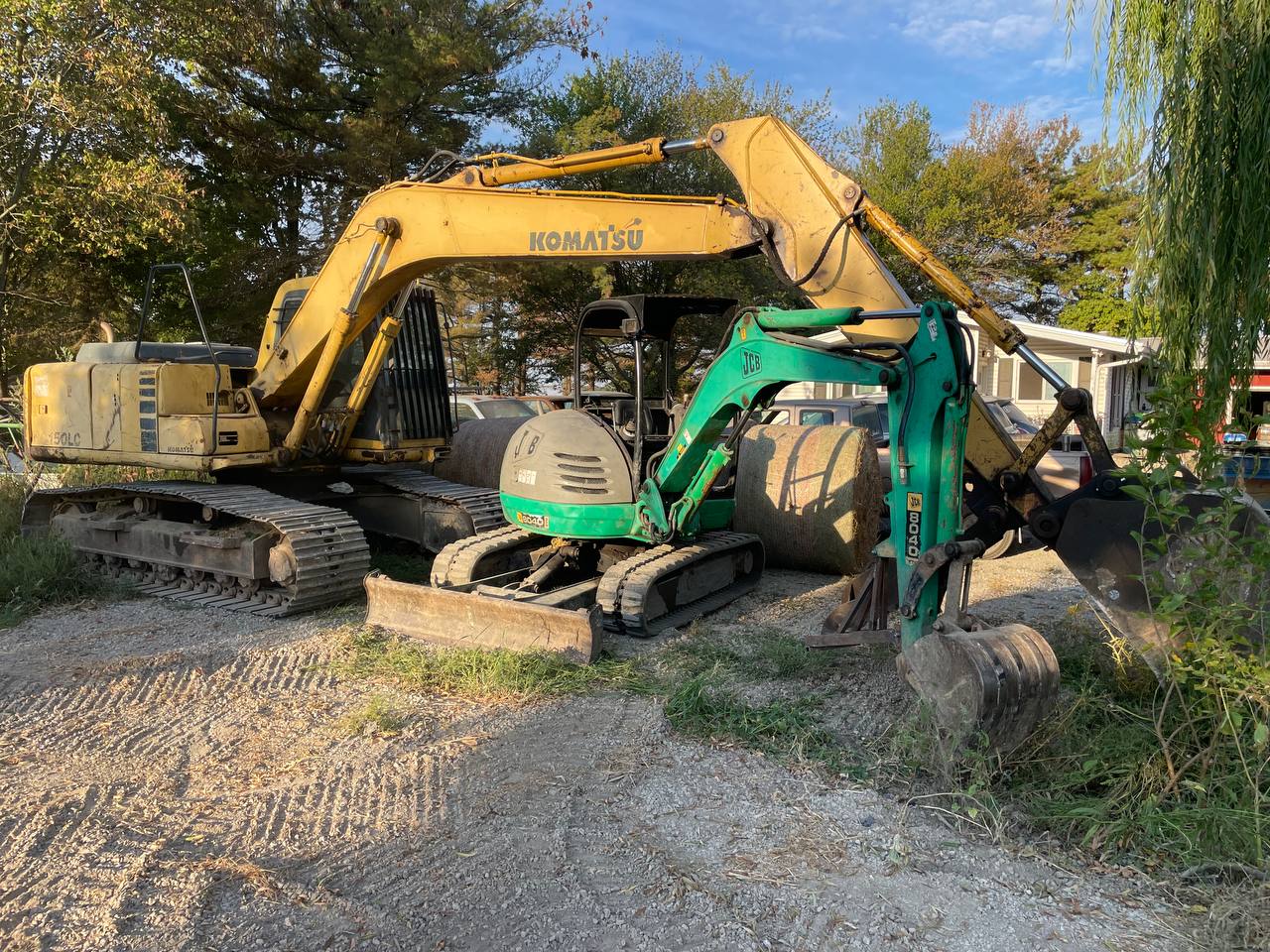
Brohez Trucking LLC is an owner-operated excavation and earthwork outfit out of Mattoon. We build dry detention basins and wet retention basins to the grading and stormwater sheets — mass excavation to the design bottom, side slopes cut to the plan ratio, embankment keyed in and built up in compacted lifts, sediment forebay and low-flow channel shaped in, outlet control structure and riser set to elevation with the barrel pipe bedded to line and grade and anti-seep collars where the detail calls for them, emergency spillway cut to its design crest and armored, and the whole thing finish-graded, topsoiled, seeded, and matted. We run a Komatsu PC150LC-6 excavator, a Cat D6N dozer with laser grade, and our own tandem dump trucks, so we can dig, shape, and haul the spoil on one project without renting in iron or stacking up subs.
There are plenty of firms in Illinois that will mow and spray a finished basin. Far fewer downstate contractors will actually build one. If you're a GC, a developer, or a civil engineer looking for a local earthwork contractor to price a stormwater basin scope anywhere between Decatur, Champaign, Effingham, and Charleston, that's the gap we fill. Call (217) 809-0779 and ask for Levi — the man on the machine is the man you'll talk to.
A note on scope: we're an earthwork and excavation contractor, and we speak to what our iron and crew can do — excavation, embankment, structure setting and backfill, grading to the engineered contours, erosion control, and stabilization. We do not design basins, run the hydrology, stamp drawings, or perform surveying or as-built certification; that work belongs to your civil engineer and surveyor. Where a job needs precast supply, a licensed utility tie-in, paving, or specialty work, we say so and coordinate rather than claim credentials we don't hold.
A wet basin is the one most people call a retention pond — it holds a permanent pool between storms instead of drying out. Which one your engineer specs comes down to the ordinance, the available head at the outlet, the soils, and how much land the site can give up. We build either, and a commercial or subdivision retention pond gets built the same way a farm pond does: clay-tight subgrade, embankment keyed in, and outletted to the plan.
Empty between storms. It fills during the rain, meters the water out through a restricted low-flow orifice, and drains back down within a day or two so the bottom stays mowable.
Holds a permanent pool at the outlet's normal water elevation. Only the volume above that pool is live storage — the pool itself does the water-quality work by settling solids out.
Building a farm or recreational pond instead of an engineered stormwater basin? That's a different animal — see our pond construction page. We build runoff-fed, clay-lined ponds; we don't dig into the water table.
One local, owner-operated crew for the dirt, the structures, and the erosion control — from the first silt fence to the final seeding.
Topsoil stripped and stockpiled, the basin cut to the design bottom elevation, and the spoil balanced on site or hauled off with our own trucks. Volume is the number that drives a basin bid — we take it off the plan before we price it.
Where the basin is bermed, the embankment gets keyed into the existing ground and built up in compacted lifts of suitable material — not end-dumped and pushed. That's the difference between a berm that holds grade and one that settles and seeps.
Riser, outlet box, or control structure set on its base at the plan elevation; barrel pipe bedded to line and grade; anti-seep collars or a drainage diaphragm where the detail calls for them; backfill placed in thin lifts and compacted around the pipe by hand equipment.
The overflow route cut to its design crest elevation and width, shaped, armored with rock or stabilized and matted per the plan, so the storm that beats the design event goes over the spillway instead of over the embankment.
Forebay excavated and shaped at the inlet so solids drop out in one accessible place, with the trickle or low-flow channel carried across the bottom to the outlet so a dry basin actually goes dry.
Side slopes cut to the plan ratio, safety shelf and benches shaped, and finish grade shot to the contours on the drawing — with the D6N running laser grade — so the volume the engineer sized is the volume that's actually in the ground.
Silt fence, stabilized construction entrance, inlet protection, rock check dams, and sediment traps installed and maintained to the SWPPP so the site keeps its NPDES coverage through construction.
Storm inlet and outfall piping trenched and laid to line and grade, catch basins and structures set and tied in, end sections and rip-rap aprons placed so the discharge doesn't cut a gully into whatever is downstream.
Topsoil respread, permanent seeding, erosion blanket and matting on the slopes and spillway, and the disturbed area carried to final stabilization so the basin can be turned over and the permit closed out.
Silted-in basins cleaned back out to the design bottom with machines when it's dry enough to work, gullied slopes rebuilt, plugged or crushed outlet piping repaired or replaced, spillways re-armored, and the basin reseeded to the original plan.
Every site is a little different. The sequence doesn't change much.
Email or text the grading plan, the stormwater management sheet, and the outlet structure detail. We take off the cut and fill, look at where the spoil goes, and price the earthwork scope.
We walk the site with your superintendent or engineer — access, haul route, soils, the outfall, and what the basin has to do during construction — and give you a straight number on the earthwork.
Perimeter silt fence, stabilized construction entrance, and inlet protection go in per the SWPPP, and utility locates are called, before the first bucket of dirt moves.
Topsoil stripped and stockpiled, the basin excavated to the design bottom, slopes cut to ratio, and the embankment keyed in and built up in compacted lifts. Spoil balanced on site or hauled off.
Outlet control structure and riser set to elevation, barrel and outfall pipe bedded to line and grade, anti-seep collars placed, backfill compacted around the pipe, and the emergency spillway cut and armored.
Finish grade shot to the engineered contours, forebay and low-flow channel dressed, topsoil respread, seed and matting placed, and the basin walked against the plan with you before we pull off — so your surveyor's as-built checks out.
General contractors subbing out the sitework on a commercial or institutional build, where detention is one line on a bigger earthwork package. Site and subdivision developers who need the basin in early because it doubles as the construction sediment basin. Civil engineering firms looking for a local earthwork contractor who can read a stormwater sheet and price a scope without three rounds of RFIs. Municipalities and townships with a basin that's silted in, gullied out, or has an outlet that quit working. Institutional and industrial owners — schools, churches, light industrial — carrying a basin they're responsible for maintaining.
We do commercial and non-union work, we're fully insured with the certificate in your office before we mobilize, and we're 60 miles or less from most of the sites in this corridor. Put us on your bid list — send the plans and we'll price the earthwork.
Bulk earthwork and grade control across central Illinois.
If your site is within about 60 miles of Mattoon, yes — that covers Charleston, Effingham, Decatur, Champaign, Urbana, Shelbyville, Sullivan, Tuscola, Paris and across into Terre Haute. Folks search it as retention ponds near me, retention pond contractors near me, or a detention basin contractor; it's the same stormwater basin earthwork, and we self-perform it to the engineered plan. Call (217) 809-0779.
Yes. A retention pond is the wet version of a stormwater basin — it holds a permanent pool between storms rather than drying out between them, and it gets built much the way a farm pond does: shaped to the engineered contours, subgrade and slopes worked tight so the permanent pool holds, and outletted through a structure sized by the plan. We build new retention ponds and detention basins for commercial sites, subdivisions, municipalities and industrial lots, bring silted-in ones back to their design volume, and rebuild failing outlet structures. Bring us the plan sheet and we will price the earthwork off it.
Yes — that's the scope we self-perform. Give us the grading plan, the stormwater management sheet, and the outlet structure detail, and we build it: strip and excavate to the design bottom, cut the side slopes to the plan ratio, build the embankment in compacted lifts, shape the forebay and low-flow channel, set and backfill the outlet control structure, cut and armor the emergency spillway, and finish grade to the engineered contours. The design, the hydrology, and the certification stay with your civil engineer. We're the earthwork contractor who builds what they drew.
A dry detention basin holds nothing between storms. It fills during a rain, meters the water out through a restricted outlet, and drains down to an empty, mowable bottom in a day or two — that's why the low-flow channel and the bottom grade matter so much. A wet retention basin, or wet pond, holds a permanent pool at the outlet's normal water elevation and only the volume above that pool is live storage. Which one you get is the engineer's call, driven by the ordinance, the available head, the soils, and how much land the site can give up. We build either one; a wet pond just needs tight subgrade and slope work so the permanent pool holds.
Yes. Setting the outlet control structure is the part of a basin that has the least tolerance for being close enough. The riser or box goes on its base at the plan elevation, the barrel pipe is bedded to line and grade, anti-seep collars or a drainage diaphragm go on where the detail calls for them, and the backfill around the pipe and structure is placed in thin lifts and compacted by hand equipment — that pipe trench through the embankment is exactly where a basin fails if it's rushed. Where a job calls for a precast supplier, a licensed tie-in, or specialty work, we say so and coordinate.
Yes. Any site disturbing an acre or more needs NPDES permit coverage and a SWPPP, and the controls have to actually get built and maintained. We install and maintain them to the plan — silt fence, stabilized construction entrance, inlet protection, rock check dams, sediment forebay and traps, and seeding, matting, and blanket for final stabilization. On a lot of sites the detention basin gets built first and serves as the construction sediment basin, then gets cleaned back out to the design bottom and stabilized at the end. More on that scope on our solar & utility-scale site work page.
No — and we'll say that plainly rather than oversell. We are an earthwork and excavation contractor. Hydrology, basin sizing, the stormwater report, the structure design, the record survey, and the engineer's as-built certification belong to your civil engineer and surveyor. What we do is build to their plan, hold the grades, and walk the finished basin against the drawings with you so their as-built checks out the first time.
General contractors subbing out the sitework, site developers and subdivision developers, civil engineering firms looking for a local earthwork contractor to price a stormwater scope, municipalities and townships, and institutional owners — schools, churches, and light industrial. Commercial and non-union work. We're owner-operated out of Mattoon, fully insured, and a certificate of insurance is in your office before we mobilize. See our full commercial & institutional site development scope.
Yes. Older basins silt in, lose their design volume, gully out on the side slopes, hold water where they shouldn't because the bottom has gone flat, or have an outlet that's plugged, crushed, or undermined. We clean the basin back out to the design bottom with machines when it's dry enough to work, reshape the slopes and the low-flow channel, rebuild or re-armor the emergency spillway, repair or replace the outlet piping and structure, and reseed. If a municipality has cited a basin for maintenance, bring us the original plan and we'll build it back to it.
It depends on the volume of cut, whether the spoil balances on site or has to be hauled off, the embankment and compaction requirements, the outlet structure and piping, the spillway armoring, and how much erosion control and stabilization the plan calls for. Send the grading plan and the stormwater sheet and we'll price the earthwork scope. Free on-site estimate — call (217) 809-0779.
60-mile radius from Mattoon, IL — including Coles, Cumberland, Effingham, Douglas, Edgar, Clark, Shelby, Moultrie, Macon, and Champaign counties, and towns like Decatur, Champaign, Urbana, Effingham, Charleston, Sullivan, Tuscola, Shelbyville, Pana, and Paris.
Brohez Trucking LLC builds stormwater detention and retention basins — excavation, embankment, forebay, outlet structures, spillways, erosion control, and stabilization — across a 60-mile radius from Mattoon, IL, into Coles, Cumberland, Effingham, Douglas, Edgar, Clark, Shelby, Moultrie, Macon, and Champaign counties. Commercial and non-union work. If you're searching for retention pond contractors near me, retention ponds near me, or detention pond construction near me anywhere in that radius, this is the crew that builds them. Pick your town below for local details, or call (217) 809-0779 for a free estimate anywhere in the radius.
We're a small owner-operated outfit and reviews are how the next neighbor finds us. If you mention the basin work and the town you're in, that's what helps somebody nearby searching for the same job. Whatever you write is up to you — honest feedback either way.
Send the grading plan and the stormwater sheet, or call and we'll come walk the site. No pressure, no obligation — just a straight number on the earthwork from a local crew that builds it to the plan.
(217) 809-0779 📞 Call For Free Estimate Send A MessageOpen Monday–Saturday, 7am–7pm · Mattoon, IL · 60-mile service radius