Recent Work

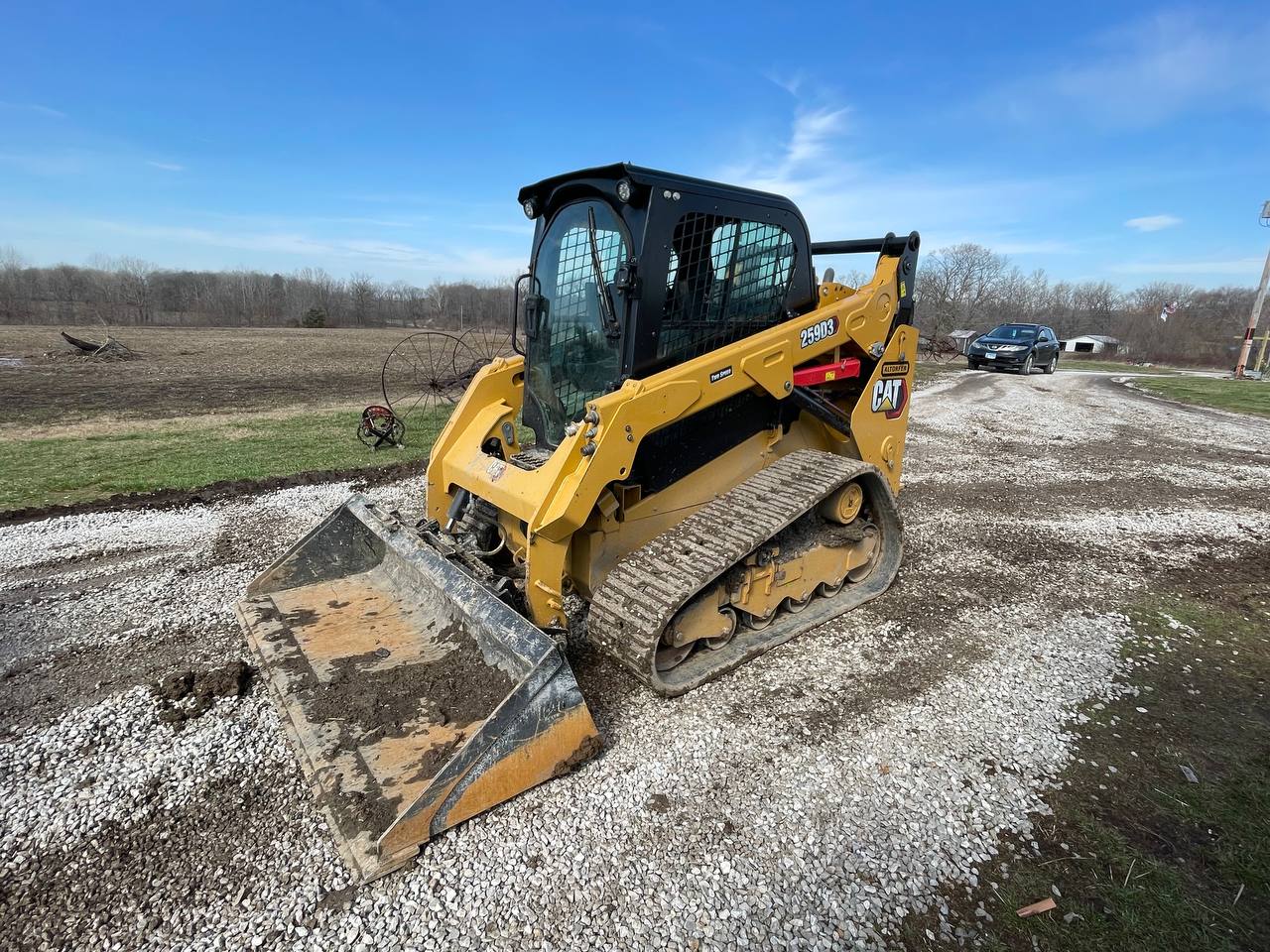
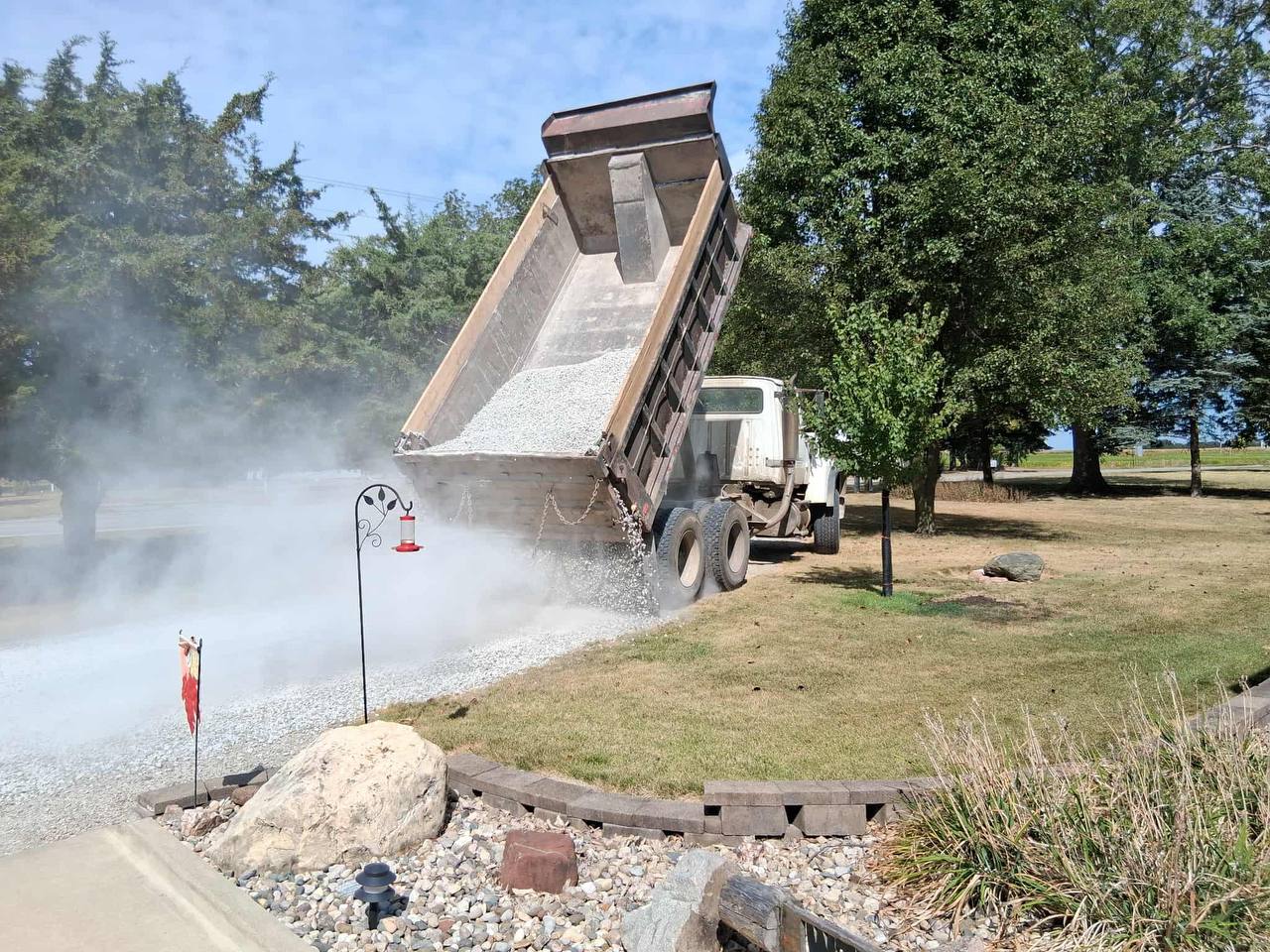
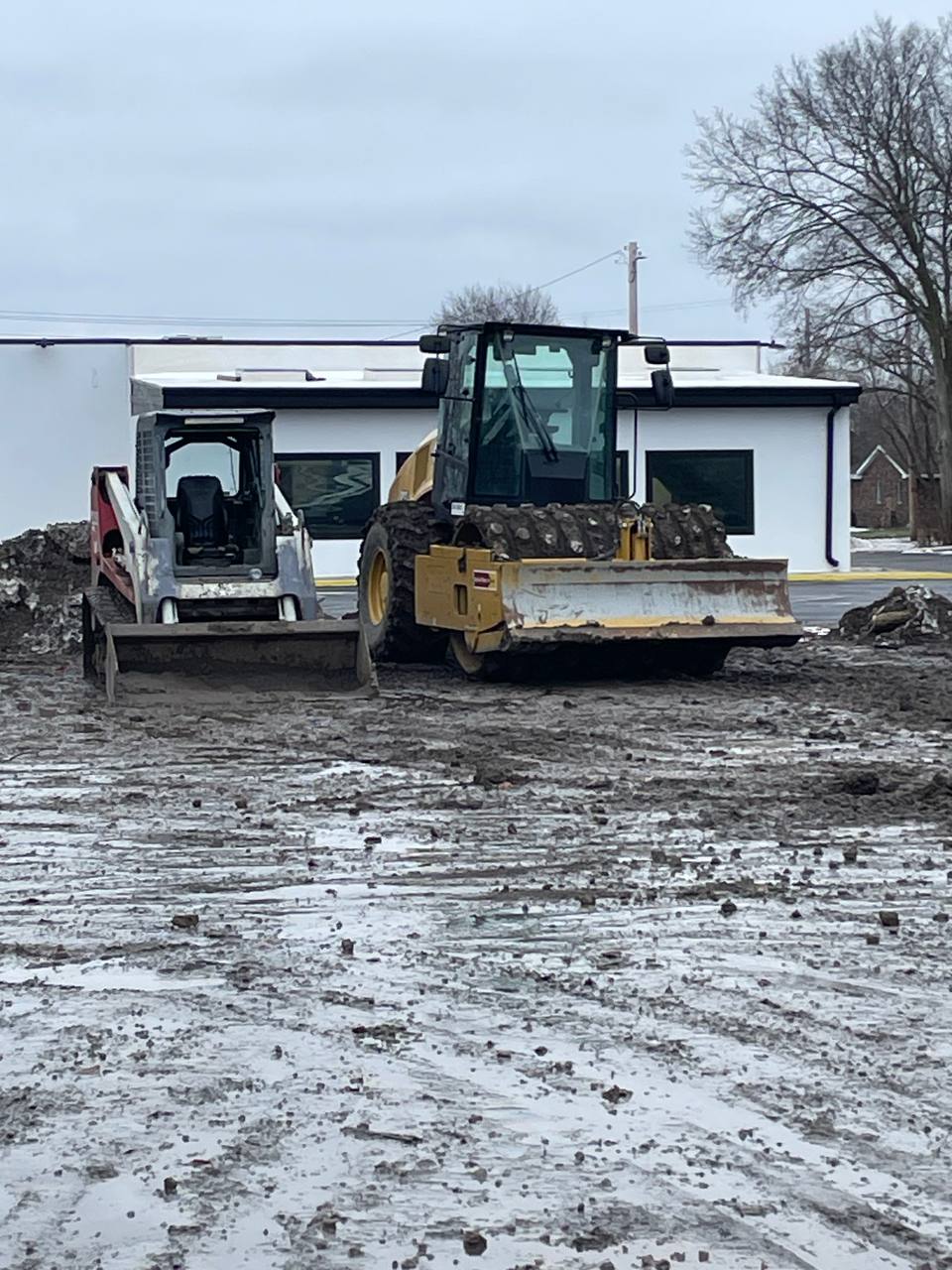
Fill, Lifts & Finish Grade
The machines and the method that go into a pool fill-in — fill placed in lifts, compacted, then graded off and left ready to seed.
Drained legally, bottom punched so it drains, walls broken down below grade, engineered fill compacted in lifts, yard graded back to match the lawn. Mattoon, IL — serving a 60-mile radius.
📞 Call (217) 809-0779 Free EstimateThe owner answers — same-day callback.
Call or text and you get Levi, the man running the machine. Not a call center, not a lead broker passing your number around. Reach out during the workday and you hear back the same day.
Pool fill-in contractor in Mattoon, IL — serving Charleston, Effingham, Shelbyville, Decatur, Champaign, and Urbana. Brohez Trucking LLC fills in inground pools the way it should be done — decking and coping off, the shell broken through so water can never sit in it, walls collapsed inward, then backfilled in compacted lifts and topped with soil. Graded and seeded when we leave. Cheaper than a full removal, and done right it doesn’t sink. Insured, owner-operated, on a 60-mile radius covering Coles, Cumberland, Douglas, Moultrie, Shelby, Effingham, Champaign, and Macon counties. Free on-site estimate, or text a photo to (217) 809-0779.
An inground pool nobody swims in anymore is a yard you're paying to not use — chemicals, a cover, a liability, and a fenced-off chunk of the backyard. Filling it in gets the yard back without hauling the whole shell off the property.
Right here — call (217) 809-0779. Levi looks at the pool and the access to the back yard and hands you one itemized number. Free, no obligation, inside 60 miles of Mattoon, IL.
Brohez Trucking LLC fills in inground pools across central Illinois — concrete, gunite, vinyl-liner, and fiberglass. Properly, this job is called a partial removal and fill-in; the industry also calls it abandon-in-place. It is a legitimate, permitted way to be done with a pool. It is not backing a truck up and dumping topsoil into a swimming pool, and the difference between those two jobs is the whole ballgame.
Searching pool fill-in near me and turning up outfits three counties away? We're based in Mattoon and work a 60-mile radius. Brohez Trucking LLC handles complete inground pool fill-in — draining, punching the bottom, breaking the walls down below grade, engineered fill in compacted lifts, and grading the yard back to match — all inside that radius. You deal with Levi, the man on the machine, not a call center, and the travel is built into your estimate instead of tacked on afterward. Call or text a photo during the workday and you get a straight number back the same day.
The Komatsu PC150LC breaks the shell. The JCB mini and Takeuchi skid steer fit through gate openings and side yards a big machine can't reach. Dump trucks bring the fill in and take the coping, decking, liner, and plumbing out. Water in the pool to grass on the yard is one job, one contractor.
Not sure a fill-in is the right call for your yard? Full inground pool removal takes the entire shell out and leaves buildable ground. We quote both. The fill-in vs. removal comparison guide walks through which one your yard wants.
Straight answer: nobody can tell you over the phone, and anybody who does is guessing. But the things that set the number aren't a mystery, and you can size up your own job before we ever pull in the driveway.
Pool type and size. A vinyl-liner pool comes apart easy — the walls are steel or polymer panels that come out in pieces. Gunite and concrete pools are a real demolition job, and the deeper the deep end, the more material has to come out or get broken up. Fiberglass shells are usually pulled whole.
How much of it comes out. A partial fill-in punches the bottom for drainage and breaks the walls down below grade. A full removal takes the whole shell and the deck out and hauls it off. The second one costs more and it's the right call if you might build on that ground later.
Where the fill comes from. This is the line most quotes hide. It takes a lot of material to fill a pool — and it has to be the right material, placed in lifts and compacted, not pushed in loose. Hauling that in is real truck time.
Backyard access. If a machine and a tandem can't get to the pool, everything slows down and the price follows. A gate that has to come out, a fence line, a septic field, or a neighbor's driveway all change the plan.
The deck and everything around it. Concrete apron, coping, the fence, the pump house, the plumbing and the electric all have to be dealt with. Sometimes the deck is bigger than the pool.
That's why the estimate is free and on-site. We'll walk it with you, tell you what a partial and a full removal each look like, and you'll get one itemized number with the fill and the haul-off already in it. The pool fill-in cost guide goes deeper on each of these if you want to read up first.
Talk to Levi — the man running the machine, not a call center. Call (217) 809-0779.
Ask three contractors to fill in a pool and you can get three different jobs under the same word. Here is what has to happen, and why each step exists.
Thousands of gallons have to be let down somewhere that isn't the neighbor's basement or an overloaded storm drain. Rate, location, and chemistry all matter, and the discharge point gets confirmed with the local authority before the pump runs. Utility locates get called before anything digs.
A pool shell is a watertight bowl. Leave it intact under a yard and you've built an underground bathtub: rain and subsurface water work down through the fill, hit the sound concrete, and have nowhere to go. The fill saturates, the ground over the footprint stays soggy, and in a freeze-thaw winter that trapped water does real damage. So the floor gets punched through in multiple places — holes big enough to actually drain, not a couple of taps with a hammer.
The upper portion of the walls and any bond beam gets broken down and folded into the hole, well below finish grade, so nothing is sitting just under the sod waiting to be found by a fence post or a rototiller. Coping, decking, and the top of the shell come off. Clean concrete rubble buried below grade is fine — it's inert and it drains. What doesn't stay is the liner, the plumbing, the light housings, any steel that will rust to nothing, and anything organic.
This is where "dirt" fails you. Topsoil is organic — it breaks down, holds water, and keeps consolidating for years. It belongs on top, in the last few inches where you want grass. Below that, the void gets clean granular material or suitable structural soil placed in lifts — layers thin enough that a compactor's energy actually reaches the bottom of the layer — with each lift compacted before the next one goes on. Dump the whole depth in at once and the machine only ever densifies the top of it. Moisture matters too: soil compacts properly in a fairly narrow window, which is one reason a fill-in in a wet week is a different job than a fill-in in a dry one. It's the same site and grade work we do every day.
This is the part that shows up long after the check clears. Loose fill consolidates under its own weight and under every rain that soaks it. Two to five years on, the pool footprint reads as a shallow depression in the lawn — then a bowl that holds water after a storm, then a spot the mower ruts in. In a bad case, water working down along a wall that was never broken opens a genuine void, and that's where a sinkhole comes from. It isn't a horror story; it's the predictable result of skipping lifts.
And it costs you twice. Regrading a settled pool footprint means hauling more fill onto a yard that's now landscaped and fenced, which is harder than doing it right the first time. If you ever want to build over or near that spot, an engineer looking at uncompacted fill over a buried shell will tell you to dig it back out — so the money saved on the fill-in gets spent, with interest, to undo it. And at sale time, a settled low spot over a known filled-in pool is exactly what makes a buyer nervous.
More on our channel — youtube.com/@broheztrucking · watch on YouTube →
The machines and the method that go into a pool fill-in — fill placed in lifts, compacted, then graded off and left ready to seed.
Brohez Trucking LLC gives free, on-site, itemized estimates for pool fill-ins anywhere within 60 miles of Mattoon, Illinois — call (217) 809-0779. We come out, look at the pool and at how we get a machine into the back yard, and give you one number that already includes draining, punching the bottom so it drains for good, collapsing the walls, hauling in and compacting the fill in lifts, and grading and seeding the spot. Access is the thing people do not expect to matter and usually the thing that does — a fence line, a gate width, or a neighbor's tree can change the number more than the pool does. We cover Coles, Cumberland, Douglas, Shelby, Moultrie, Effingham, Edgar, Clark, Champaign and Macon counties. There is no charge for the visit and no obligation to book the work.
No. A fill-in is a partial removal: the coping, decking, and the top of the walls come off and go into the hole, the bottom gets punched through in several places so water drains instead of collecting, and the void is backfilled and compacted. A full removal breaks out and hauls off the entire shell so nothing is left in the ground. A fill-in is the shorter, lower-cost route and it keeps the yard usable; a full removal is what you want if you plan to build over that spot or want nothing to disclose at sale. We quote both so you can pick.
Not if you want it to hold. Topsoil is organic — it breaks down, it holds water, and it keeps consolidating for years. It belongs in the last few inches where you want grass. Below that, the void needs clean granular material or suitable structural soil placed in lifts thin enough that a compactor's energy reaches the bottom of the layer, with each lift compacted before the next goes on. Dumping the whole depth in at once only densifies the top of it, and the pool footprint reads as a depression in the lawn two to five years later.
Not when it is done right. Settling is what happens when a pool is dumped full of loose dirt and never compacted — first a shallow depression, then a bowl that holds water after a storm, then a spot the mower ruts in. We fill in lifts, compact each layer as we go, and grade it to drain. If a wall was never broken and water works down along it, that is where a genuine void and a sinkhole come from, which is why the walls get folded in rather than buried standing.
A pool shell is a watertight bowl. Leave it intact under a yard and you have built an underground bathtub — rain and subsurface water work down through the fill, hit sound concrete, and have nowhere to go. The fill saturates, the ground over the footprint stays soggy, and freeze-thaw does real damage over a winter. So the floor gets punched through in multiple places, holes big enough to actually drain, before anything goes in.
Inside city limits, usually yes, and whether it is a partial fill-in or a full removal can matter to the local office. Outside city limits it often is not required, but that varies by jurisdiction. We will tell you what your office wants, help you handle the paperwork, and call utility locates before we dig.
Thousands of gallons have to be let down somewhere that is not the neighbor's basement or an overloaded storm drain. Discharge gets planned as part of the job — rate, location, and chemistry all matter, and it is confirmed with the local authority before the pump runs. It is a real step, not an afterthought.
Yes. A filled-in pool stays in the ground, so it is a material fact about the property and it gets disclosed to a buyer. That is one of the honest trade-offs versus a full removal, where there is nothing left to disclose. Keep your paperwork — a contractor who can show the bottom was punched, the walls were broken down, and the fill was compacted in lifts makes that conversation easy instead of nervous.
Plan on no. Even a well-compacted partial fill has a buried shell under it, and a structural engineer looking at that will generally tell you to dig it back out before putting a foundation over it. If a garage, shop, addition, or pole barn is going on that ground later, pay for the full removal now — it is cheaper than doing the fill-in and then undoing it.
Usually, yes. The JCB mini and the Takeuchi skid steer fit through tight gate openings and side yards a big machine cannot. At the estimate we check access and tell you straight whether a fence section has to come down and go back up to get in and out.
If you are inside a 60-mile radius of Mattoon, Illinois, yes. Brohez Trucking LLC handles complete inground pool fill-in — draining, punching the bottom, breaking the walls down below grade, engineered fill in compacted lifts, and grading the yard back to match — throughout that radius, including Mattoon, Charleston, Effingham, Decatur, Champaign, Urbana, Sullivan, Tuscola, Shelbyville, Pana, and Terre Haute. You deal with Levi, the owner running the machine, and travel is built into the estimate rather than added afterward. Free on-site estimate: (217) 809-0779.
Brohez Trucking LLC delivers demolition across a 60-mile radius from Mattoon, IL — into Coles, Cumberland, Douglas, Shelby, Moultrie, Effingham, Edgar, Clark, Champaign, and Macon counties, plus over the line into Vigo County, Indiana. Pick your town below for local details, or call (217) 809-0779 for a free estimate anywhere in the radius.
We'll walk the yard, check the access, and scope it honestly — drain plan, how far down the walls come, how much fill the hole takes, and how it grades back. Itemized and free. Text a photo of the pool and we'll get you a straight number.
(217) 809-0779 📞 Call For Free Estimate Full Pool RemovalHours: Monday–Saturday, 7am–7pm · Mattoon, IL · 60-mile service radius