A Dam Is The Only Part Of A Pond That Can Fail All At Once
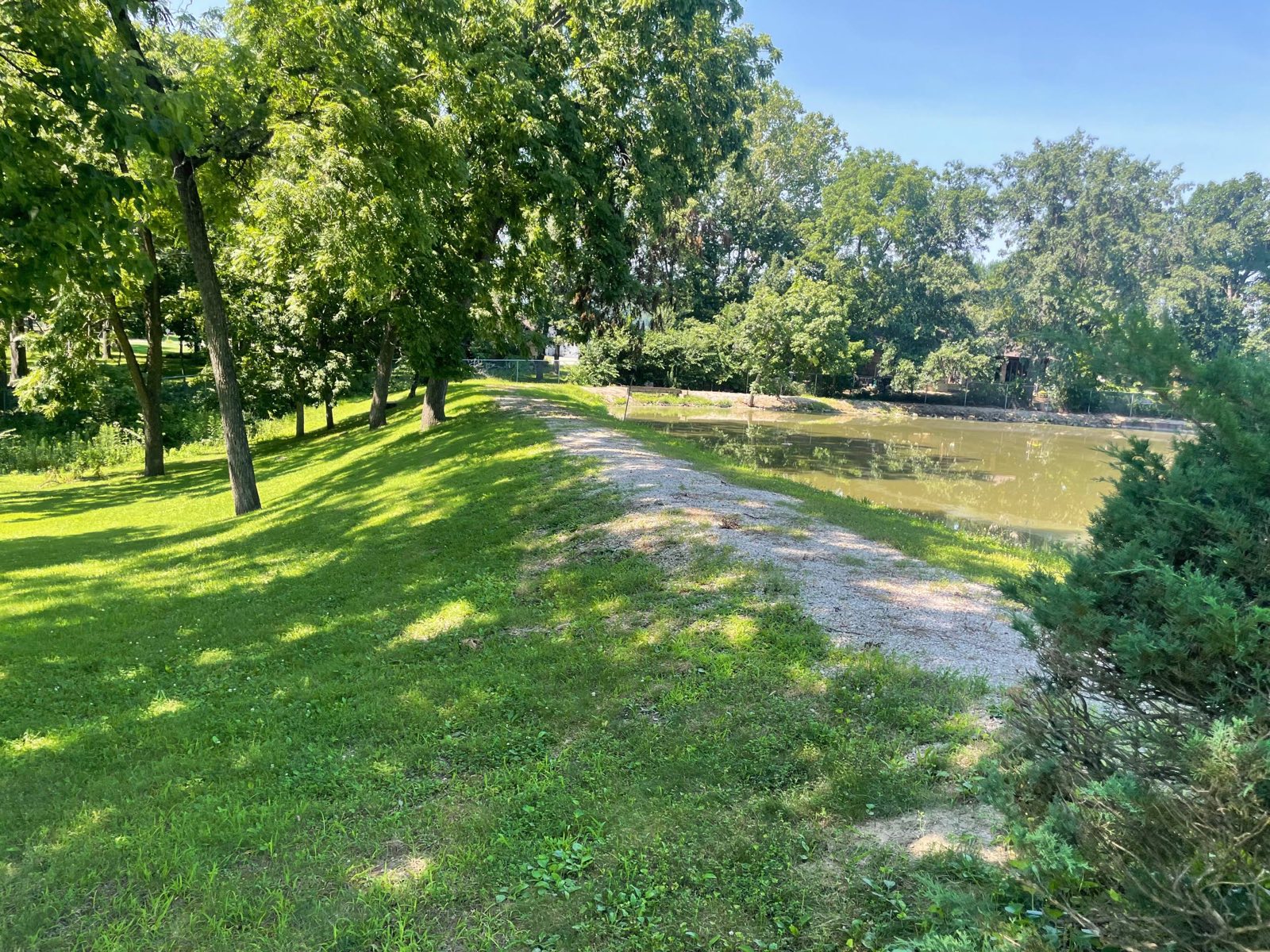
This one is in Macon County, outside Decatur. The pond had been holding for years and then it wasn't — the level kept working its way down, and it was going out through about forty feet of the embankment rather than over it.
That is the ordinary way an earth dam fails, and it is almost never sudden. A dam holds because the material in it reached density — because it went in at workable moisture, in lifts thin enough to compact all the way through. A length that never got there looks identical to a length that did on the day the machines leave. You find out two springs later, when the back face is wet and there is no way to test what is inside it without opening it up.
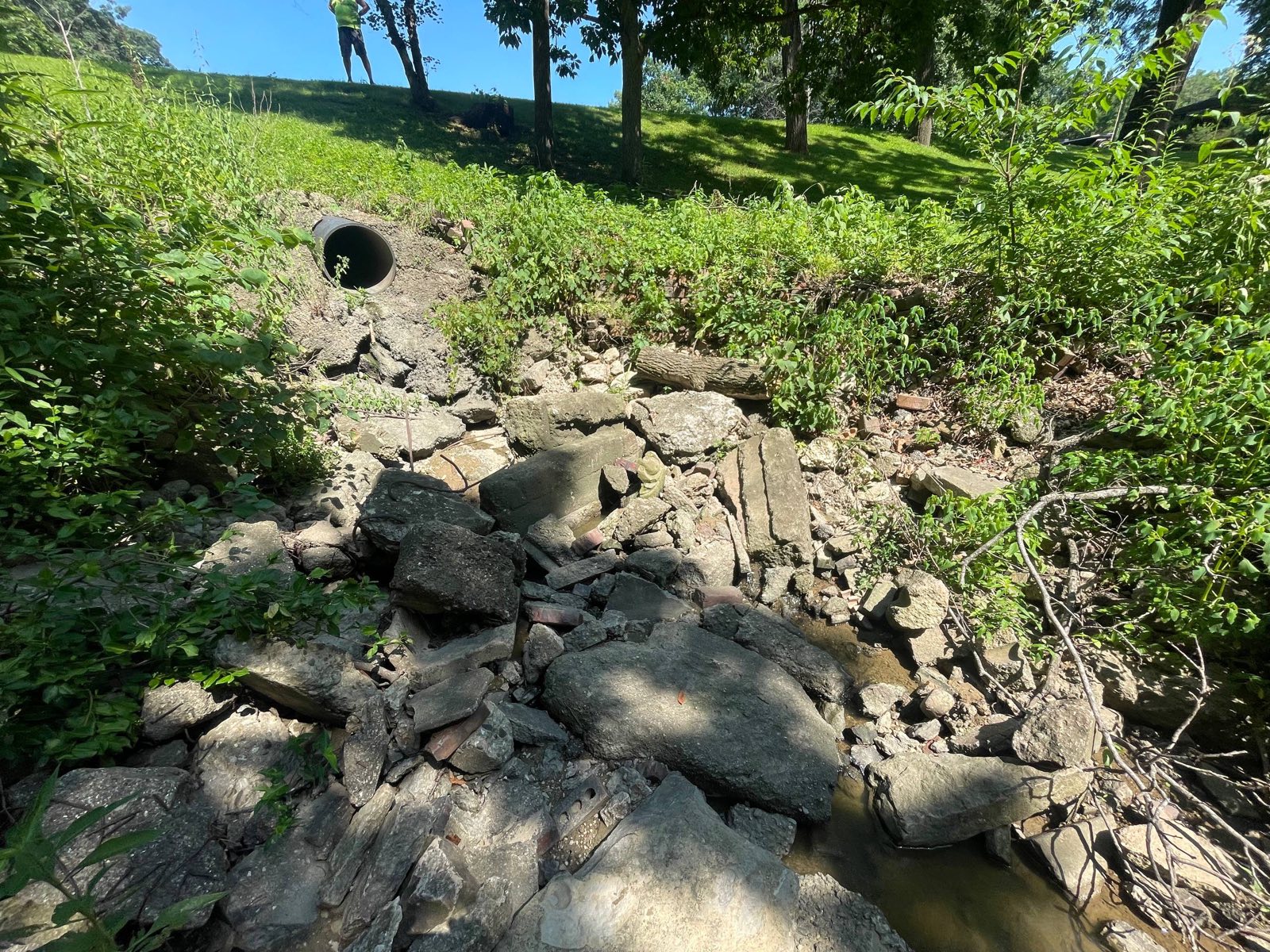
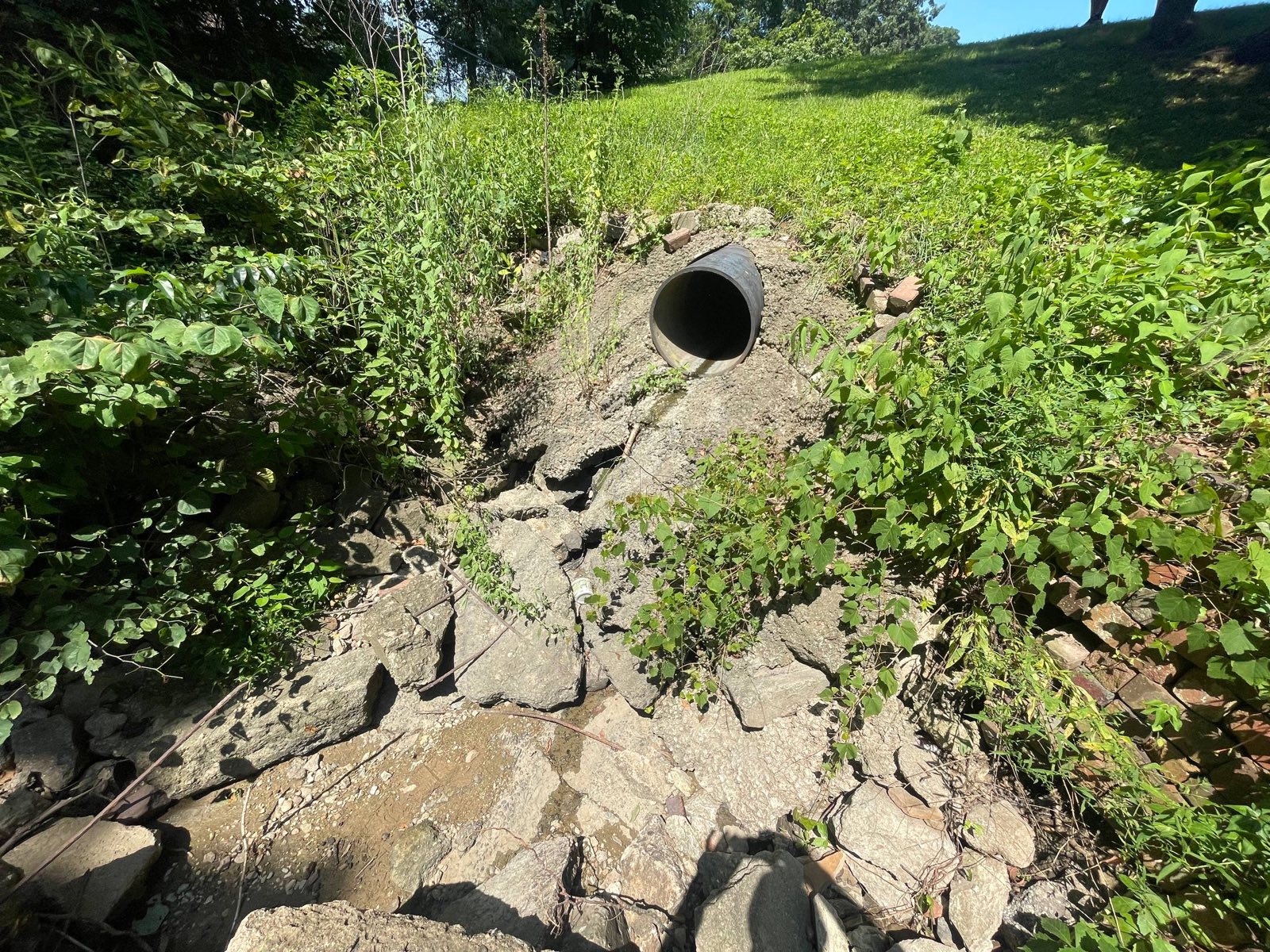
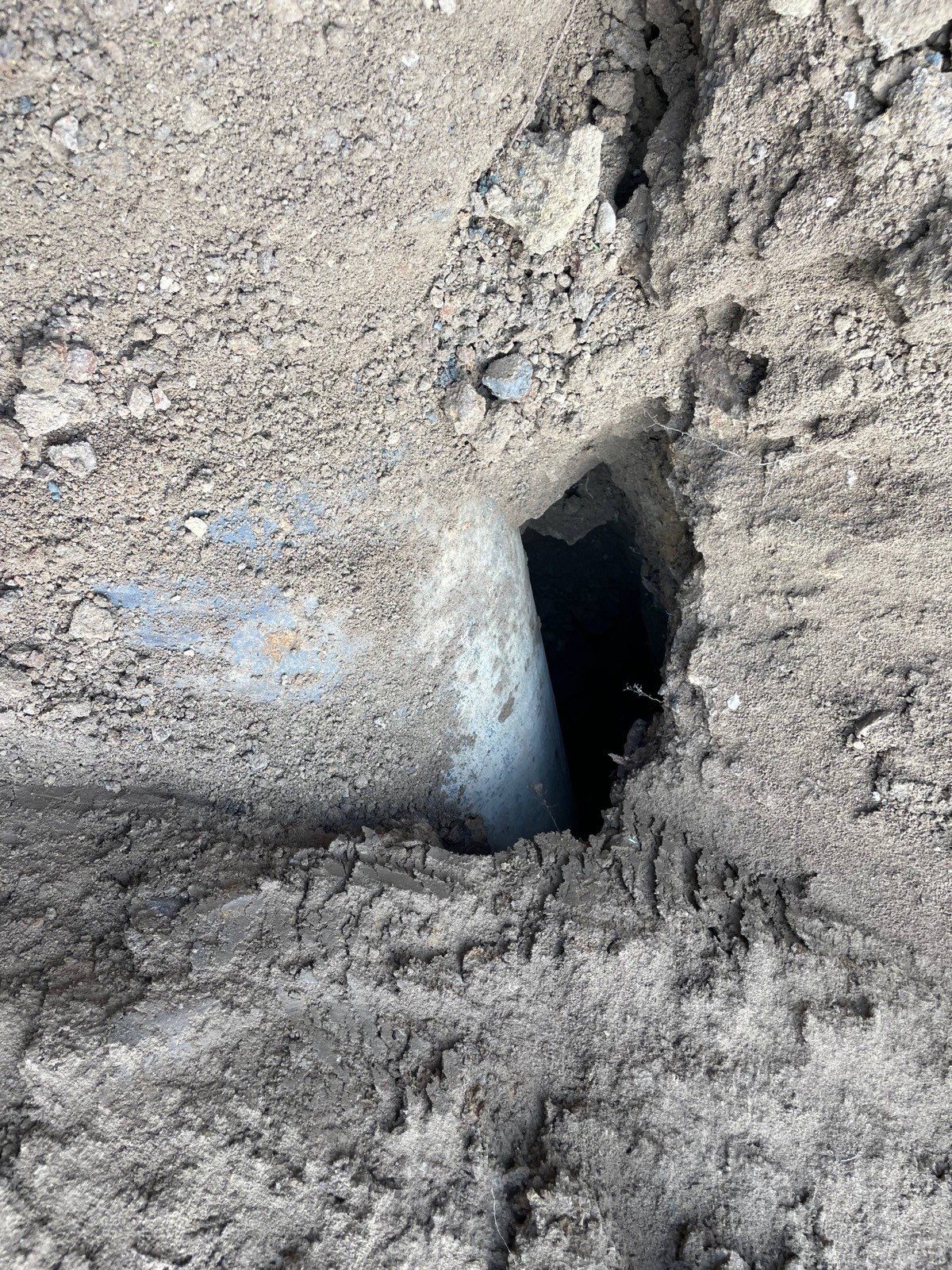
The second path is along the outlet. Any pipe through an embankment is a seam, and water will follow the outside of the barrel if it gets the chance, carrying fines out with it. The channel that opens gets bigger every season. Both showed here — a cracked apron at the outlet and a void running along the pipe.
The first thing that had to happen was getting the water off it. A three-inch trash pump went in and drew the pond down. Nothing useful can be done on a wet face: you cannot compact saturated material, and until the water is off you are guessing at what failed.
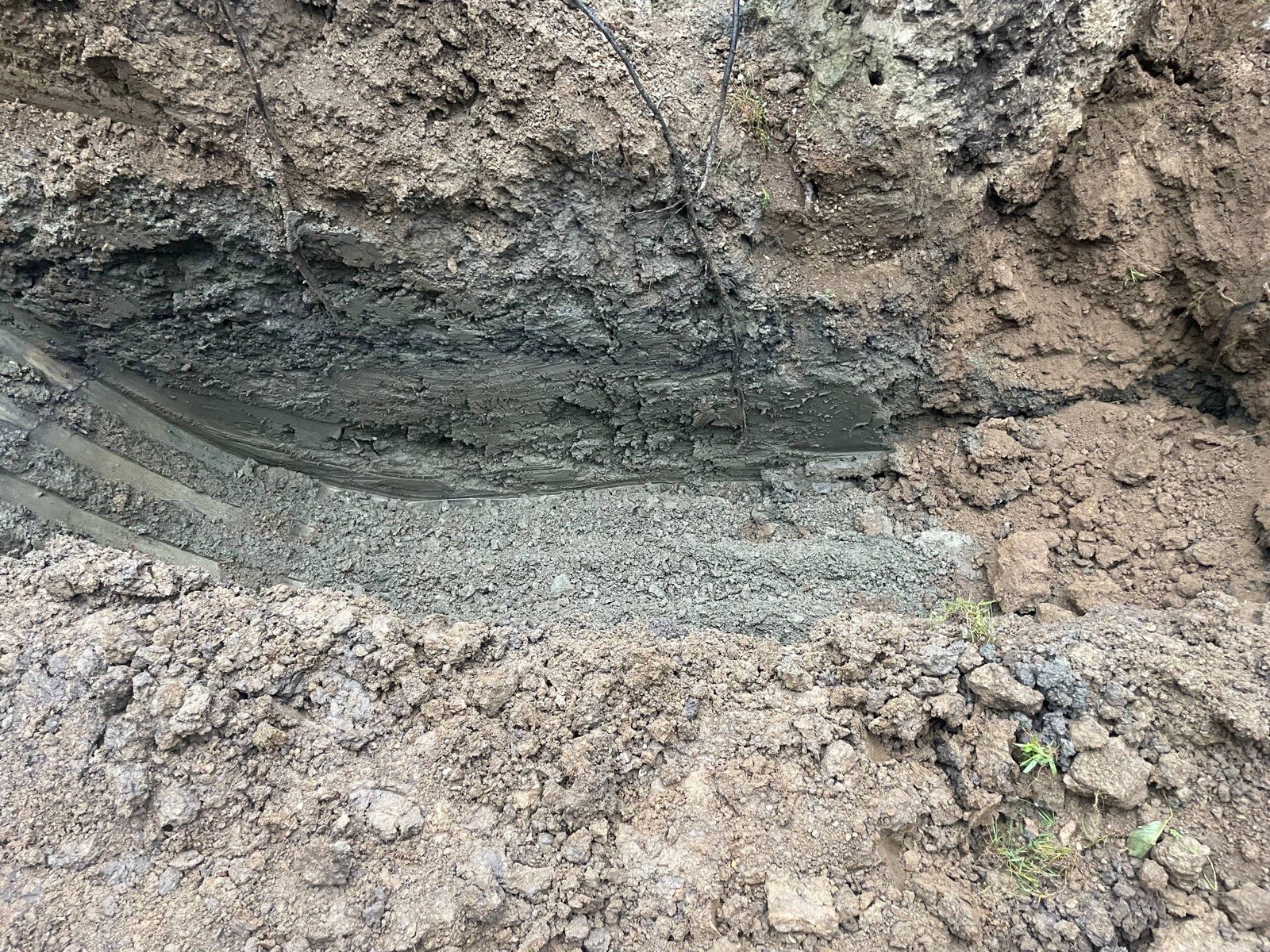
Then the failed length came out. Not a patch on the outside — that is the repair people ask for and it buys a season at most, because the water is already through the middle by the time it shows on the back face, and capping the outside only changes where it comes out. The section was excavated and benched so the new fill would tie into the old rather than sit against a vertical face.
A key trench ran the full length of it, down the centerline into undisturbed material. That is the cutoff. Water travels under a dam as well as through it, along the seam between whatever you place and the topsoil, root channels and old plow pan you place it on. How deep to go is a call made in the hole with the bucket, based on what the ground actually shows — not a number off a plan.
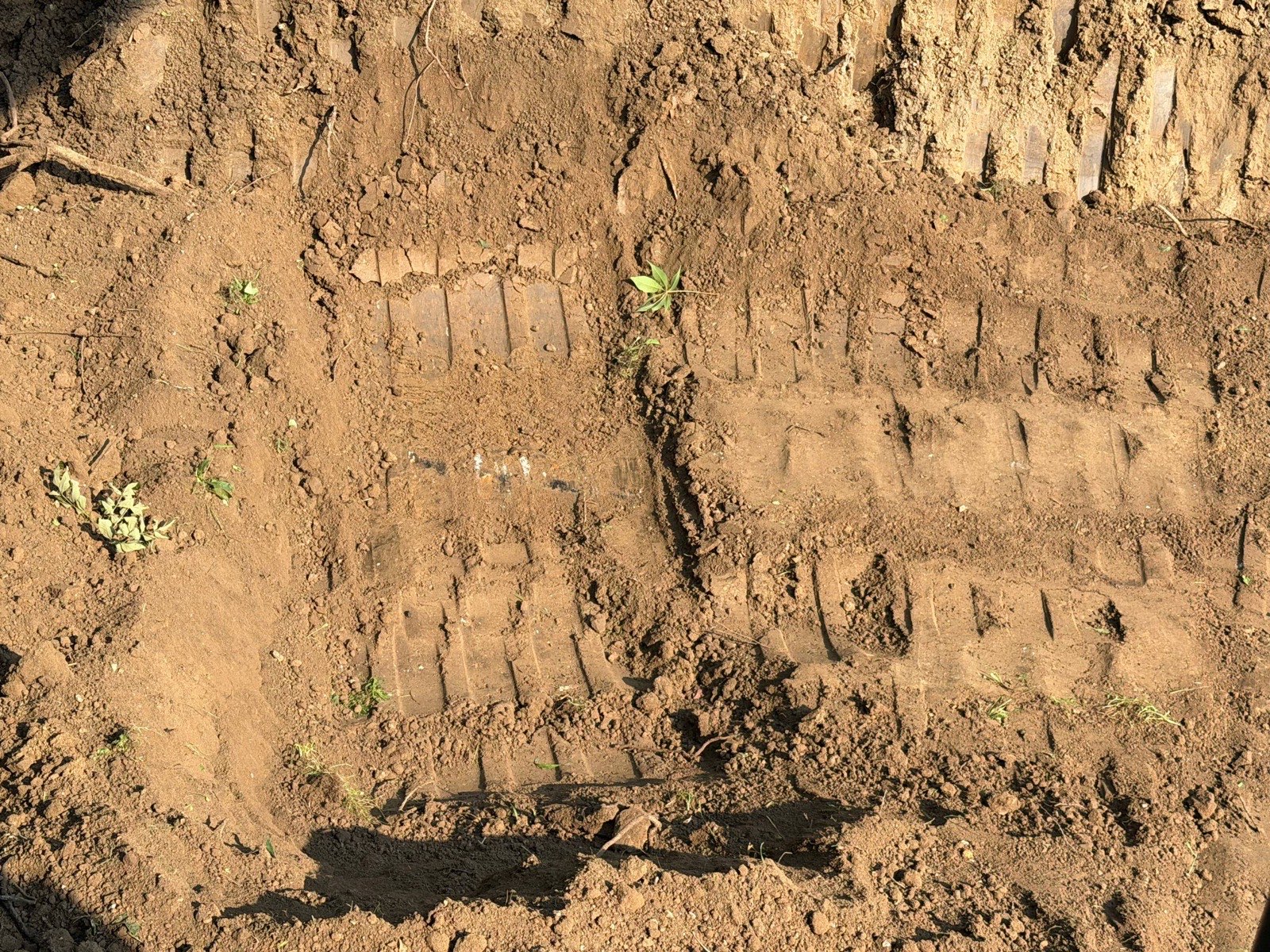
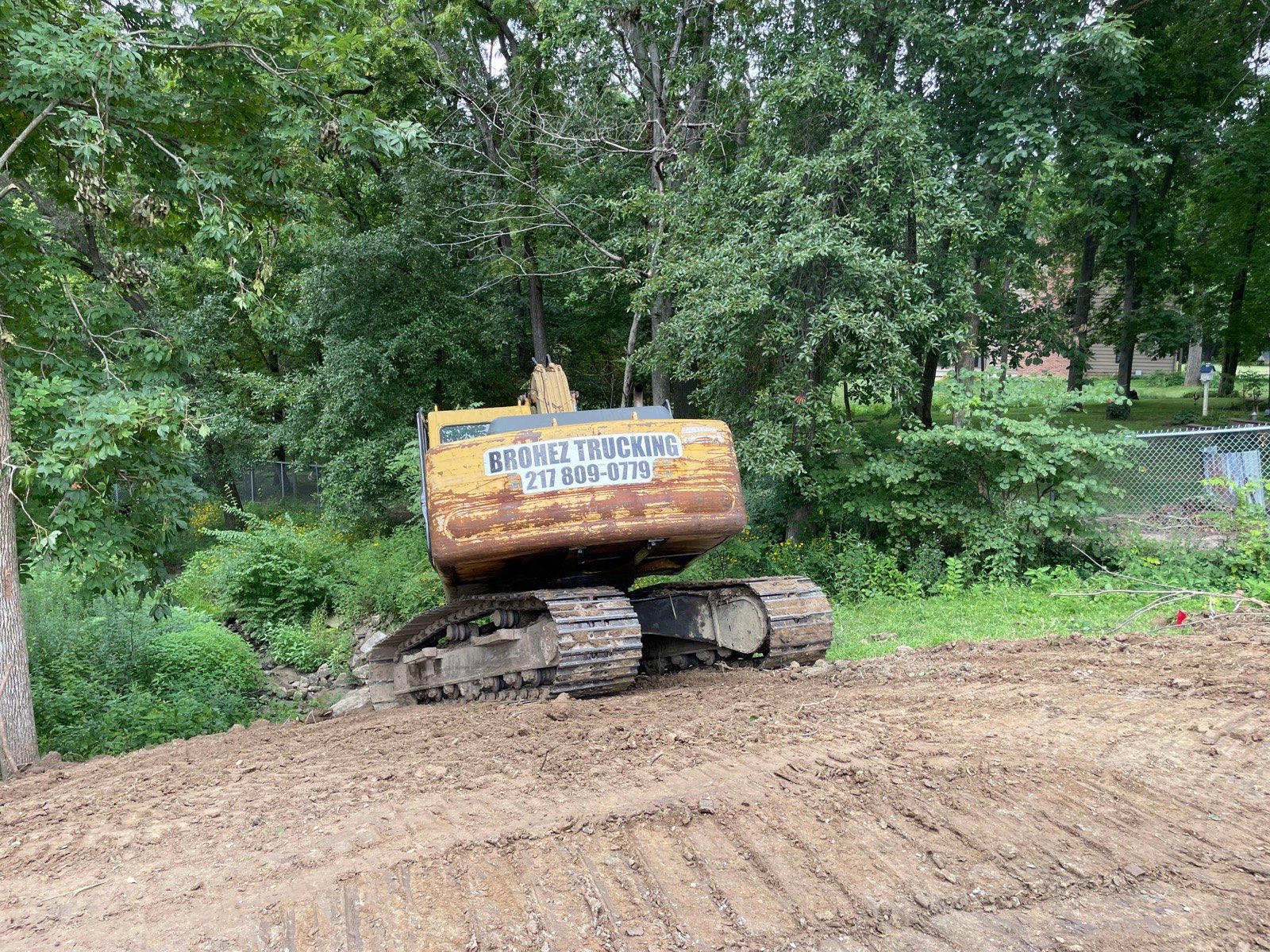
Then it went back up in eight-inch compacted lifts, tracked in and moisture-conditioned as it went. This is the slow half and it is the half that matters. Clay too dry will not knit no matter how many passes it gets; too wet and it pumps under the machine and never gains strength. There is a fairly narrow band where it works, and hitting it sometimes means waiting a day.
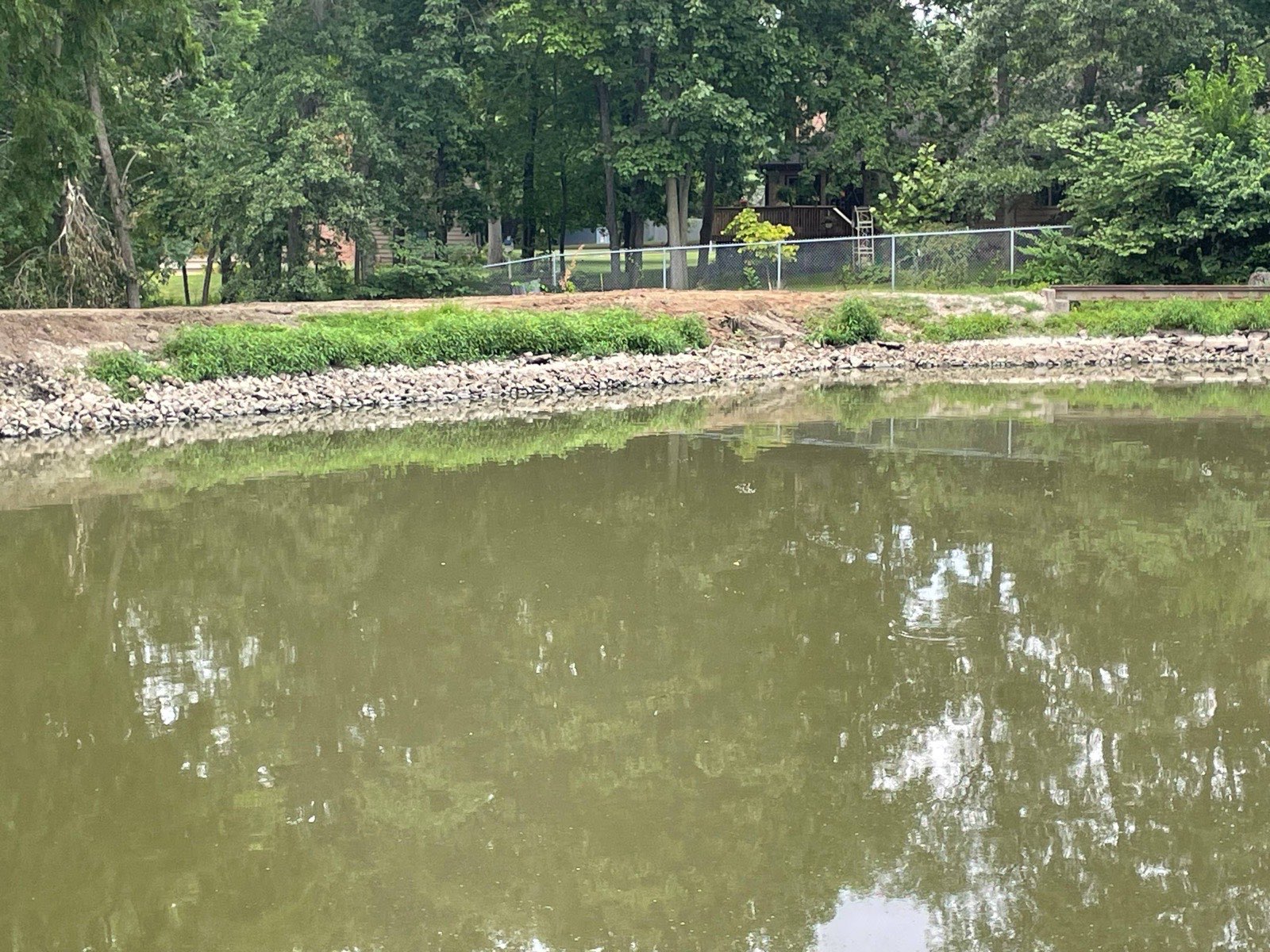
Faces dressed, crest back to elevation, bank armored, and the pond allowed to come back up. The last photo in the gallery is the same section at level.