Questions
Pond Excavation FAQs
What does pond excavation involve?
Cutting the basin, and then dealing with everything that comes out of it. The dig itself is the visible half — shaping the bottom, cutting the side slopes to something that will hold and mow, and leaving a shelf where you want to stand. The other half is the spoil: several thousand yards of dirt has to go somewhere on your property, and where it goes is usually what the job costs.
Where does the dirt from a pond dig go?
Onto your ground, unless you tell us otherwise. It gets pushed and spread where it does some good — a pad, a lane, a low spot that has always held water — or windrowed and shaped so it looks like it belongs there. Hauling it off site is a separate job with trucks in it, and we price that on its own rather than burying it in a per-yard number.
Can you make an existing pond bigger?
Yes, and it is a normal job for us — cutting the basin out wider, deeper, or both, working it dry. Whether it is worth doing depends on what fills the pond now, which is the first thing we look at when we walk it.
Will a bigger pond hold more water?
A bigger basin holds more water only if more water arrives. Ponds are filled by the acres of ground that drain into them, and enlarging the hole does not enlarge the watershed — you get more capacity, not more inflow. On some sites the honest answer is that the pond is already bigger than its watershed supports, and we would rather say so at the walk than dig you a basin that sits low.
How long does it take for a new pond to fill?
That depends on the acres that drain to it and on the weather, not on how big the basin is. A pond here is clay-lined and runoff-fed, so every inch of water in it arrives as runoff off the ground above it. A basin finished going into fall usually comes up fastest, because through fall, winter and early spring the ground is already wet and most of what falls on it runs off instead of soaking in. Dig the same pond in midsummer and it can sit well down until the ground turns, since dry ground takes most of a summer rain before it ever reaches the pond. Plan on one wet season for a small pond with a generous watershed above it, and two or more wet seasons for a big basin or a short watershed. We give you our read on your own site at the walk — and if the watershed is too small to ever fill the pond you have in mind, we say so then rather than after it is dug.
How deep can a pond be dug?
Deep enough to hold water through a dry summer without cutting into the water table. We build ponds that sit above it and seal by compaction — the wetted face scarified, moisture-conditioned and recompacted so it closes up. We do not dig ponds into groundwater, and a liner of any kind - synthetic or clay - is not work we take. Nothing gets laid in the bottom to make a pond hold; if the ground will not seal, we say so.
Do you clean out a pond that is full of muck?
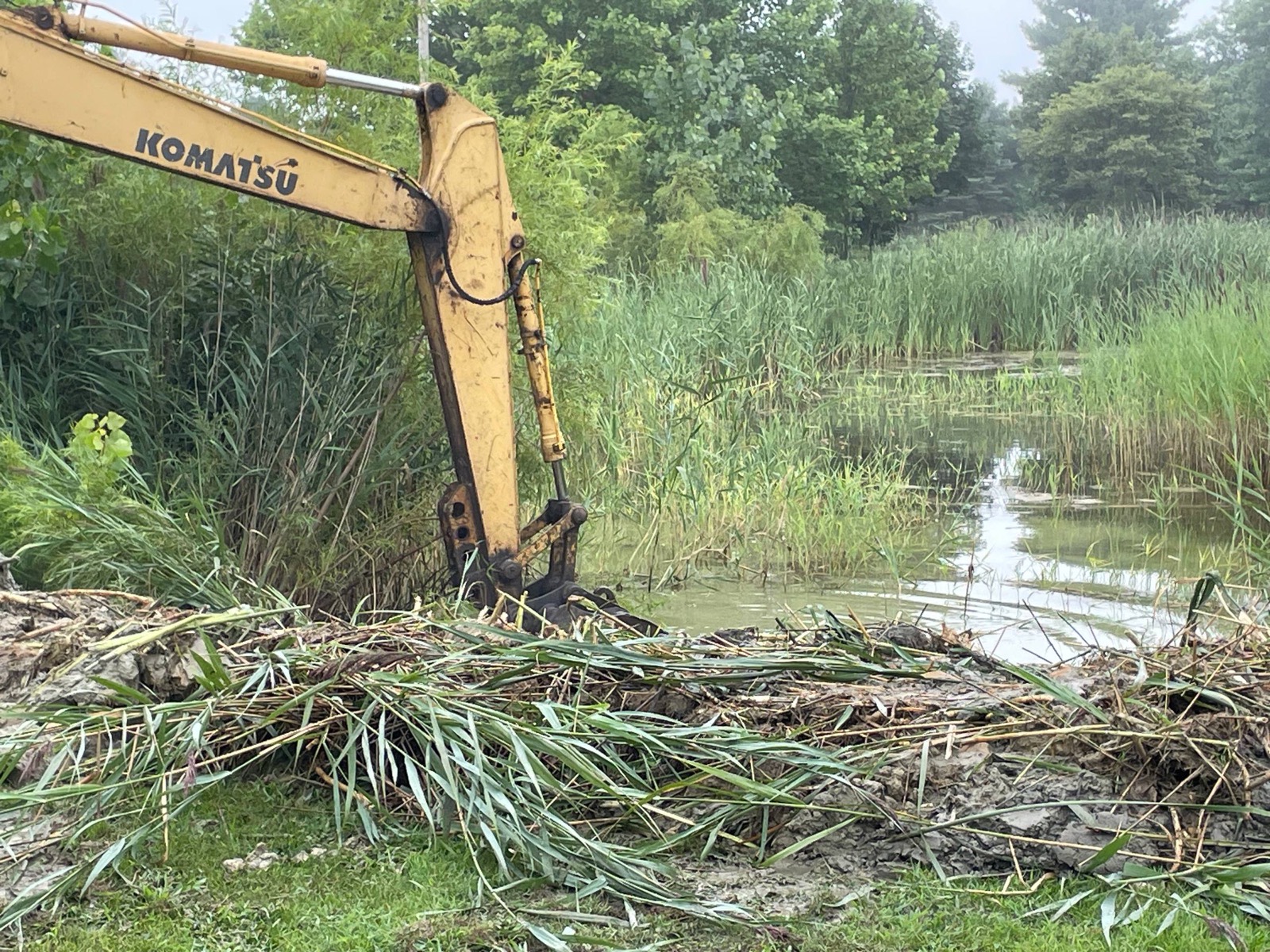
We clean out a basin working dry — drawn down or drained, machine on the bank or on the bottom, silt and root mat pulled and windrowed to drain. Pulling material out from under water is a different trade and not ours. If your pond cannot be taken down, we are not the outfit for it and we will tell you that on the phone.
Do you dig livestock ponds?
Yes — a stock-water pond is a normal job here, whether you call it a stock pond or a stock tank. It gets dug dry and above the water table like every pond we build, either cut into the ground and sealed by compaction or held by an embankment thrown across a draw, and it is sized against the acres that drain into it rather than against the herd. What decides how long it lasts is the access point: cattle will use one bank, and a bank left at the slope the excavator cut turns to mud and walks into the pond a yard at a time. We cut that approach flat and armor it, and leave the rest of the shoreline steep enough that the herd stays off it. Fencing and any pipe to a tank below the dam are somebody else's trade, and we will say so rather than take that part on.
Do you dig ponds near me?
Mattoon is home and we work a 60-mile radius from it — Charleston, Effingham, Shelbyville, Decatur, Champaign, Urbana, Tuscola, Arcola, Paris, Casey and the ground in between. Farther out we still go for a job that is worth the trip; the drive shows up as its own line on the estimate rather than hidden in the hourly.
Who actually digs it?
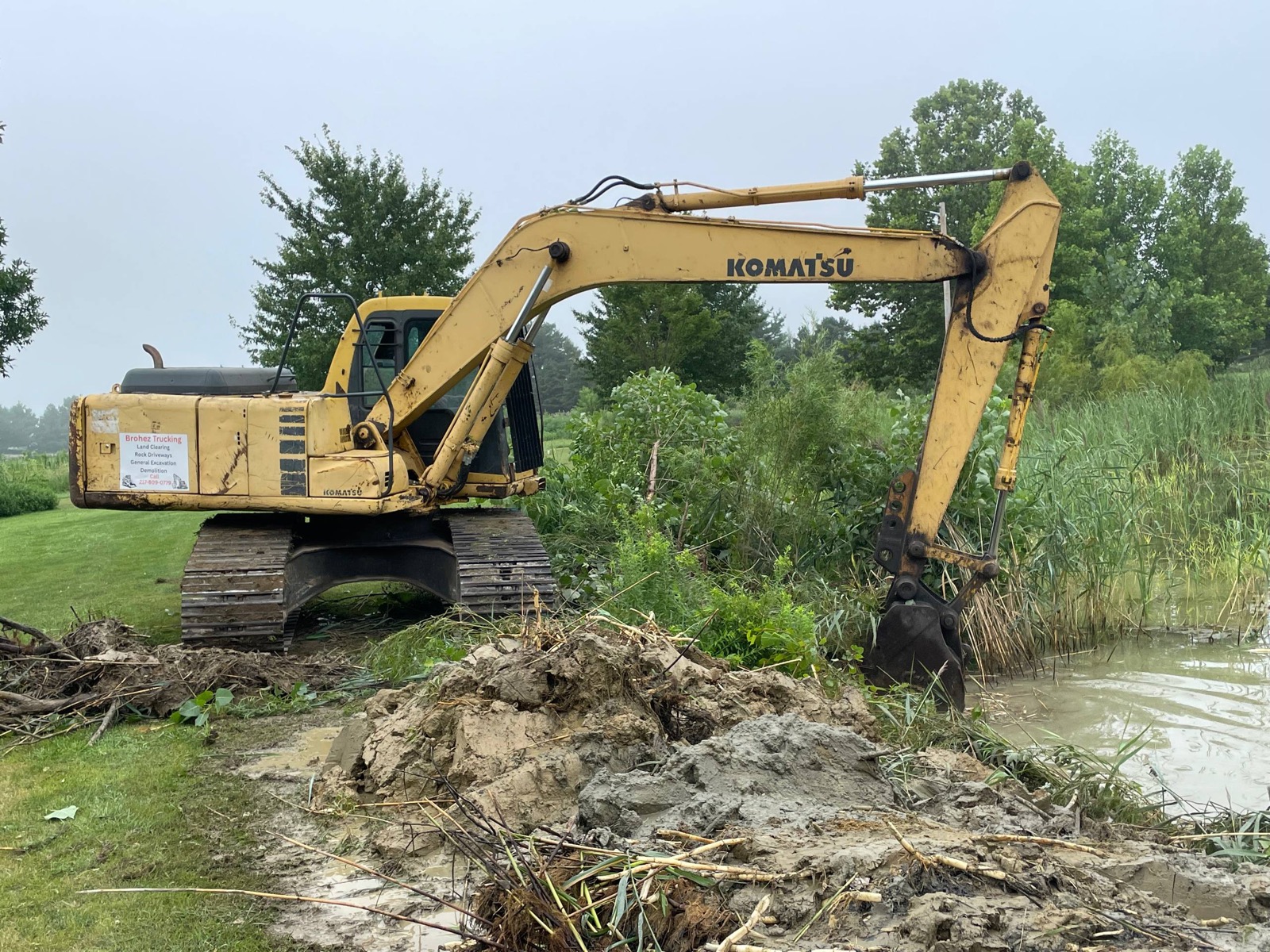
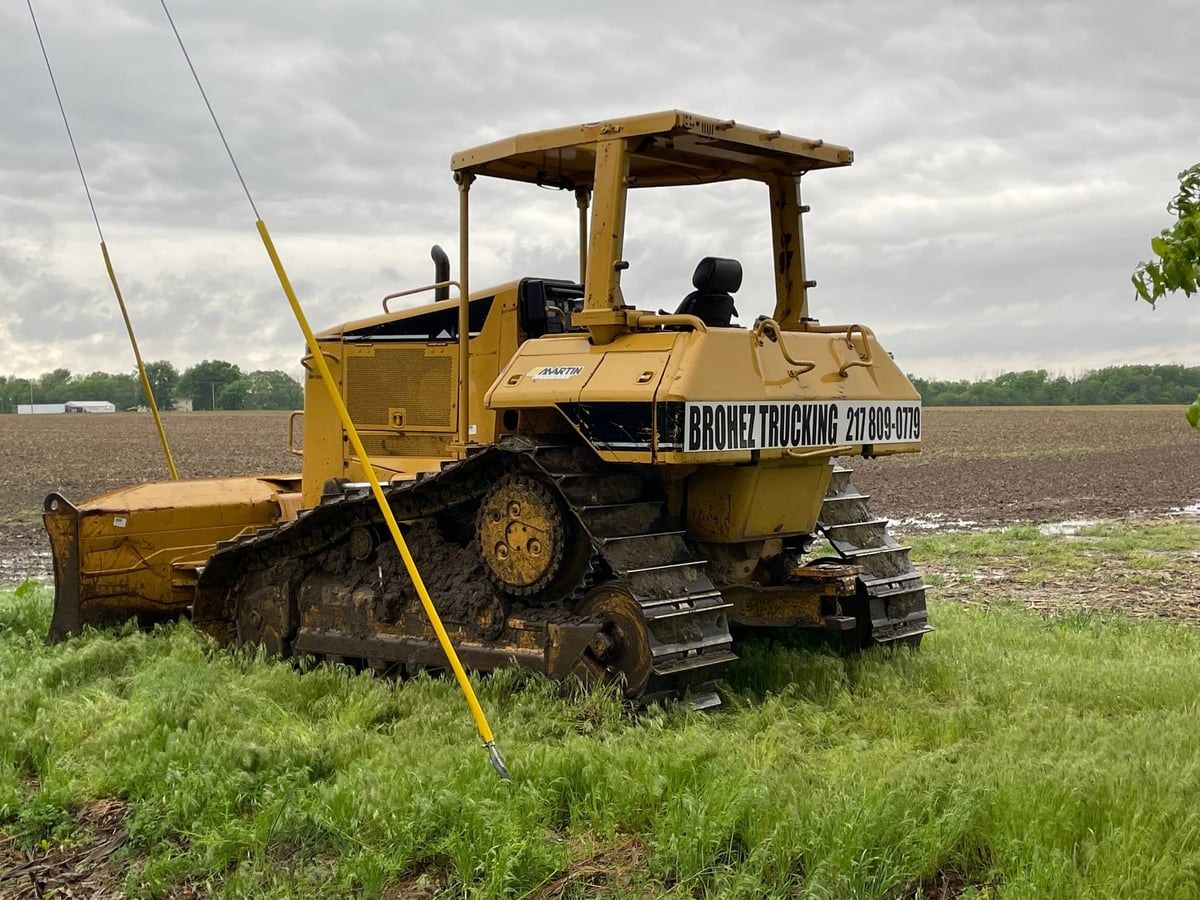
Levi does. He walks the site, prices it, and runs the machine — a Komatsu PC150LC-6 excavator and a Cat D6N dozer with laser grade control, both ours and both maintained. One free on-site walk and one straight number.