A Grassed Waterway Only Works While It's Grassed
The call came in as four words: waterway repair, one mile north of Neoga. We went and looked at it the same week.
A grassed waterway is a shaped, seeded channel that carries concentrated runoff off a field without letting it cut. The sod is the armor. Water spreads out across it, the grass slows it down, and the soil stays where it is. It's a simple idea and it works for years — right up until something takes the grass off.
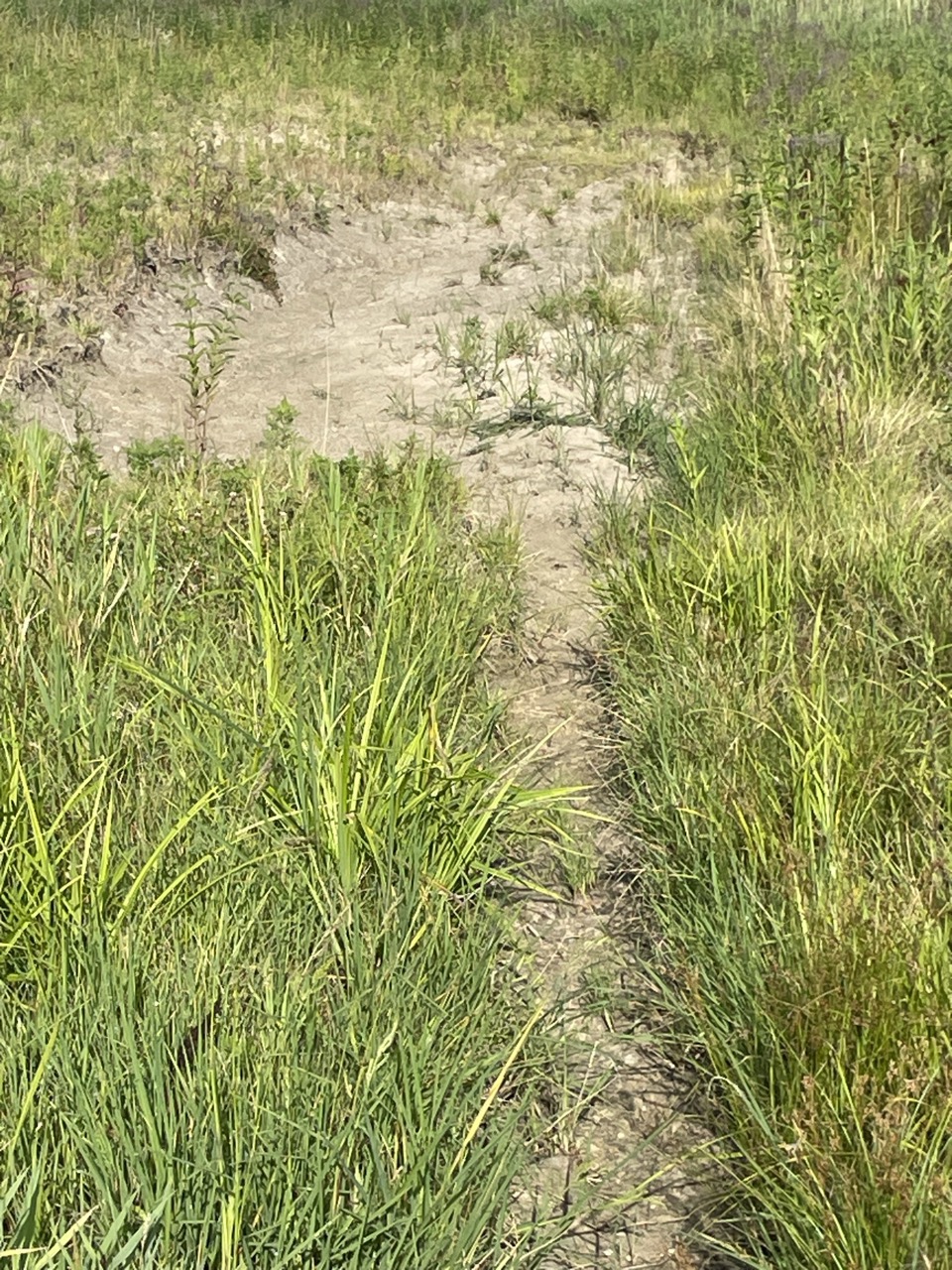
Once the sod is gone, the waterway stops being a waterway and starts being a ditch in the making. That's what this one was doing. Down the middle of the channel the cover had washed out to bare, silty soil, and the flow had already started to concentrate in one narrow line instead of spreading across the full width. You can see it in the first photo — the green shoulders on both sides and a bald scour cut straight down the throat. Left alone, that scour deepens every rain, the sides slough in, and eventually you're driving equipment around a gully instead of over a waterway.
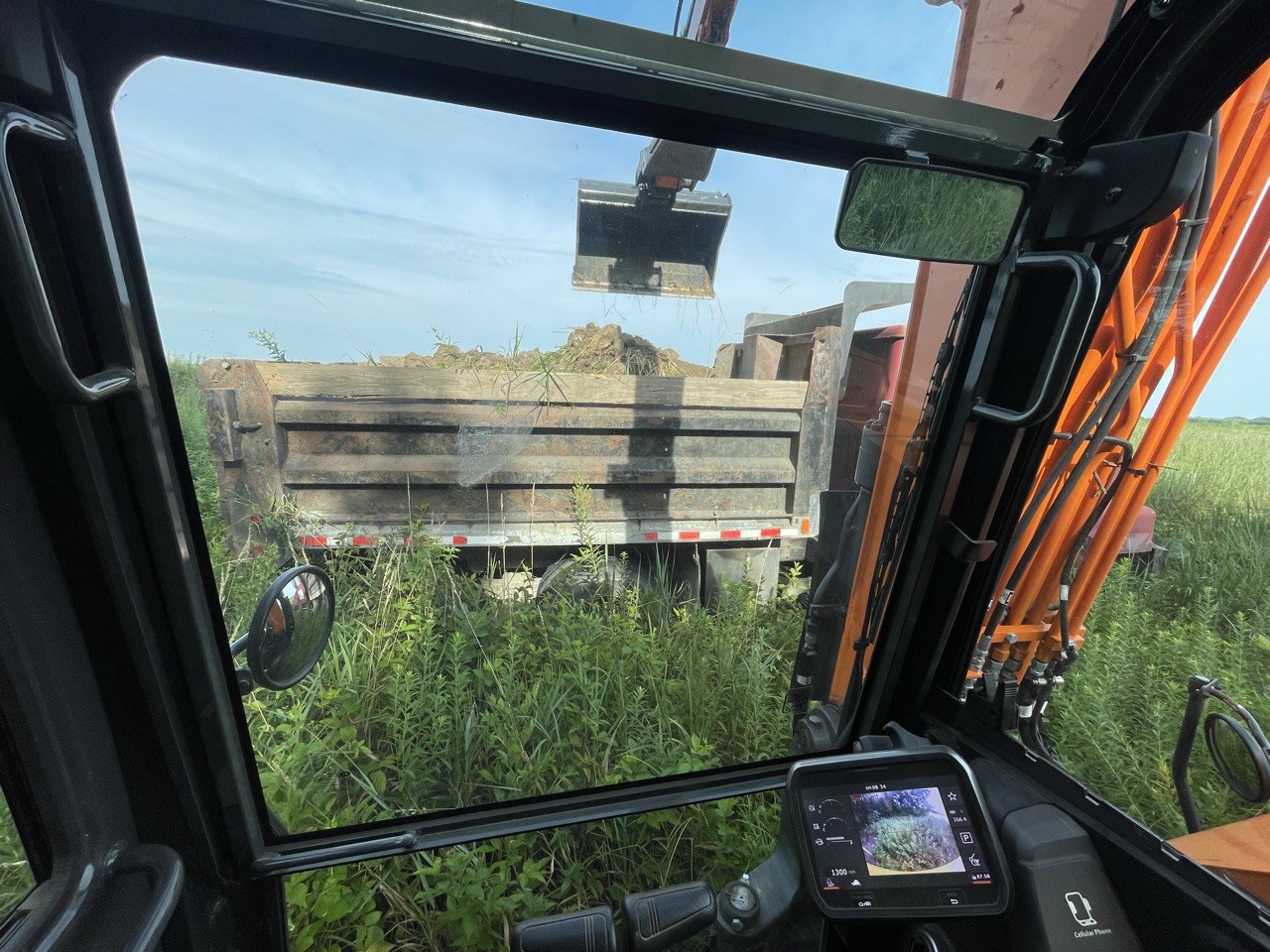
Two things had to happen, in order. First, get the loose material out. We ran the excavator in the channel and loaded the tandem — the spoil that had already sloughed and silted in gets hauled off, not pushed to the side, because a berm along a waterway just funnels more water into the same cut.
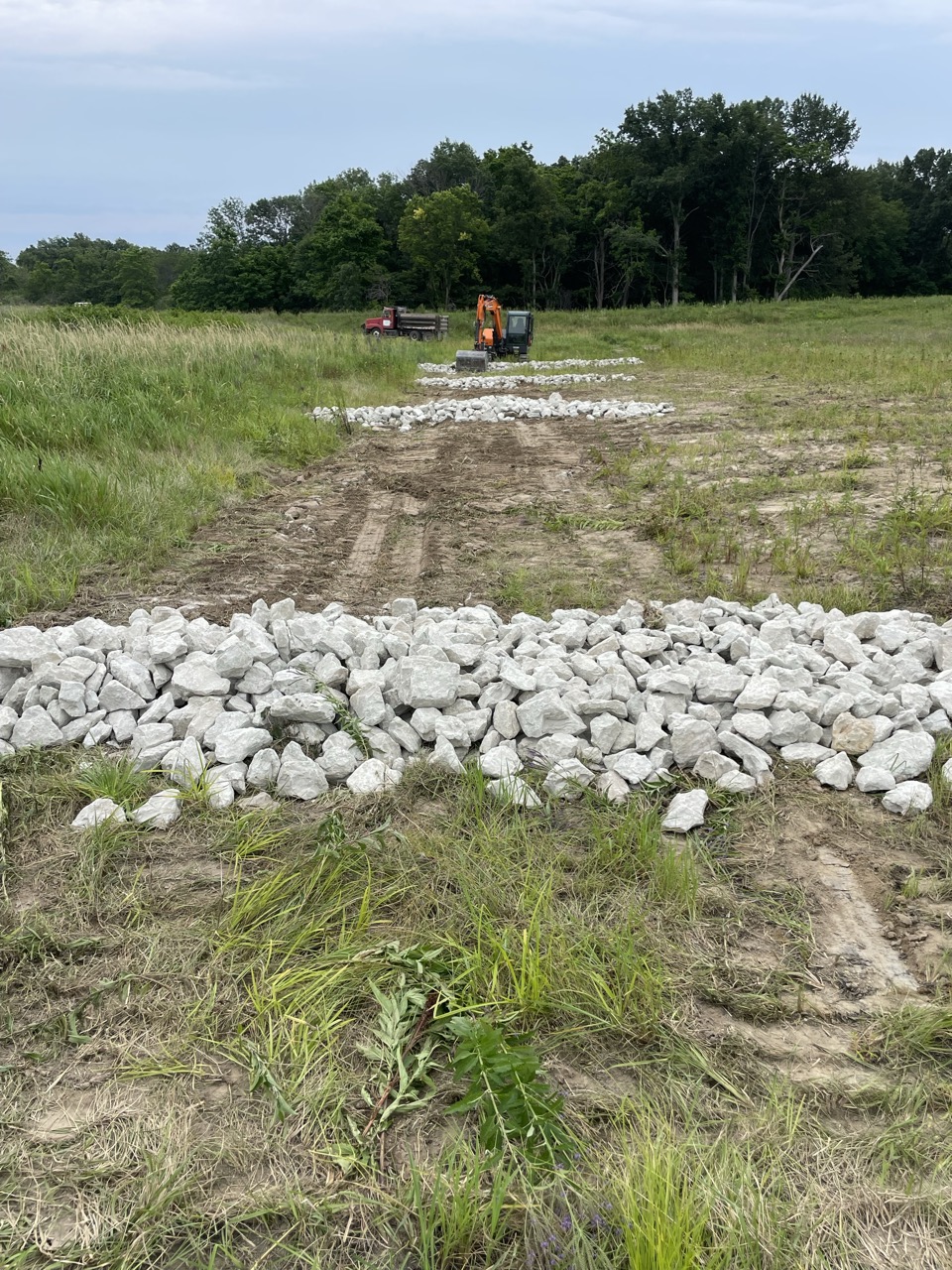
Second, put the flowline back on grade and armor it. We re-cut the channel so the fall is continuous instead of stair-stepped, then set riprap down the flowline where the water actually runs. Some of that rock was already on site — old riprap from the original job that had washed out of position. We dug it up and reused what was sound rather than billing for stone the customer had already bought once. The rest came in as 15 tons of new rock delivered to the job.
Rock does something grass can't: it takes the energy out of the water at the point where it's moving fastest. Set in the flowline, it holds the grade while the shoulders re-establish cover on their own.
Start to finish this one was a single day on site — excavator, tandem, and a load of rock. That is what a washout caught early looks like on a schedule and on an invoice.
The lesson worth passing on: the cheapest waterway repair is the one you make while the scour is still shallow. Every season you leave it, the channel gets deeper, the volume of dirt to move gets larger, and the amount of rock it takes to hold goes up with it. If you can see bare soil in a waterway from the road, it is already time.