When Water Finds A Way Through, You Fix It Right Or Fix It Twice
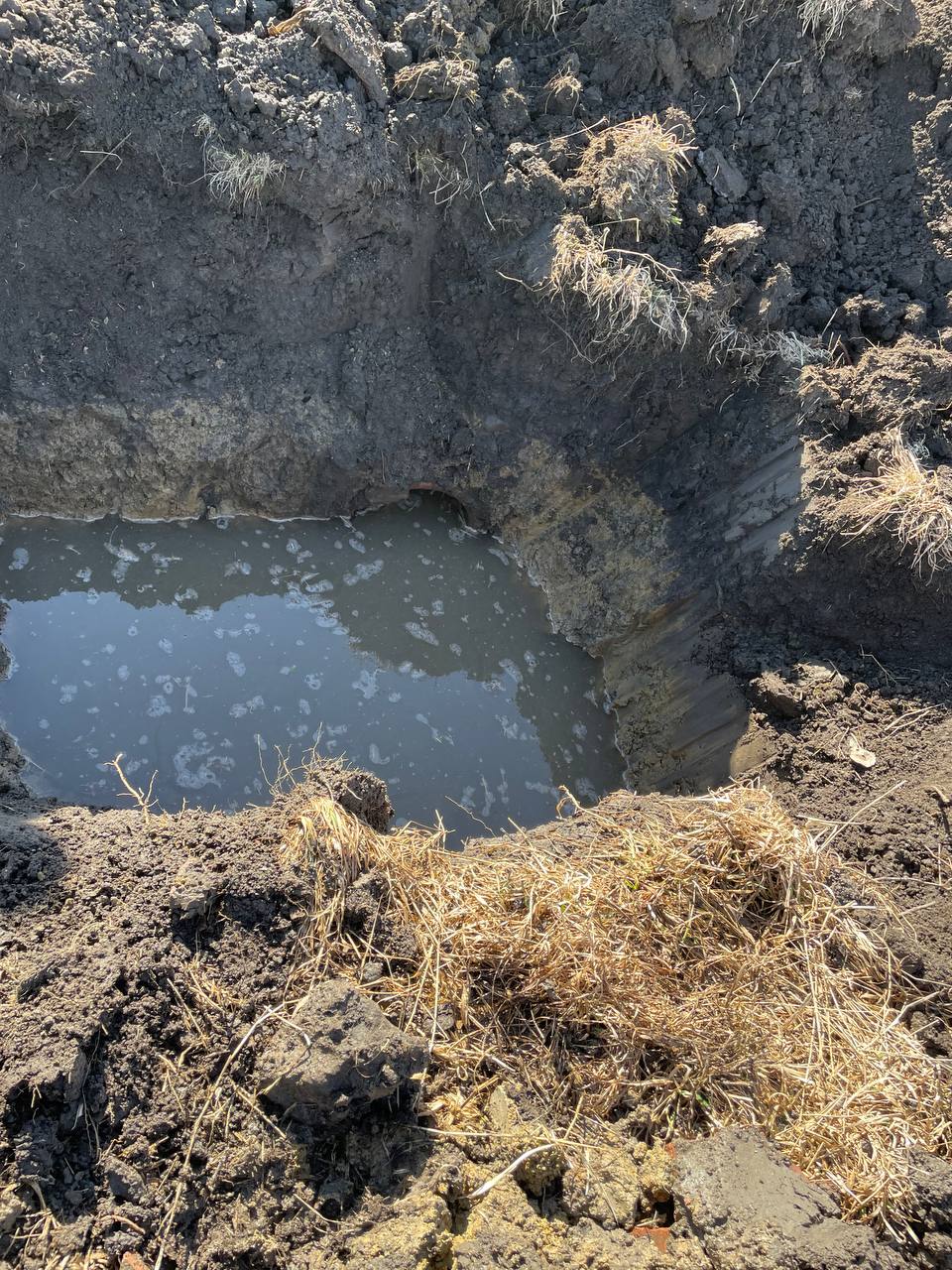
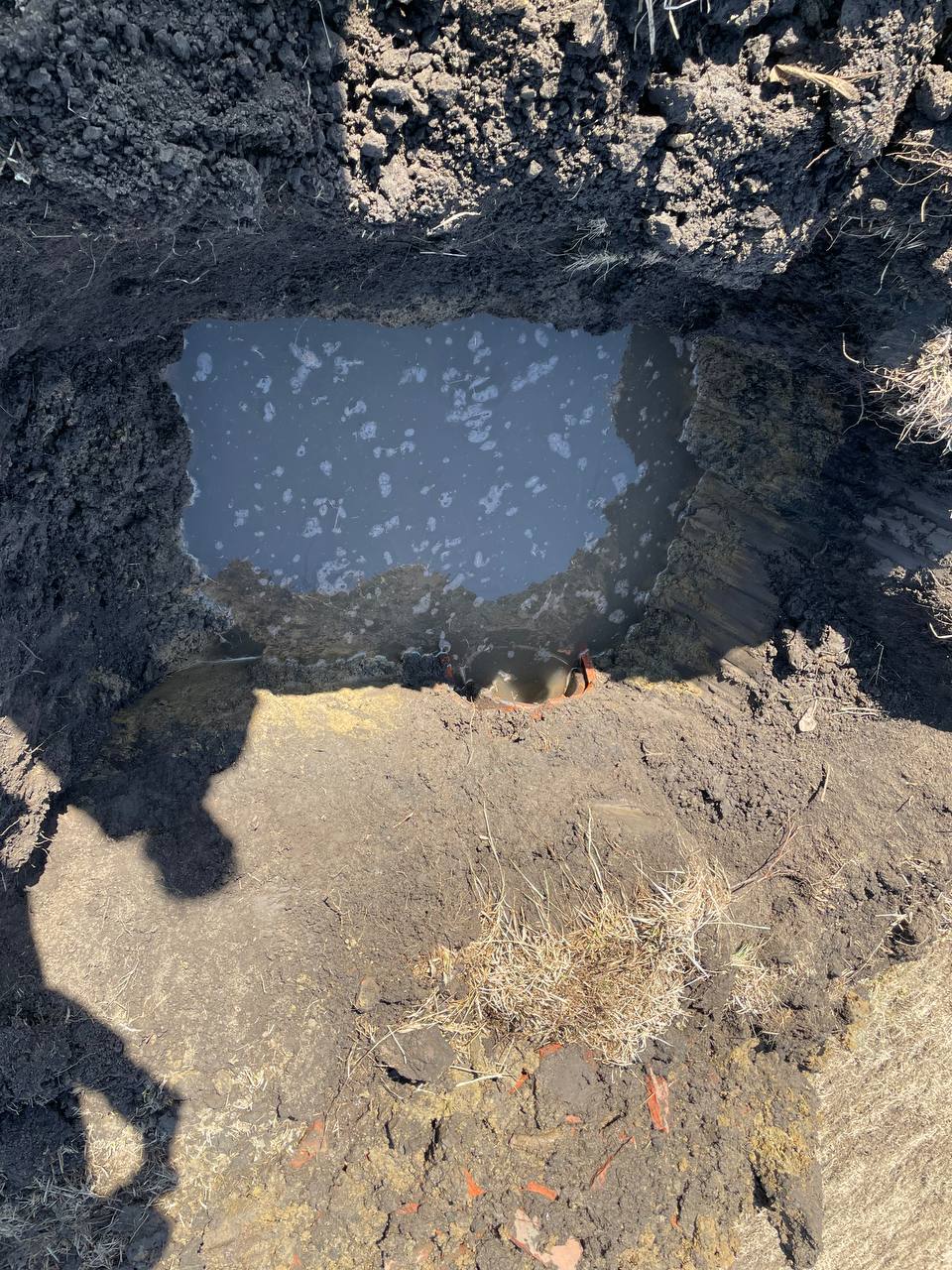
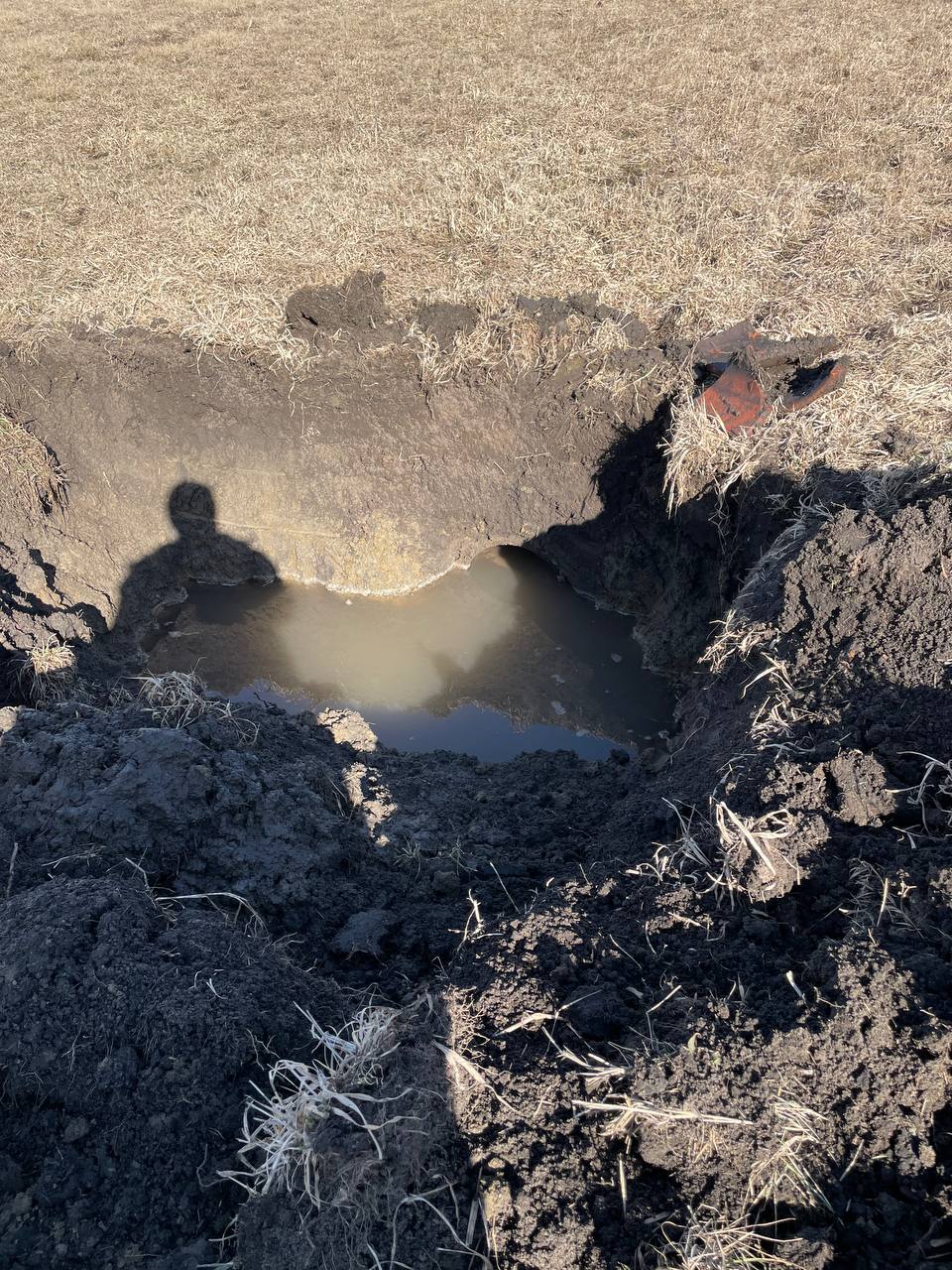
Customer called us out about a soft spot in the driveway. By the time we got there, the soft spot was a hole — and water was running straight through it.
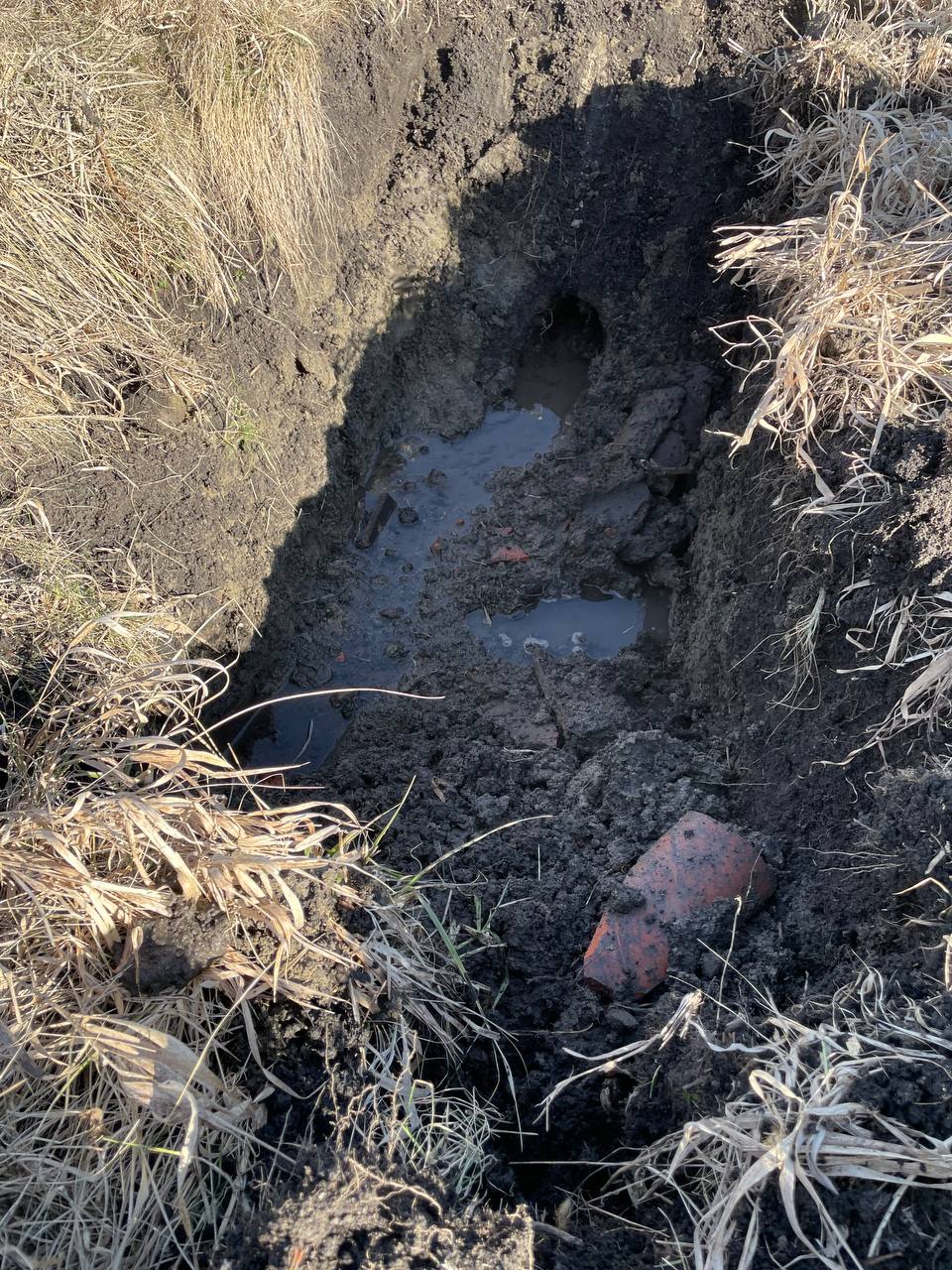
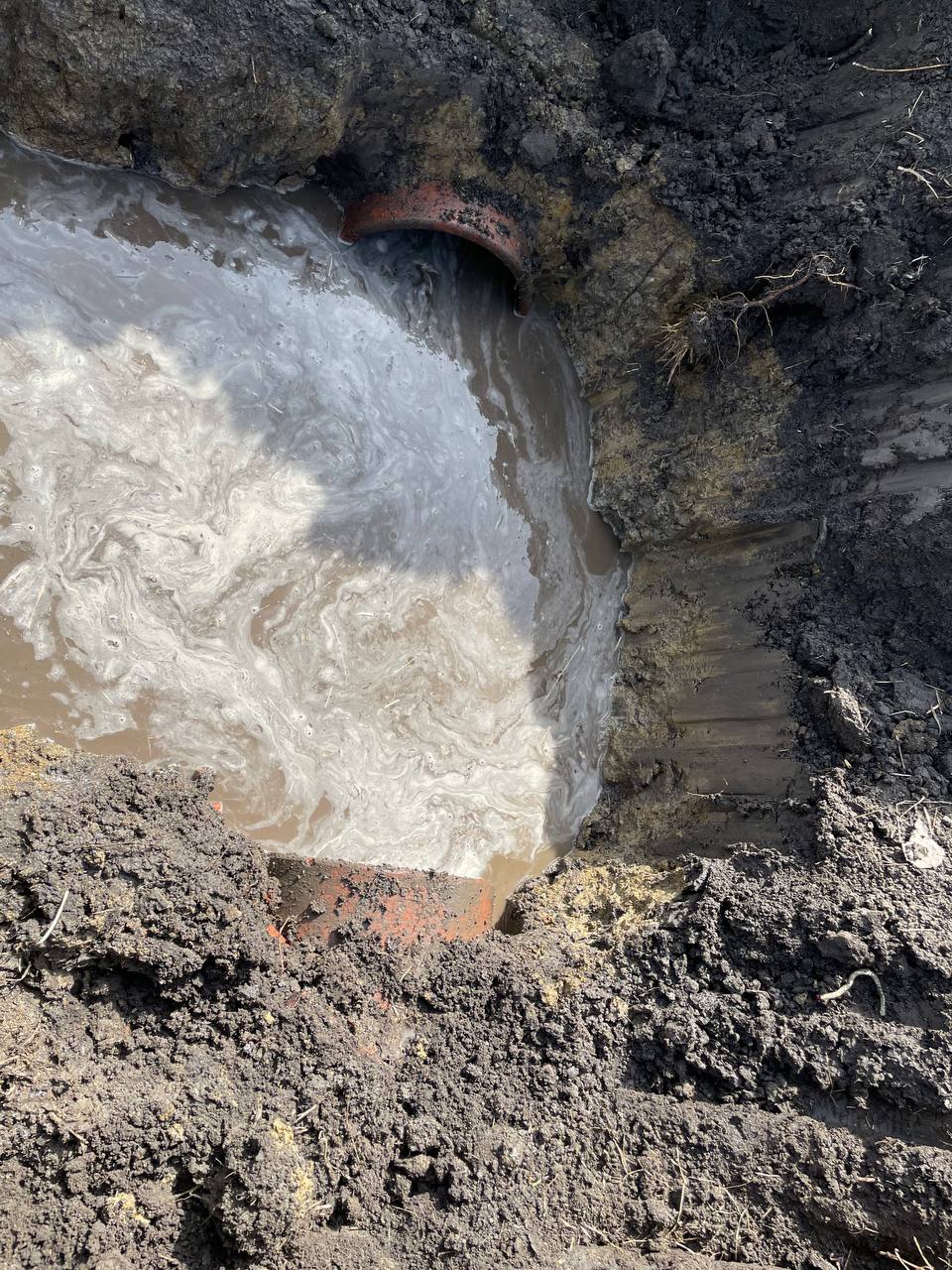
The old culvert tile underneath had completely failed. Whatever pipe had been there originally had collapsed, rusted out, or just rotted away — by the time we dug down to it, there was nothing left to hold the road up. Water was finding its own path through the soil, undermining everything above it.
That's the problem with old failing culverts. They don't fail dramatically. They fail slowly — water starts moving through ground it shouldn't be moving through, the road above it gets soft, and one day there's a hole big enough to swallow a tire.
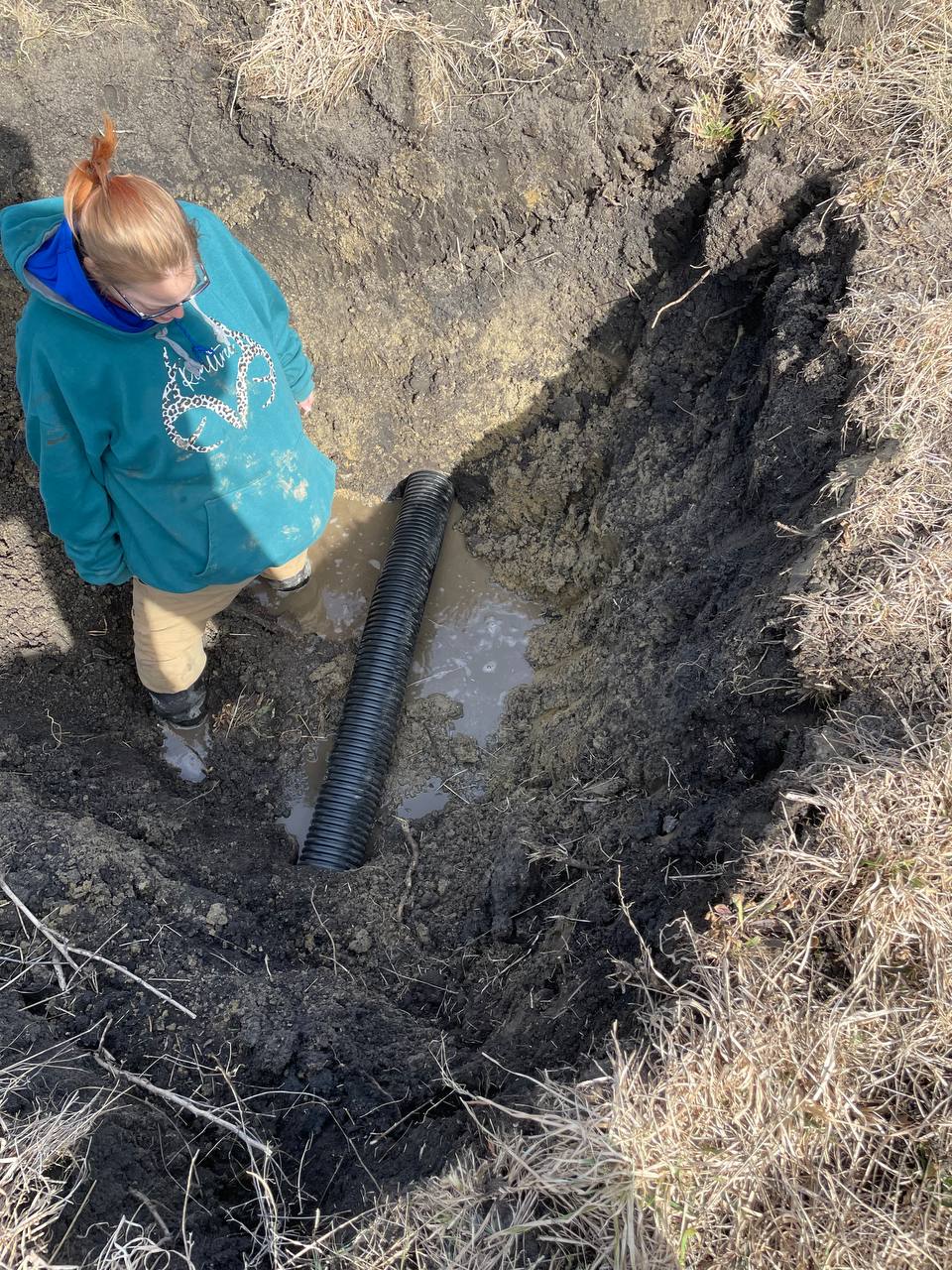
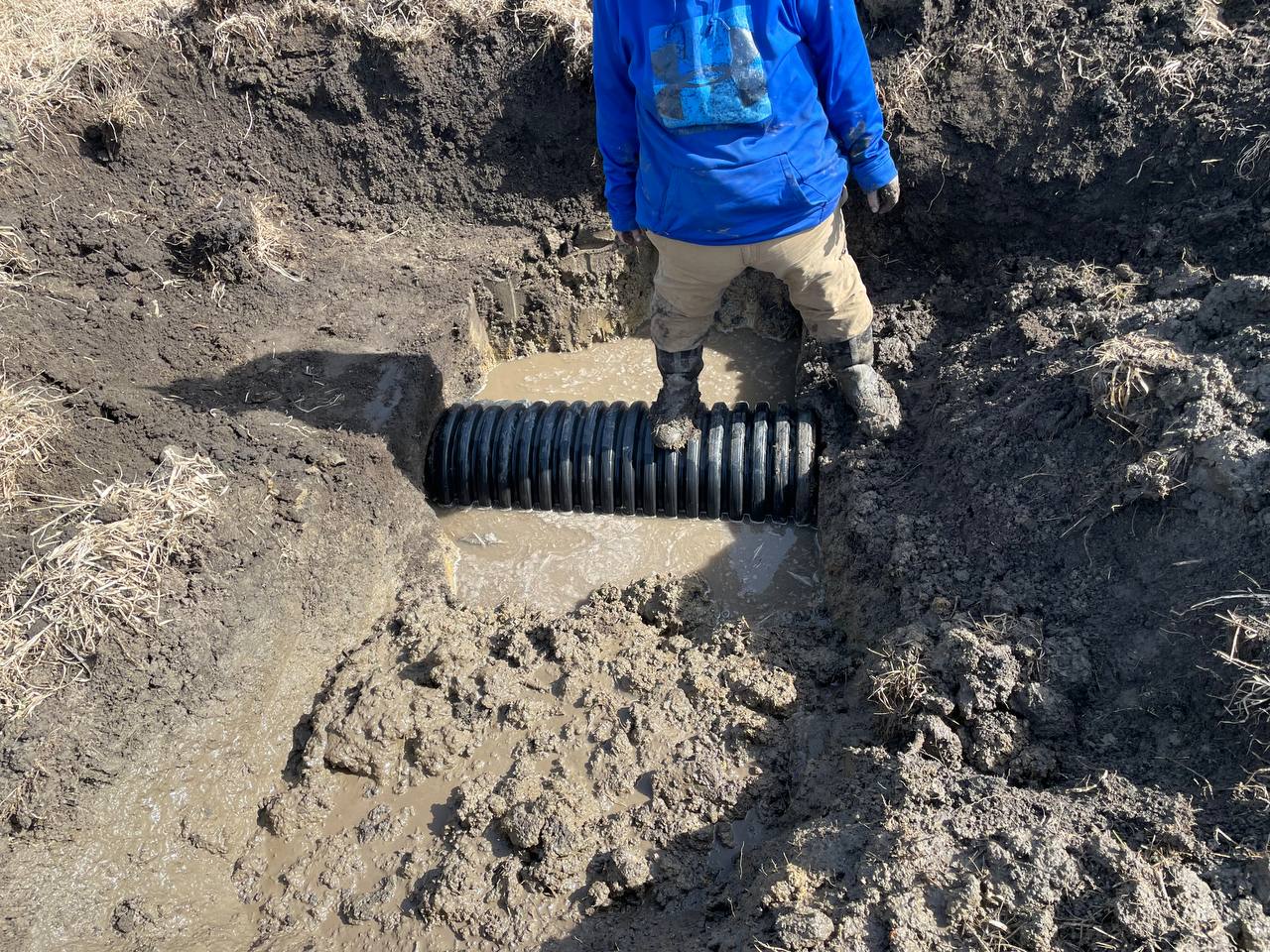
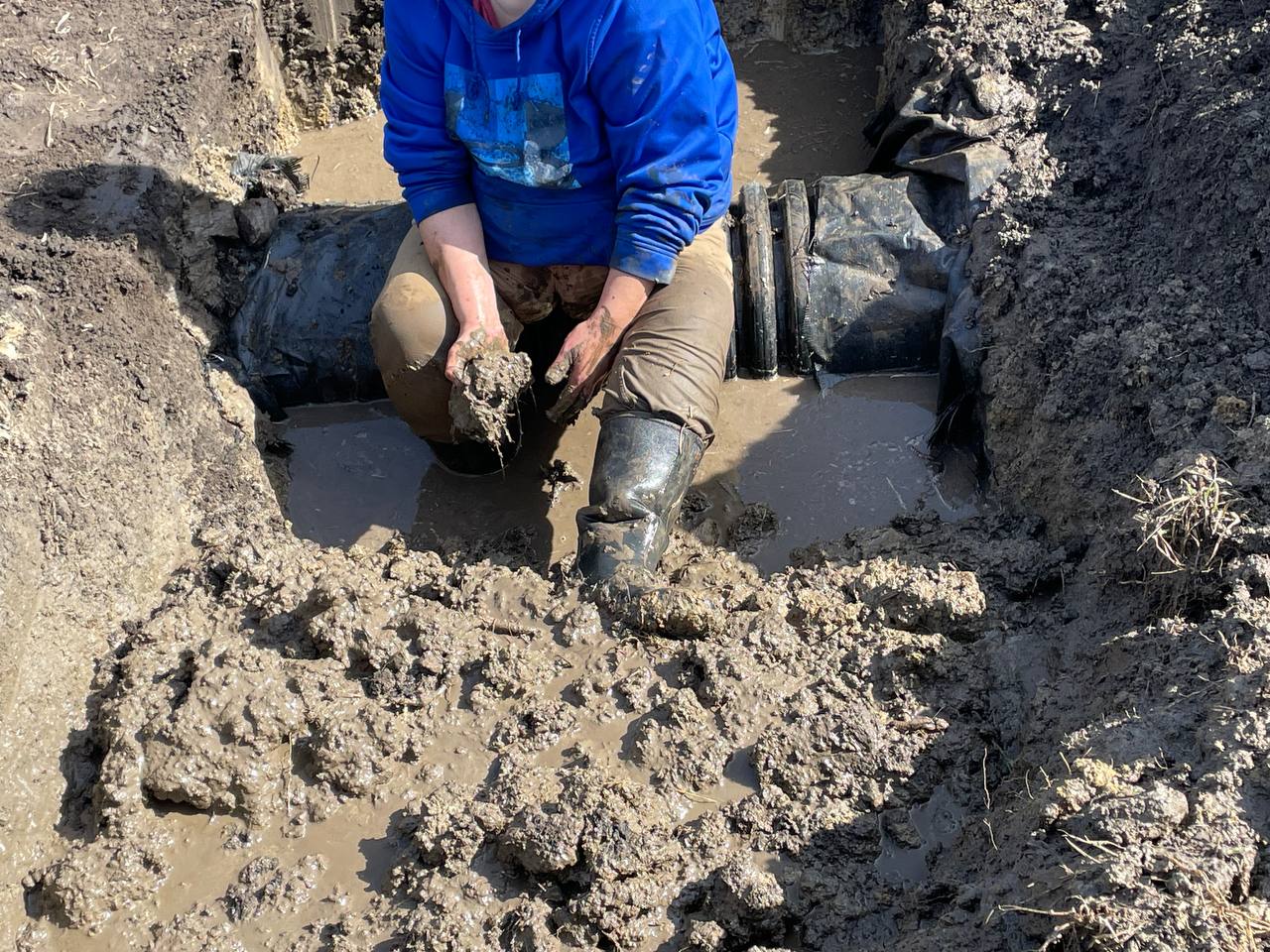
We brought in the Komatsu PC150LC and started digging. Found the remnants of the old pipe, pulled what was left, and opened up the trench down to clean ground. Once we had a stable base, we set new corrugated HDPE pipe at the right grade — sloped so water moves through instead of pooling — and backfilled in proper lifts so there'd be no settlement later.
Conditions weren't ideal. Wet ground, cold day, and the kind of drizzle that gets into everything. But that's the job. Drainage problems don't wait for nice weather. If you've got water finding paths through your driveway, road, or field crossing, the longer you wait, the bigger the repair gets.
Done right with new pipe, proper grade, and clean backfill — this culvert should last twenty to thirty years.