Hiring somebody to tear down a building is one of those jobs where it's hard to know what you don't know. You don't do it often, the quotes look different from each other, and there's no easy way to tell the real crew from the slick ad. So I'm going to give you the same straight talk I'd give a neighbor: here's exactly what to ask, what to watch out for, and how to tell who's actually going to do the work.
The Questions to Ask Before You Sign Anything
A good contractor will answer all of these without dancing around. If somebody gets vague on any of them, that's your answer.
- Are you insured — and will you provide a certificate of insurance? This is the big one. Demolition is heavy, unpredictable work. If a machine clips a power line or something doesn't fall the way it should, you do not want that liability landing on you. A real contractor carries liability and equipment coverage and will hand you a certificate of insurance without blinking.
- Who actually hauls the debris off, and where does it go? Tearing the building down is half the job. The other half is getting it gone. Ask whether haul-off is included, who does it, and where it ends up — you don't want to find out later that "demolition" meant a pile left in your yard.
- Do you handle asbestos testing and permits, or is that on me? Older buildings can contain regulated material, and Illinois has notification rules before some demolitions can even start. The right contractor will tell you when testing is needed and help line it up — not leave you holding it after the quote's signed.
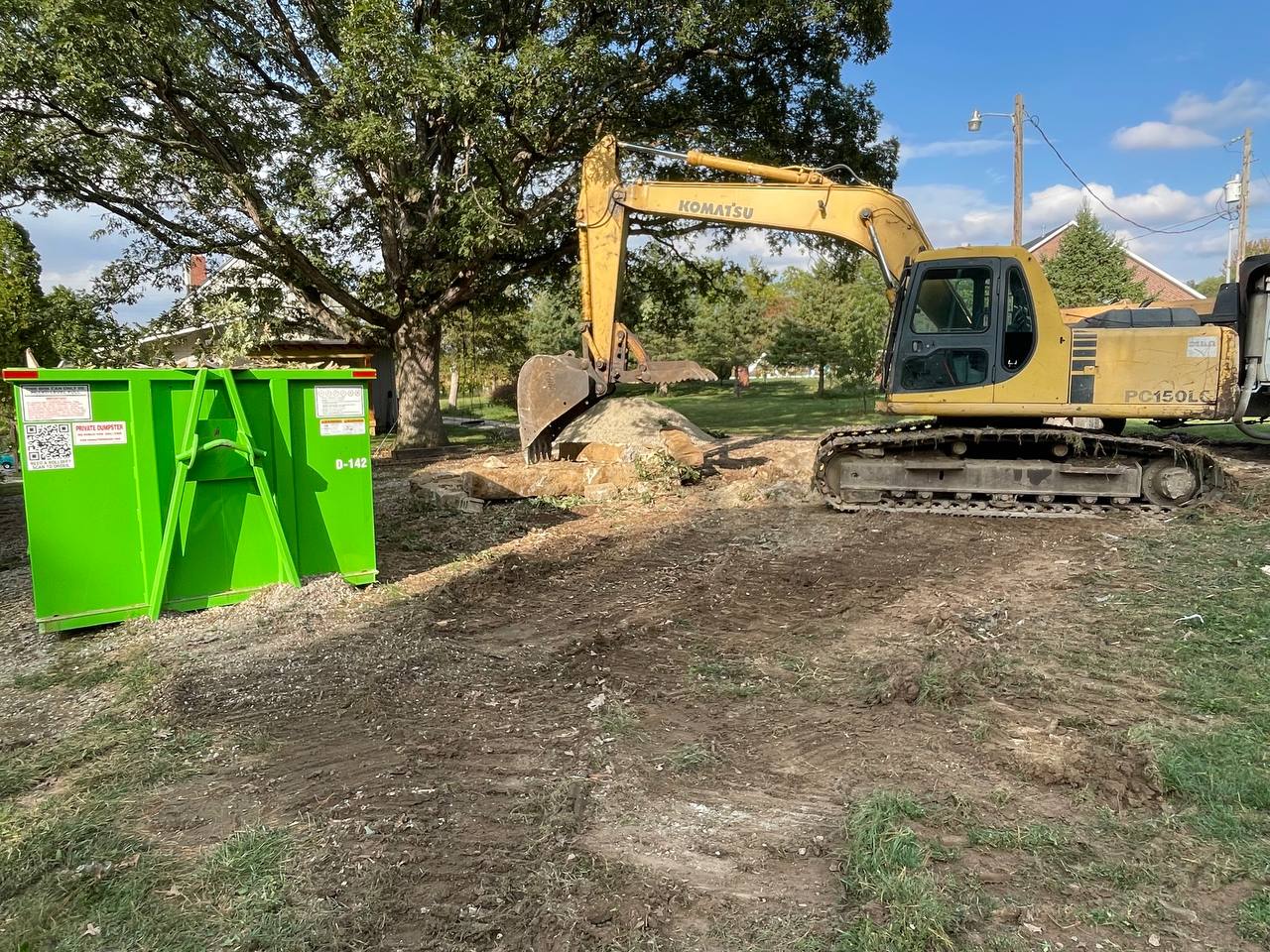
- Will you grade the site clean when you're done? Ask what the ground looks like when they pull out. A finished job means the foundation handled per the plan, the hole backfilled, and the site graded so you can use it. "Knocked down and gone" isn't the same as "done."
Why a Local Owner-Operated Crew Beats a Lead Broker
Here's something a lot of folks don't realize. A good share of the slick demolition ads you'll find online aren't contractors at all — they're lead brokers. You fill out the form or make the call, they collect your information, and they sell that job to whatever sub happens to take it, with a markup on top. You never meet the people who show up. Nobody you talked to is responsible for the result.
Local also means local references. Around here, a contractor's reputation is the whole business. We work in the same towns we live in, and the last thing we'd do is leave a mess down the road from somebody we'll see at the gas station.
Red Flags Worth Walking Away From
If you see any of these, slow down and keep looking. None of them are worth the headache.
- No proof of insurance. If they can't or won't show you a certificate, the job isn't insured — and a problem becomes your problem. Full stop.
- A vague quote with no scope. A real quote tells you what's coming down, whether the foundation's included, who's hauling, and what's left when they leave. A one-line number with no detail is a number that can grow.
- Asks for a big cash deposit up front. Be careful with anyone who wants a large cash payment before any work starts. A reputable local contractor doesn't need your money sitting in their pocket to show up.
- No local references or nearby jobs. If they can't point to finished work in the area or people who'll vouch for them, ask yourself why. Around here, a good crew has a trail of happy neighbors.
How We Answer Every One of These
I'll save you the trouble and answer the checklist myself. We're fully insured — full liability and equipment coverage, and we'll hand you a certificate of insurance on request, every time. We haul our own debris with our own trucks; haul-off is part of the conversation, not a surprise. We help you navigate asbestos and permits, including lining up a licensed inspector when it's warranted and the Illinois notification side of things. And we grade the site clean when we're done, so you've got usable ground, not a crater.
We're owner-operated out of Mattoon. When you call, you talk to the people who'll be on your site. No broker, no markup, no mystery sub. Want the full picture? Here's our demolition service, plus our barn demolition and house demolition pages.
Do your homework, ask the questions above, and you'll know exactly who you're hiring before a machine ever rolls in.