Whether an old barn is worth saving usually comes down to three things: the foundation, the frame, and the roof. A barn with a sound foundation and a square, dry frame can be worth restoring even if it looks rough; one with a failing foundation, rotted sills or a roof that has been open to weather for years is usually past the point where repair costs less than replacement. Safety is the other half — a leaning barn with sagging beams is a hazard to anyone who walks into it. Brohez Trucking LLC will walk it with you and give you a straight read either way, across a 60-mile radius from Mattoon, Illinois. Call or text a photo to (217) 809-0779.
Whether an old barn is worth saving comes down to the bones, not the looks: rot at the post bottoms and sills, a lean that has grown in the last few years, a swayed or dishing roof, and a failing foundation. Any two of those together and you are rebuilding, not repairing. Barns that are still square with a sound roof and a solid foundation are usually worth keeping — a roof, siding or a foundation repair on a building that is still standing on its own is money well spent. The walk-through and the itemized number are free: (217) 809-0779.
Just about everybody who calls me about an old barn asks the same thing two different ways. Half of them say "can you tear this down?" The other half say "is there any way to save it?" And both of them really want the same honest answer: is this building worth the trouble, or is it time to let it go?
I've walked enough of these to tell you it's not a guess if you know what to look at. Some barns are past saving and pretending otherwise just costs you money. Some are full of material worth real dollars. And a lot of them land in the middle. Here's the checklist I run in my head when I walk one.
Signs the Barn Is Past Saving
Start with the bones. These are the things that tell me a building is moving, not just old — and a barn that's moving is a safety problem before it's a money problem.
- Rot at the base. The bottoms of the posts and the sills sitting on the foundation are where water collects and wood gives up. If you can push a screwdriver into a post bottom, that load isn't being carried anymore — it's being faked.
- A lean that's getting worse. Every old barn has a little character to it. But a lean that's grown over the last few years, racked doorways, or a frame that's lost its square means the structure is slowly failing. Once it starts walking, it doesn't walk back.
- A sagging or buckled roof. A swayed ridge or a roof that's dishing in the middle usually means rafters or the plate underneath have rotted or pulled loose. That's expensive to chase and dangerous to work under.
- A failing foundation. Crumbling stone, a heaved or cracked block footing, or posts set straight in dirt that's washed out — when the thing it stands on is going, everything above it is going too.
- Asbestos siding or roofing. On a barn built before 1980, some old roofing and siding can contain asbestos, and decades-old paint can carry lead. That doesn't kill a save on its own, but it adds cost and rules to anything you do.
If you've got two or three of these stacked together, repair almost always costs more than the barn is worth, and you're better off planning a clean barn demolition than throwing good money after a building that's leaving anyway.
When the Barn Is Still Worth Repairing
Now the other side of the ledger, because plenty of old barns should not come down. Four things decide it, and they're the same four in reverse: the post bottoms, the square of the frame, the line of the roof ridge, and the foundation.
- Sound feet. Get down at the base of the posts and the sill and dig a screwdriver in. If it bites clean and stops, that timber is fine. Punky, spongy, or a blade that sinks to the handle means the barn is standing on rot, and everything above it is on borrowed time.
- A frame that's still square. Sight down the wall line and across the door openings. A barn that's still square has held its bracing, and a new roof or new siding is a real fix rather than a bandage on a building that's already moving.
- A straight ridge. Stand back and look down the roof line. A ridge that's flat and true means the rafters and purlins are still carrying. Sway in the middle means something under it has already let go.
- A foundation that isn't failing. Stone and block foundations under old barns can be repaired or underpinned. A wall that's bowed, split, or has stone falling out of it is a much bigger job than most owners expect.
What a Clean Teardown Actually Looks Like
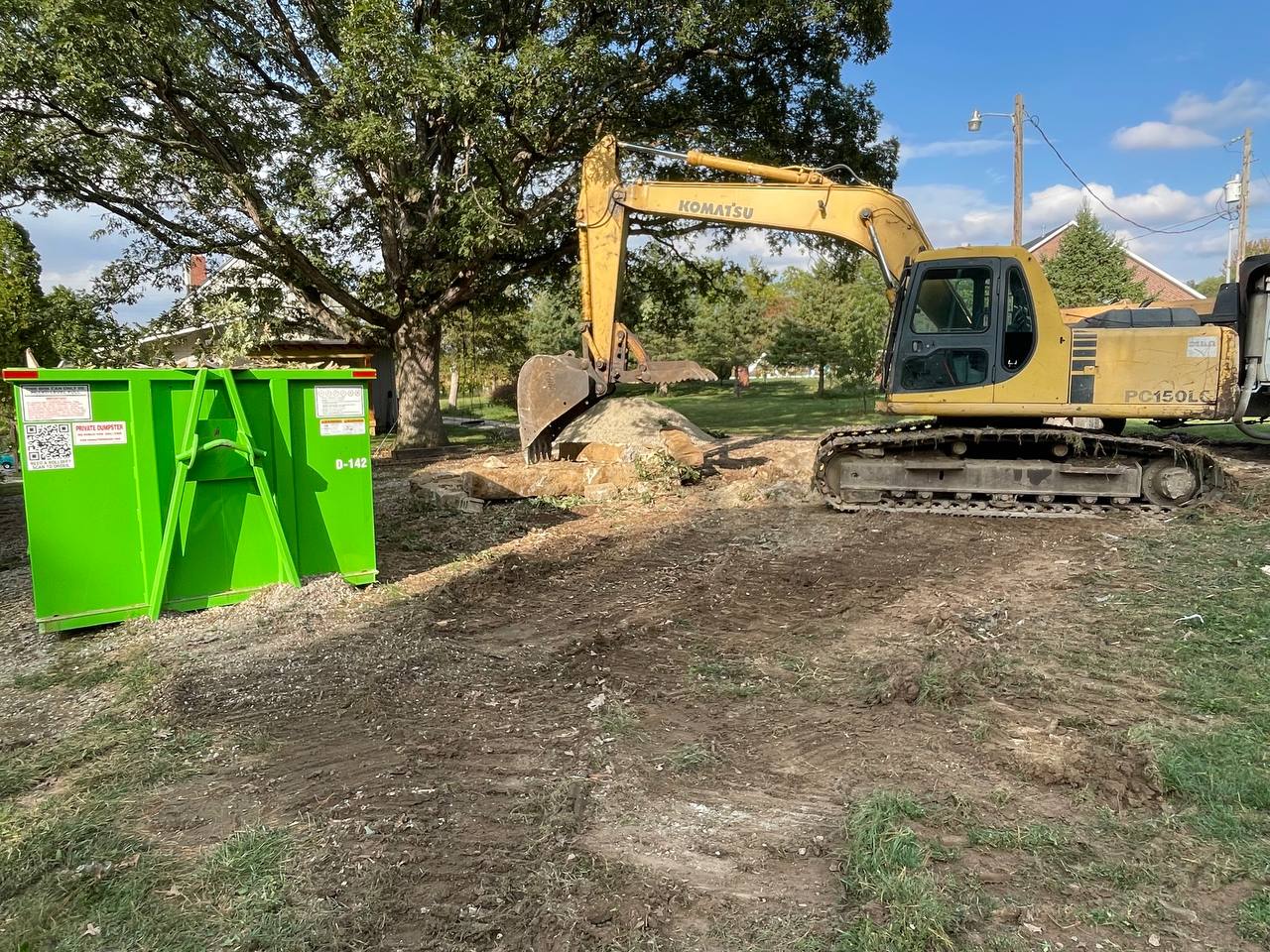
If the checklist says it's done, the job isn't complicated — it's just a matter of whether it's done right. We bring the barn down in a controlled sequence rather than shoving it over, break out the foundation if you want it out, separate the metal for scrap, haul off the lumber, tin, concrete and trash, and grade the footprint so you can farm it, build on it, or just mow it.
One thing to settle before we mobilize: anything in the barn you want to keep, take it out first. Tools, equipment, feed, hardware — it's your property, and it's a lot easier to carry out of a standing building than to pick out of a pile. Once we're on site the barn comes down as a unit; we don't hand-pull material out of it. A barn that's still full has to be sorted before it can be dropped, and sorting is time on your bill.
If you want to read more about what actually moves the price once you've decided to take it down, we wrote a whole guide on the cost to tear down a barn in Illinois — size, construction, foundation, asbestos, and access, with no web-page guesses.
So How Do You Actually Decide?
Run the checklist. If the base is rotted, the lean's growing, the roof's sagging, and the foundation's failing, the barn is telling you it's done — and the right move is a clean teardown that returns the ground to use. If the feet are sound, the frame's still square and the ridge is straight, you've got a building worth spending a roof on. It's usually not a close call once you've looked at all four.
What I won't do is talk you into tearing down a good building or saving a dangerous one. I'll walk it with you, tell you straight what I see, and lay out your real options — repair it or take it down — with the number to match.
Want the full picture on how we work? Here's our demolition service and our dedicated barn demolition page.
"We hired Levy for a large demo job and dirt removal. They showed up on time, worked hard, and completed the job faster than I expected. What impressed me most was how clean they left the site afterwards — no mess left behind."
"Great Service and Great Price! They continued working for 3 days to demolish three buildings and removed all the debris to dumpsters that I ordered. Then, they also came in with dirt to fill the whole backyard. Strongly recommended!"
"Very responsive, fair pricing, and easy to work with. Did a great job for our project."
Every one of these is a real Google review from a real central Illinois customer — see them all on our reviews page.