Whether you need a demolition permit in Illinois comes down to where the building sits, and the asbestos notification comes down to what kind of building it is — not how old it is. Inside city or village limits you will almost always need a local demolition permit; on unincorporated county ground you often will not. The separate IEPA 10-working-day asbestos notification applies to commercial, institutional, agricultural and multi-family buildings over four units, while a single-family private residence is exempt from it. Brohez Trucking LLC handles demolition across a 60-mile radius from Mattoon, Illinois, and confirms what your specific address and structure actually need before anything is scheduled. Call or text (217) 809-0779.
Do I need a permit for building demolition?
Inside a city or village, almost always yes — the municipality issues it before anything comes down. On unincorporated county ground, an ag building often needs no local permit. The state asbestos notification can still apply either way.
Do I need a permit to tear down a house?
In town, yes — a house teardown needs a local demolition permit, proof of insurance, and utilities disconnected first. A single-family home is exempt from the asbestos survey and 10-day notice. We've pulled these permits before and we'll walk you through yours.
"Do I need a permit to tear this thing down?" It's a fair question, and the answer is the honest one: sometimes yes, sometimes no — it depends on where the building sits and what's in it. Let me walk you through how it actually works in Illinois, in plain English, without making it sound scarier than it is.
One thing up front: rules vary by city, village, and county, and they change. Nothing here is legal advice. The right move on any specific building is to confirm with your local building or zoning office — and we'll help you do exactly that. With that said, here's the lay of the land.
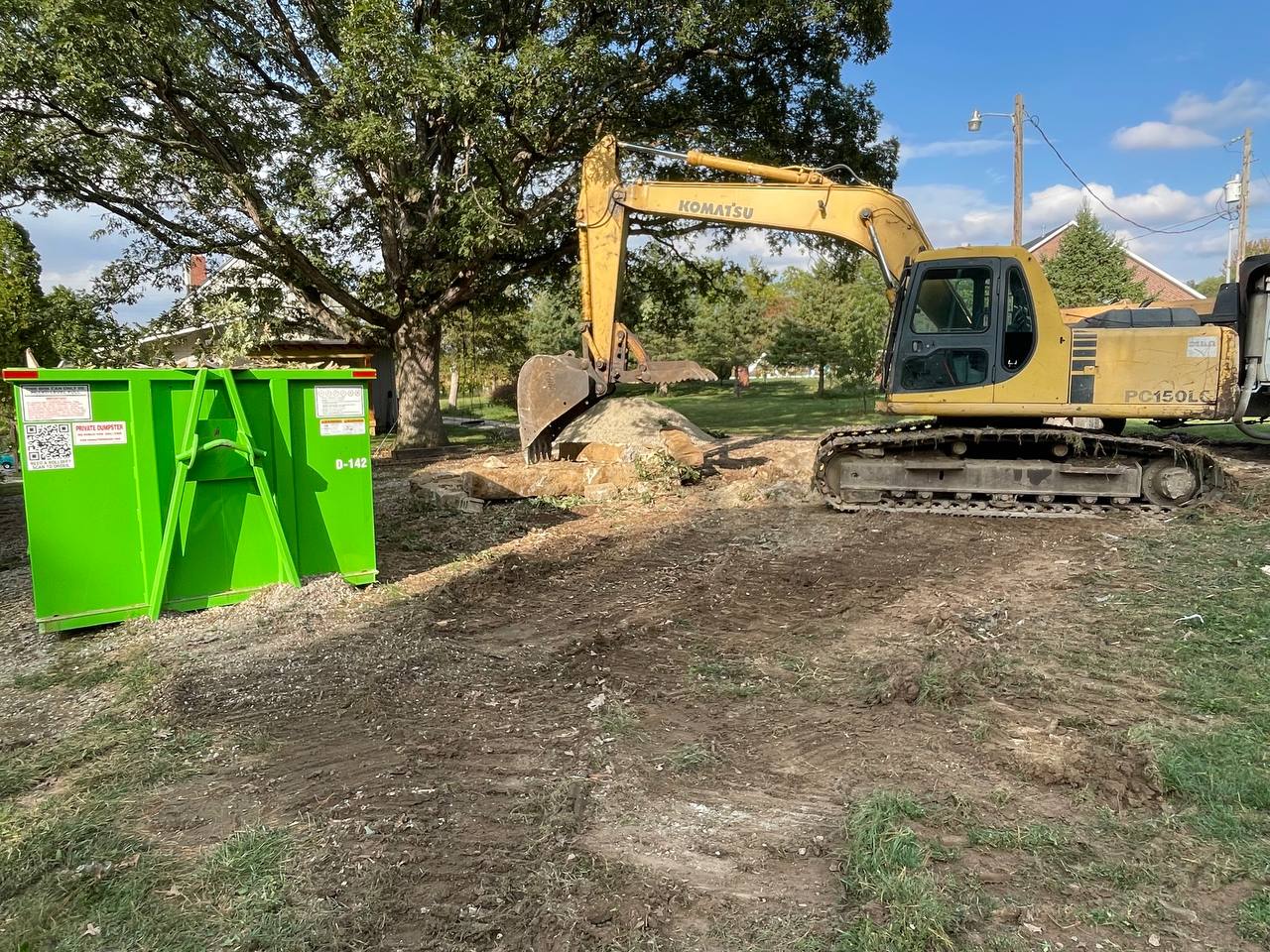
City vs. Rural: The First Question
The biggest factor is whether the structure is inside a town or out in the country.
Inside city or village limits
If your building is within an incorporated city or village, you almost always need a local demolition permit from that municipality before anything comes down. The city wants to know what's being demolished, by whom, that the contractor is insured, that utilities are disconnected, and that debris is going to a proper facility. Some towns also require erosion control or a re-grading plan for the open lot afterward.
Out on the farm or unincorporated county ground
For a barn, machine shed, or grain structure on farm ground in an unincorporated part of the county, a local building/demolition permit often isn't required — many counties exempt routine agricultural structures. But "no local permit" does not mean "no rules." The state asbestos requirement and the utility steps below can still apply. This is exactly the spot where folks assume they're clear and miss a step, so confirm it.
The Asbestos Notification Most People Don't Know About
This is the one that surprises people, so I want to be accurate about it. Under the federal asbestos rule known as NESHAP (administered in Illinois through the Illinois EPA), most building demolitions require a written notification filed at least 10 working days before the work begins — even when no asbestos turns out to be present, and even for some buildings out in the country.
None of this should scare you off. Plenty of barns come back clean and the notification is a formality. The point is simply that it's a real requirement, it has a 10-day lead time, and it's not optional on the buildings it covers. Planning for it up front keeps your project on schedule instead of stalled.
Utility Disconnects and Locates
Permit or no permit, this part is non-negotiable on every job — it's about safety.
- Disconnect services first. Electric, gas, water, and any other utility running to the structure should be formally disconnected by the utility company before demolition. You don't want a machine into a live line or a charged gas service.
- Locate before you dig. Before any excavation — foundation removal, backfill, or grading — underground utilities have to be located. In Illinois that means calling JULIE (811) and giving the legally required lead time so the lines get marked.
We coordinate these as part of the job so nothing gets missed and nobody gets hurt.
When a Permit Is Definitely Required
To boil it down, you should plan on permitting and/or notification when:
- The structure is inside an incorporated city or village (local demolition permit).
- It's a commercial or residential building (NESHAP notification typically applies).
- Utilities are connected to it (disconnects required regardless of permit).
- You're digging out a foundation or slab afterward (JULIE locate required).
- The building is old enough that asbestos is a realistic possibility (inspection recommended).
And you should still confirm — not assume you're exempt — when it's a farm building on county ground. A five-minute call to the county office settles it.
When a Permit Is Not Required
The list above is the half everybody writes about. The half people actually come looking for is this one, because most of the buildings we get called about are small, out of town, or both. Here is where a local demolition permit commonly does not apply — with the same caveat as everything else on this page: confirm it with your building or zoning office rather than take it as read.
- A small shed with nothing running to it. A garden shed, a lean-to, a playhouse — no electric, no water, no gas, sitting on skids or a slab. Most Illinois municipalities set a floor under which an accessory structure needs no permit to put up or take down, and a small shed usually sits below it. If a line runs to it, it stops being a shed question and becomes a utility question.
- Farm buildings on unincorporated county ground. A barn, corn crib, machine shed or grain structure outside any city or village limit. Many counties exempt routine agricultural structures outright. The asbestos notification can still apply on its own terms, and it does not care whether the county wanted a permit.
- Work that isn’t demolition. Taking down interior partitions, pulling cabinets, stripping a porch, gutting a room to the studs — remodeling work that leaves the structure standing. That is a building-permit conversation with your contractor, not a demolition permit. The line is whether the structure comes down.
- Something already down. A barn that has collapsed, a burn pile, a foundation left over from a building that is long gone. Cleanup and haul-off is usually not a demolition — though if you are digging the old foundation out, the JULIE locate still applies before a bucket goes in the ground.
Do I need a permit to tear down a garage in Illinois?
The garage is the building this question gets asked about most and the one the general answer fits worst, because a detached garage lands on the line between “shed” and “building.” The honest split:
- In town, plan on a permit. Illinois municipalities generally treat a detached garage as a structure rather than an accessory shed, and most want a demolition permit before it comes down — along with the contractor’s insurance, the utility disconnects, and where the debris is going. If the garage is attached to the house, that is not a garage teardown at all; it is partial demolition of the house, and it goes through the same permit and structural review as any other piece of it.
- Out on county ground, often not. A detached garage or shop on unincorporated ground frequently needs no local demolition permit, on the same footing as any other outbuilding out there.
- Almost always there is a service running to it. This is what actually catches people. A garage usually has power, sometimes a water line, sometimes gas to a heater. Those disconnects are ordered by you as the account holder and they run on the utility’s calendar, permit or no permit — and on most garage teardowns they are the longest item on the schedule.
- On the asbestos side, a detached garage serving a single-family home generally rides with the house rather than standing on its own. That is the kind of thing to have confirmed rather than assumed, and it is one of the calls we make as part of the estimate.
A slab is its own question. Most garage jobs we do include breaking out and hauling the floor, which is concrete removal work and puts a machine in the ground — so the locate applies even where the permit did not.
How Long Does a Demolition Permit Take in Illinois?
This is the question people actually mean when they ask about permits, because it is the one that sets a start date. Most of the answers online are written for Chicago and the collar counties, where a demolition permit goes through a plan-review queue and can genuinely take weeks. Downstate the shape of the delay is different, and knowing which piece is the slow one saves more time than filing early does.
Downstate, the permit itself is rarely the long pole. A small-city or village building office is not running your teardown through plan review. What holds an application up is almost never the reviewer — it is the attachments it asks for: the contractor’s certificate of insurance, written confirmation that each utility has been disconnected, and the name of the disposal site the debris is going to. Handed in without those, it sits on a desk. Handed in with them, it moves at the speed of the office.
The clock that really governs is the 10-working-day notification. As covered above, the IEPA notification has to be on file at least ten working days before work begins — two full calendar weeks once you count weekends, and longer if a holiday lands in it. On most jobs that notice, not the permit, fixes the earliest possible start date. It runs in parallel with everything else, so the way to protect a start date is to file it first and chase the rest while it runs.
Utility disconnects run on the utility’s calendar, not yours. Electric, gas, water and sewer each have their own scheduling, and on a rural property the propane tank has to be pulled by the supplier. These are frequently the longest single item on a teardown timeline, and they are the one part nobody can expedite. Start them the day you decide the building is coming down.
Two things that surprise people. A village board that meets twice a month can add most of two weeks if your approval has to land on an agenda instead of being issued over the counter — worth asking on the first call. And on unincorporated county ground an agricultural building often needs no local demolition permit at all, which means the notification is the only clock you are watching.
Because it varies by office and the rules change, we do not publish a day count for any particular city or county — the honest answer is that a five-minute phone call to your building or zoning office beats anything written down. We make that call as part of the estimate. For the rest of the schedule, from the first walk to a graded lot, see how long a demolition actually takes.
How Brohez Helps You Navigate It
Here's the honest reason most homeowners and farmers hand this off: the paperwork is annoying, the asbestos rule isn't obvious, and the lead times can trip up a project if you find out late. We've done it many times across central Illinois, so we make it simple.
- We tell you straight whether your specific structure likely needs a local permit, and point you to the right office to confirm.
- We help line up the asbestos inspection and file the Illinois EPA notification with the 10-day lead time built into the schedule.
- We call the JULIE 8-1-1 locate before we put a machine on it, cap the sewer, and pull any private well or propane tank. The public disconnects — electric, gas and water at the meter — you order as the account holder, because the utility will only take that request from you.
- We haul the debris to a proper facility and leave you a clean, graded lot.
You can read more on our demolition service page, our barn demolition page, and — if there's a slab or footing involved — our concrete removal work. Or just call and tell us what you've got; we'll walk you through the right steps for your building.
Bottom line: the rules aren't as scary as they sound, but they're real, and the asbestos notification has a 10-day clock. Get it confirmed early, line up the utilities, and the teardown goes smooth.
"We hired Levy for a large demo job and dirt removal. They showed up on time, worked hard, and completed the job faster than I expected. What impressed me most was how clean they left the site afterwards — no mess left behind."
"Great Service and Great Price! They continued working for 3 days to demolish three buildings and removed all the debris to dumpsters that I ordered. Then, they also came in with dirt to fill the whole backyard. Strongly recommended!"
"Very responsive, fair pricing, and easy to work with. Did a great job for our project."
Every one of these is a real Google review from a real central Illinois customer — see them all on our reviews page.