Just want the shed gone? This page explains what moves the price. If you are ready to book the work, our shed removal page has the crew, the equipment, and a free on-site walk — or call (217) 809-0779 and talk to Levi.
How much to tear down a shed comes down to five things: what it's made of (metal or resin kit, stick-built wood, or a pole shed with posts in the ground), how big it is, how much is still stored inside, whether the slab or gravel pad comes out with it, and how far the debris hauls. The cost to demolish a shed and the cost to remove one are the same job. Two choices actually move the number — empty it out first, and decide whether the concrete stays. Free on-site walk: (217) 809-0779.
Why won't you just put a price on this page?
Because the honest answer depends on things a page cannot see. A tin kit shed and a pole shed with posts set in the ground are the same size and not the same job, and what is still stored inside can matter more than the shed does. What I will promise instead: after I look at it you get the real number, itemized and free — what comes down, whether the pad goes with it, and what we are hauling. Text a photo or call (217) 809-0779. The five things below are what that walk is looking at.
"Who hauls off an old shed, and what's it cost?" It's one of the smaller demolition calls we get, but it's a common one — a rusted metal shed, a rotted wood shed the mower lives in, a lean-to that came with the place. And the answer is the same one I give on the phone: the honest answer is it depends — though a shed is usually quick, predictable work once we know a few things about it.
The good news is a shed is about the simplest structure we take down, so the variables are easy to understand. Here's what actually moves the cost to tear down a shed in central Illinois. (Got a garage instead? See our garage demolition page, or the garage demolition companies guide.)
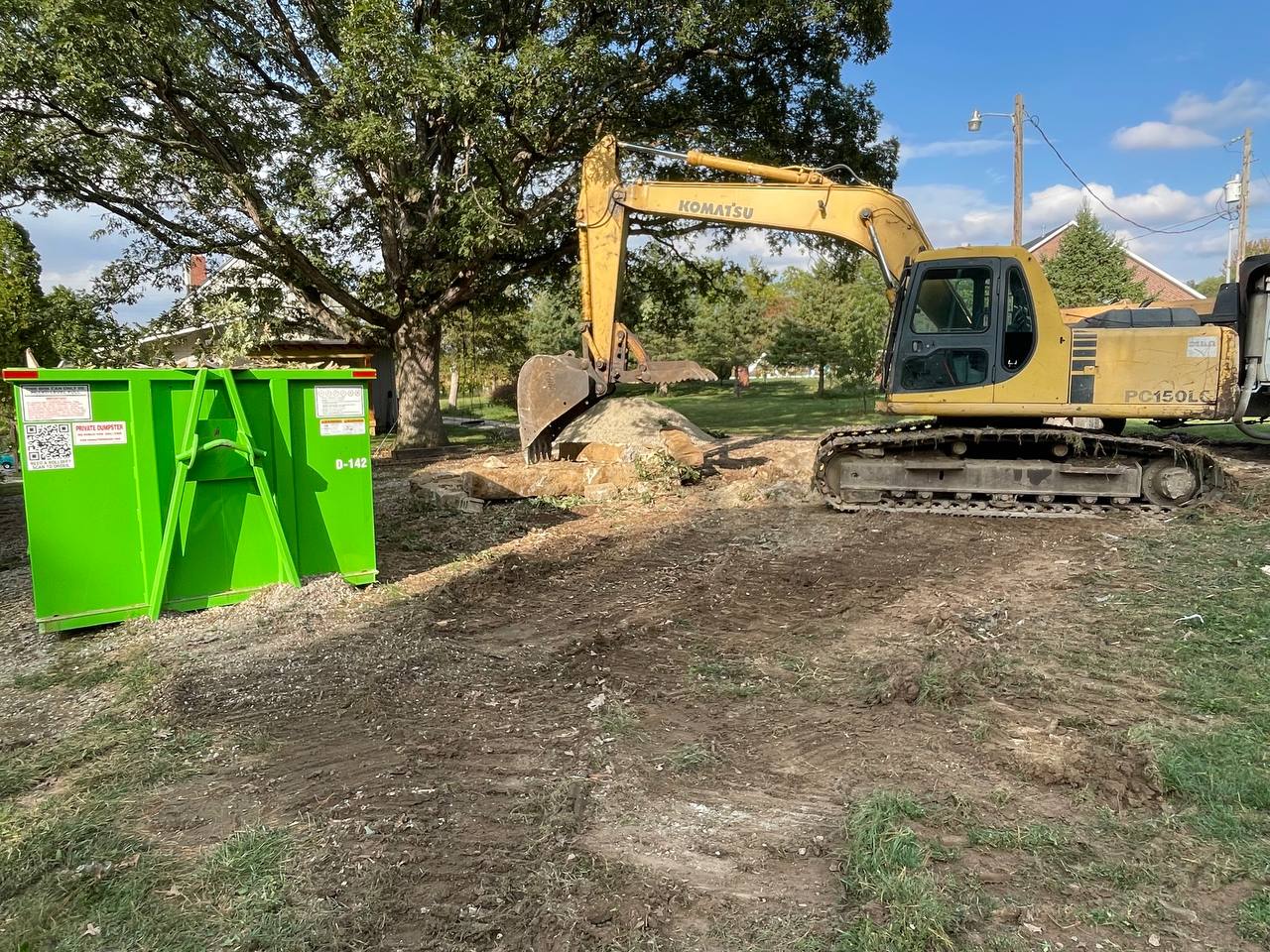
1. What the Shed Is Made Of
Shed type is the first thing that sets the work.
- Metal and resin kit sheds are the lightest — they come apart fast and there's not much to haul.
- Wood / stick-built sheds are heavier, with framing, siding, and a shingled roof to process.
- Pole and run-in sheds have posts set in the ground that have to be pulled, which adds a little.
- Lean-tos and add-ons stuck to a garage or barn get priced by how cleanly they separate.
Metal Shed Removal Cost — Why Tin Prices Differently
Metal gets asked about more than anything else on this list, and it's the one type where the job runs backwards from what people expect. Metal shed removal cost is usually the lowest of any shed we take, for one reason: the tin and the frame are scrap steel, not debris. On a wood shed you pay to haul material to a disposal site. On a tin one the panels and the frame go to the scrap yard instead of the roll-off, so the disposal side of the job shrinks — and we show that offset in your number rather than quietly keeping it.
What still moves it: how big the shed is, whether it's anchored to a concrete pad and whether that pad comes out with it, how much is still stored inside, and how close a truck and a machine can get. A bolted-together kit shed on skids with the truck backed up to the door is about the quickest job we do. An old tin grain shed, rusted through and half-folded by the wind, takes a controlled pull with the machine — don't climb on one and don't try to drag it with a pickup.
Bigger than a garden shed? A tin building on posts is pole barn demolition, and farm tin sits under farm building demolition. The service page for this work, with the process and the gallery, is shed removal.
2. Size and What's Inside
Footprint matters, but what's in the shed often matters more. A shed packed with old paint, lumber, tires, and yard junk is a lot more material than an empty one — and all of it has to be loaded and hauled with the structure. Clearing it out before we arrive is the single easiest way to keep the cost down.
3. The Slab or Pad — Does It Come Out?
This is the question people forget to ask. Sheds sit on all kinds of bases: a poured concrete slab, a gravel pad, patio blocks, or just skids on the dirt.
If you want a clean yard or you're putting something new on the spot, the slab or pad usually comes out and the ground gets graded. If it doesn't bother you, sometimes it can stay. Either way, slab removal and haul-off is its own line item — and where there's real concrete, that's where our concrete removal work comes in. We quote it both ways so you decide.
4. Asbestos on Older Sheds — Be Honest, Not Scared
Most sheds are clean, but older ones can carry regulated material — some old siding and roofing contained asbestos, and decades-old paint can be lead. It's not a reason to panic, but on a building that has it, the step doesn't get skipped.
5. Access and Haul Distance
The last variables are logistics. Can we get a machine and a truck back to the shed, or is it boxed in behind a fence or landscaping? And how far is the nearest landfill or transfer station — out in the country that distance adds truck time and tipping fees even on a small job.
So Why Won't I Just Quote a Number Here?
Because a clean little metal shed on skids and a packed wood shed on a concrete slab are far apart once you account for what's inside and whether the pad comes out. A number off a web page is a guess dressed up as an answer. What I can promise is that the number I give you after a quick look is the real one — itemized, honest, and free. Got a shed you want gone? Text a photo and we'll get you a straight answer, or read our full shed removal page.
"We hired Levy for a large demo job and dirt removal. They showed up on time, worked hard, and completed the job faster than I expected. What impressed me most was how clean they left the site afterwards — no mess left behind."
"Great Service and Great Price! They continued working for 3 days to demolish three buildings and removed all the debris to dumpsters that I ordered. Then, they also came in with dirt to fill the whole backyard. Strongly recommended!"
"Very responsive, fair pricing, and easy to work with. Did a great job for our project."
Every one of these is a real Google review from a real central Illinois customer — see them all on our reviews page.